On this page
Chapter 9 of your NCERT Class 12 Biology book opens with a short profile of Herbert Boyer and a single paragraph on the first recombinant DNA. It is easy to memorise "Cohen and Boyer, 1972" and move on. The real story explains why restriction enzymes, plasmids and antibiotic-resistance genes all appear together in that chapter, and it makes the whole unit easier to understand. This post sets out what happened, when, and what each tool did.
Who were Herbert Boyer and Stanley Cohen?
The Science History Institute's biography of Boyer and Cohen gives the background. Boyer, born in 1936 and raised in western Pennsylvania, earned a PhD in biochemistry at the University of Pittsburgh and joined the University of California, San Francisco (UCSF) in 1966. His lab worked on restriction enzymes, including EcoRI, which had been discovered there. Cohen, born in 1935 in Perth Amboy, New Jersey, trained in medicine and moved to the Stanford University School of Medicine in 1968, where he studied plasmids.
One point trips up many students. The Stanley Cohen who shared the 1986 Nobel Prize in Physiology or Medicine with Rita Levi-Montalcini "for their discoveries of growth factors" is a different scientist. That Stanley Cohen was born in Brooklyn in 1922 and worked on epidermal growth factor at Vanderbilt, as his Nobel autobiography explains. Do not mix them up in an answer.
How did the collaboration start?
In November 1972, the Science History Institute account says, both men were in Hawaii for a US-Japan meeting on plasmids. Boyer described how EcoRI cuts DNA so that the ends are staggered rather than blunt. Cohen described a method his lab had found for getting bacteria to take up plasmid DNA and pass identical copies on to their offspring. Over sandwiches late one night, they planned to work together.
The two skills fitted exactly. EcoRI could open a plasmid and cut a foreign piece of DNA with matching sticky ends. Cohen's method could put the joined plasmid back into E. coli and let the bacteria copy it.
What did the first experiment show?
The paper is Cohen, Chang, Boyer and Helling, "Construction of biologically functional bacterial plasmids in vitro" (PNAS, 1973). Its abstract says new plasmids were built "by in vitro joining of restriction endonuclease-generated fragments of separate plasmids", that they were put into E. coli by transformation, and that they behaved as working replicons carrying genetic properties from both parent molecules.
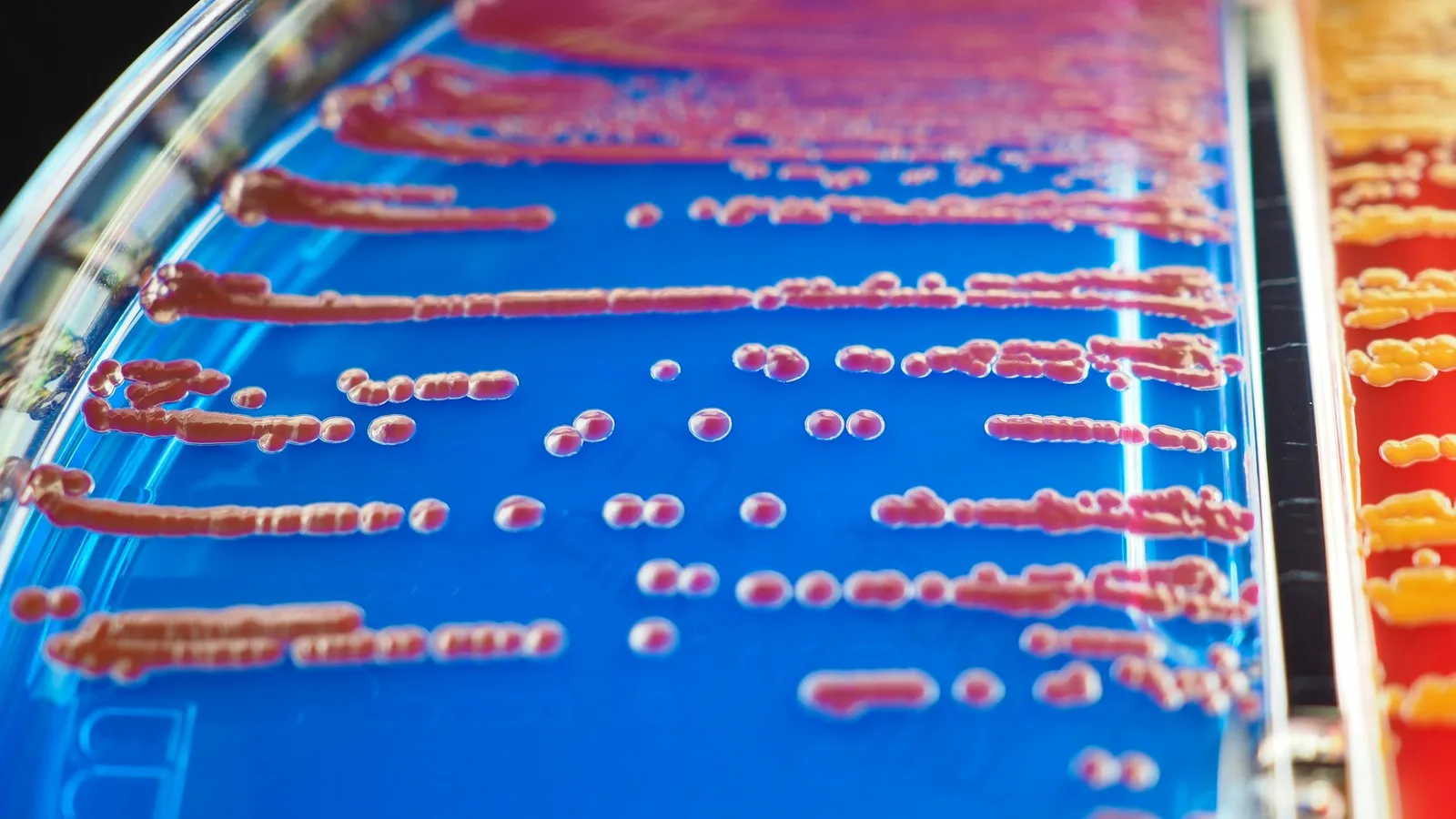
The Science History Institute describes the first success. Cohen's plasmid pSC101 made E. coli resistant to tetracycline and was cut by EcoRI at only one site, so cutting it did not destroy its ability to replicate. Cut pSC101 was mixed with other EcoRI-cut DNA; the sticky ends paired; a joining enzyme sealed the nicks; and the new loops were put into calcium chloride-treated bacteria. Only bacteria carrying the plasmid survived on tetracycline. That is the selectable marker idea in your textbook.
Next came DNA from other species. In 1974 Cohen's group and collaborators joined fragments of a Staphylococcus plasmid to pSC101 and showed in Chang and Cohen (PNAS, 1974) that E. coli carrying it expressed the penicillin-resistance genes from Staphylococcus. In Morrow and colleagues (PNAS, 1974) they linked ribosomal RNA genes from the frog Xenopus laevis to pSC101, and the recombinant plasmids replicated stably in E. coli.
Worked example: why does one EcoRI site matter?
EcoRI recognises the six-base palindrome 5'-GAATTC-3', as your NCERT Class 12 Biology Chapter 9 shows, and cuts between G and A on each strand, leaving short single-stranded overhangs.
How often should a six-base site turn up? If the four bases were equally common and arranged at random, the chance of any given position starting GAATTC is (1/4)^6 = 1/4096. So you would expect about one site every 4,096 base pairs. Real DNA is not random, which is why some plasmids, like pSC101, happen to have just one site.
Why does that matter?
One cut opens the circle into a single linear piece with two sticky ends. Insert DNA can join in, and the circle closes again.
Two cuts would remove a stretch of the plasmid. If that stretch held the origin of replication or the resistance gene, the plasmid would no longer copy itself or be selectable.
Common mistakes:
Saying the restriction enzyme joins DNA. It cuts; DNA ligase joins.
Calling the plasmid the host. The plasmid is the vector; E. coli is the host.
Thinking any antibiotic-resistance gene is the "foreign" gene. In the first experiments the resistance genes were markers that showed which bacteria had taken up the plasmid.
What happened next?
The Science History Institute notes that Boyer co-founded Genentech in 1976 with Robert Swanson. In 1977 Boyer and Keiichi Itakura expressed the human hormone somatostatin in bacteria, and recombinant human insulin, sold as Humulin, was approved by the US FDA in 1982. Cohen stayed in academic research. Our post on biotechnology applications picks up the insulin story from the textbook side.
What can a student take from Cohen and Boyer's way of working?
Combine two tools you already understand. Neither man had the whole method alone. Many hard problems give way when you ask which two ideas from different chapters fit together.
Build in a way to see success. The tetracycline marker meant they did not have to guess which cells had worked.
Test the bold version next. After joining plasmid pieces, they tried DNA from another species. Once a method works on the easy case, push it to the case that matters.
If the sequence of cutting, joining, transforming and selecting still blurs together, the Fermi Problem Library has worked problems with a step-by-step solver that explains the reasoning rather than printing an answer. The textbook version of every tool here is in our guide to biotechnology principles and processes.
Next step: draw a plasmid with one EcoRI site and label each enzyme and step from cut to selected colony, without looking.