

On this page
In 1947, ventricular fibrillation—a state where the heart muscle quivers chaotically instead of pumping blood—was considered a universally fatal event in humans. That changed during an operation at University Hospitals of Cleveland, when an American surgeon decided to use an experimental laboratory device to save a dying patient.
Dr. Claude S. Beck proved that electrical therapy could reset the heart's natural pacemaker, performing the first successful human defibrillation (JAMA 1947).
The 14-year-old boy and the silver paddles
During surgery to correct a congenital chest deformity (pectus excavatum), 14-year-old Richard Heyard's heart suddenly stopped (JAMA 1947). As Beck reopened the chest, he observed the heart was in ventricular fibrillation.
Beck refused to give up. He performed manual, open-chest cardiac massage for 45 minutes to force oxygenated blood to the boy's brain while waiting for his colleague to retrieve an experimental defibrillator from his research laboratory (JAMA 1947).
The crude device, built with his friend James Rand, was far from the sophisticated automated external defibrillators (AEDs) seen today. It used two silver electrodes, shaped like large tablespoons, which Beck applied directly to the surface of the exposed heart.
After an initial failed attempt and a dose of procaine to reduce cardiac irritability, Beck administered a second 110-volt alternating current (AC) shock (JAMA 1947). The chaotic quivering stopped. After a brief pause, the heart began beating in a normal, rhythmic sinus pattern, and the boy went on to make a full recovery.
What is ventricular fibrillation?
To understand why an electric shock was necessary, you need to look at the heart's internal wiring.
In a healthy heart, the sinoatrial (SA) node acts as a natural pacemaker. It sends a coordinated electrical signal that travels through the atrioventricular (AV) node, down the bundle of His, and into the Purkinje fibres. This causes the muscle cells to contract in unison, pumping blood out of the ventricles.
During ventricular fibrillation, this coordinated electrical wave breaks down. Individual muscle cells fire independently and chaotically. The heart muscle looks like a "bag of worms", quivering rapidly without generating the pressure needed to pump blood.
How does a defibrillator actually work?
It is a common misconception that a defibrillator "jump-starts" a stopped heart. In reality, it does the exact opposite: it stops a chaotic heart.
Here is a simple framework for how a defibrillation shock forces the heart to reset:
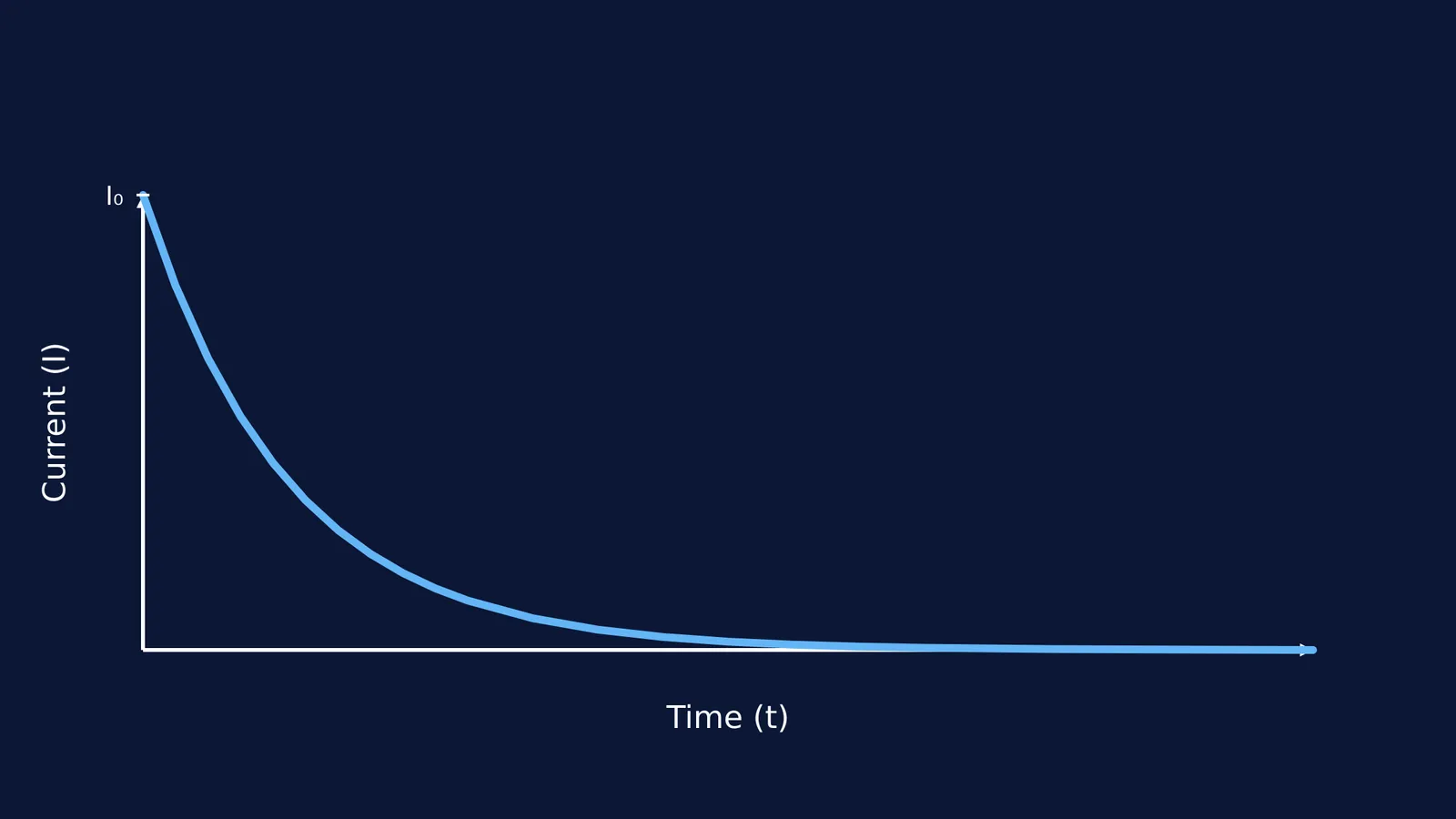
The Energy Source: A modern defibrillator stores energy in a capacitor. (Beck's original device drew directly from an AC wall outlet, but modern ones use direct current from a battery-charged capacitor).
The Discharge: When the paddles are pressed and the switch is closed, the capacitor discharges a massive surge of electrons through the patient's chest.
The Depolarisation: This electrical surge forces all the cardiac muscle cells to depolarise simultaneously.
The Silence: By forcing every cell to contract and then reset at the exact same time, the shock silences the chaotic electrical noise.
The Restart: This gives the SA node—the loudest and most regular voice in the heart's electrical system—a moment of silence to re-establish control and resume a normal sinus rhythm.
If you want to understand the electrical pathways that keep us alive, the Fermi Concept Library contains every concept in physics, chemistry, biology, mathematics and computing, each with its own lesson and its place in the map.
A new era of resuscitation
Beck published the landmark case in the *Journal of the American Medical Association* in December 1947 (JAMA 1947). The success proved that cardiac arrest was a medical emergency rather than a final verdict.
Along with earlier breakthroughs like William Morton and the first public operation under ether and later ones like Christiaan Barnard and the first human heart transplant, Beck's 110-volt shock permanently altered what surgeons believed was possible. He spent the rest of his career advocating for resuscitation training, laying the groundwork for the modern CPR techniques that save lives worldwide.
For students exploring the intersection of physics and biology, the defibrillator remains one of the clearest examples of how a basic electrical principle—using a large voltage to force a uniform state change—can perform a medical miracle. If you want to dive deeper into the physics of electric fields and capacitors, Fermi's AI tutor can work out what you already know and build a plan for the session, bridging the gap between circuit diagrams and human physiology.


