On this page
Most students learn vitamins as a table: B1, deficiency, beriberi. Behind that one line is a story about chickens, a stubborn cook and a theory that turned out to be wrong. Christiaan Eijkman joined a mission to the Dutch East Indies that went looking for the germ behind beriberi. He found a missing nutrient instead. This post goes through what he saw, the numbers behind it and what it shows about testing a hunch.
Who was Christiaan Eijkman?
Eijkman was born in Nijkerk in the Netherlands in 1858 and died in Utrecht in 1930, according to his Nobel facts page. His Nobel biography records that he trained as an army medical officer, worked in Robert Koch's bacteriology laboratory in Berlin, and in 1886 joined a Dutch government mission to the Indies to investigate beriberi. He became the first director of the medical laboratory in Batavia (now Jakarta), a post he held from 1888 to 1896.
He shared the 1929 Nobel Prize in Physiology or Medicine "for his discovery of the antineuritic vitamin". The other half went to Frederick Gowland Hopkins for the growth-stimulating vitamins.
What was beriberi, and why did people think it was an infection?
In his Nobel lecture, Eijkman describes paralysis and numbness starting in the legs, heart and breathing problems, and sudden deaths of young men. It hit soldiers, sailors and prisoners hardest. One army doctor recorded 18 soldiers dying of beriberi in his hospital on a single day.
This was the age of Pasteur and Koch, and the disease came and went in places and seasons. So the commission looked for a microbe, and reported, tentatively, that it had found one. Our post on Robert Koch's postulates shows why that was the natural first guess.
How did a change of cook change the experiment?
A disease much like beriberi broke out among the chickens at the Batavia laboratory: unsteady gait, weak legs, then paralysis. Infection experiments were inconclusive, because even the control birds kept apart fell ill. Then the disease cleared up on its own.
Eijkman later found out why. The laboratory keeper had been feeding the birds cooked polished rice from the military hospital kitchen. A new cook refused to let military rice go to civilian chickens. The lecture gives the dates: polished rice from 17 June to 27 November; the disease broke out on 10 July and cleared in the last days of November.
Check the timing: 17 June to 10 July is 23 days, a little over three weeks. In his deliberate feeding experiments, Eijkman found birds on cooked polished rice fell ill after 3 to 4 weeks, while controls on unpolished rice stayed healthy. The two numbers agree.
How did he rule out other explanations?
His lecture lists the checks:
Not spoiled rice. Freshly cooked polished rice still caused the disease, while rough rice, which spoils more easily, was harmless.
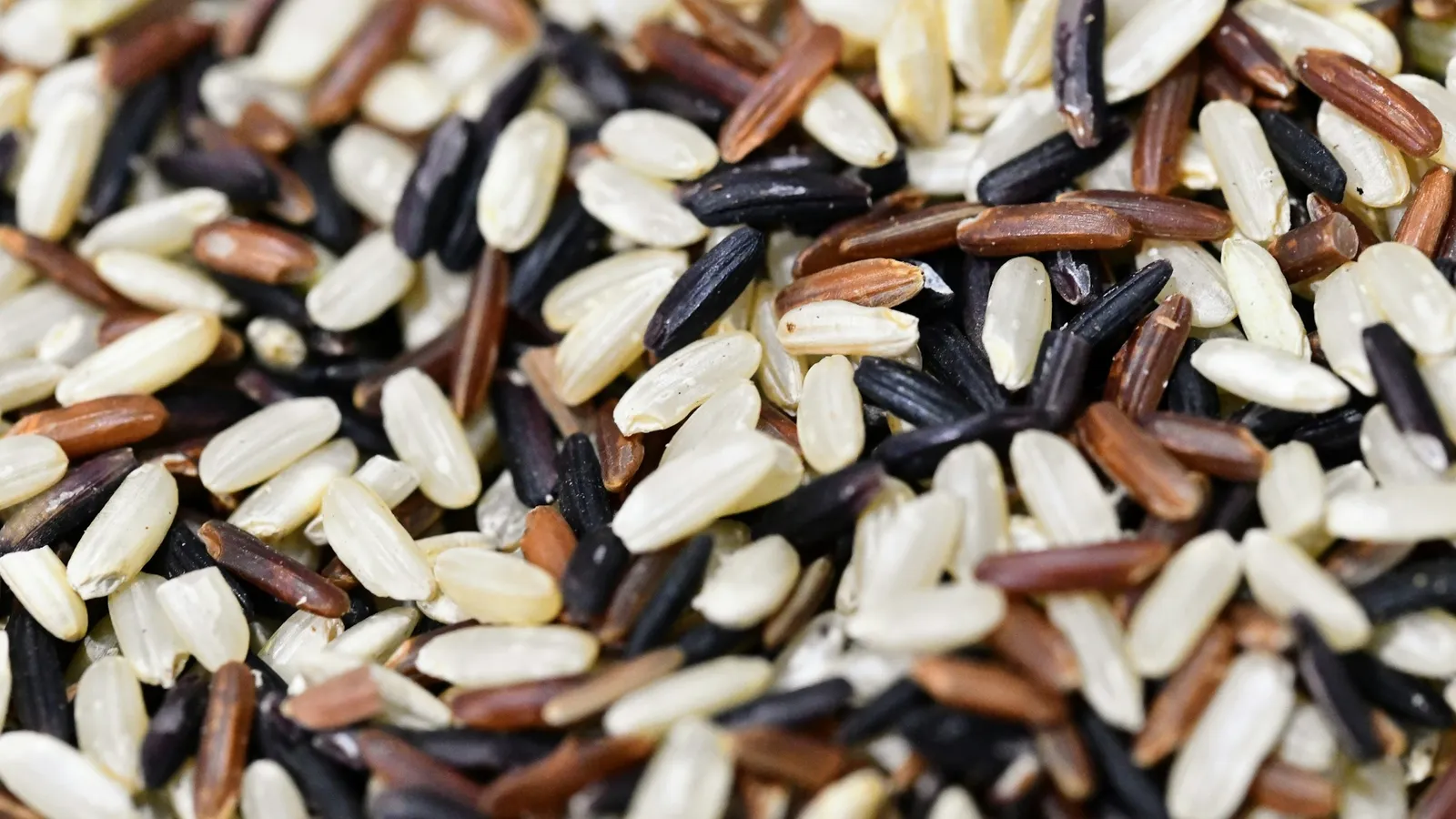
The protective part. Rough rice keeps its inner "silver skin" (pericarp) and germ. The antineuritic principle was mainly there, and could be extracted with water or alcohol.
Not simple starvation. Adding meat to a starchy diet prevented weight loss but not the disease.
What did the prison survey show?
At Eijkman's request, Vorderman, the civil medical inspector for Java, surveyed prisons in Java, where some served polished rice and others rough rice. The enquiry covered 101 prisons with almost 300,000 inmates. Beriberi was about 300 times more common where polished rice was the staple.
After Eijkman left, his colleague Grijns continued the work. The biography notes Eijkman's view that the cause was the lack of a vital substance in the rice's outer layer, "the concept of vitamins". The Nobel facts page adds that the substance was later named vitamin B1.
Worked example: how little vitamin is enough?
In the lecture, Eijkman reports that Jansen and Donath isolated the crystalline antineuritic vitamin from rice bran in Batavia, and found that 2 mg per 1 kg of polished rice was enough to protect birds. He gives this as a ratio of 1 : 500,000.
Check it:
1 kg = 1,000,000 mg.
2 mg ÷ 1,000,000 mg = 1 ÷ 500,000.
So one part in half a million of the diet made the difference between paralysis and health. A common slip is to write 1 : 5,000,000 by mixing grams and kilograms.
What can a student take from Eijkman's way of working?
Hold your theory loosely. He started looking for a germ. The evidence pointed to food, and he followed it.
Use natural experiments. The cook and the prisons gave comparisons he could not have designed alone.
Rule out the obvious alternatives one by one: spoilage, starvation, infection.
The biography says he "continuously warned his students against the acceptance of dogmas". That is advice for any exam answer that starts with a memorised line.
For questions on deficiency diseases and their causes, the Fermi Concept Library covers every concept in physics, chemistry, biology, mathematics and computing, so you can link each vitamin to what it does instead of memorising a table.
Next step: write out Eijkman's four checks as a table of claim, test and result in your notebook.