On this page
Your NCERT chapter on biological classification sorts life into five kingdoms and puts archaebacteria inside Monera, with one short paragraph. That paragraph hides one of the biggest surprises in twentieth-century biology. Carl Woese showed that these microbes are as different from ordinary bacteria as bacteria are from us. This post covers how he found out, what you need for your exam, and a worked example of the method.
Who was Carl Woese?
Woese was a microbiologist who lived from 1928 to 2012 and worked at the University of Illinois. A former student, Kenneth Luehrsen, wrote a memoir of working in his lab. It describes a scientist who preferred research to teaching and chose to start with a fundamental question: how did microbes evolve from the earliest life?
In 2003 he received the Crafoord Prize from the Royal Swedish Academy of Sciences, as Patrick Forterre recalls in an essay on Woese's legacy.
Why did he choose ribosomal RNA?
To trace ancestry back billions of years, Woese needed a molecule that every organism has and that changes slowly. Luehrsen explains the choice. A protein such as cytochrome c is not found in all organisms and probably changes too fast. Ribosomal RNA (rRNA) is in every cell, because every cell makes proteins, and it evolves slowly because its job is so important. Woese called it a kind of "ancient molecular text".
Full rRNA sequencing was not possible when he started in the late 1960s. So his lab built a workaround. They cut the 16S rRNA with an enzyme, ribonuclease T1, which cuts after every G. They separated the short pieces in two directions on paper and film, read their sequences, and stored each organism's list of pieces as a "catalogue". The more pieces two organisms shared, the more closely they were related.
How were the archaea found?
Woese's lab began working with Ralph Wolfe's lab on methanogens, microbes that make methane. Luehrsen notes they were already known to be unusual: they lacked peptidoglycan in their cell walls. When Woese decoded their rRNA catalogues, it was immediately clear that they were unlike any bacteria he had analysed.
In 1977 Woese and George Fox published Phylogenetic structure of the prokaryotic domain: the primary kingdoms in PNAS. Their abstract states that life represents one of three aboriginal lines of descent: the eubacteria (all typical bacteria), the archaebacteria (including the methanogens), and the urkaryotes, the line that leads to the cytoplasm of eukaryotic cells.
In 1990 Woese, O. Kandler and M. L. Wheelis went further in Towards a natural system of organisms. They argued that neither the five-kingdom system nor the simple prokaryote-eukaryote split reflects this three-way division. They proposed a new rank above kingdom, the domain: Bacteria, Archaea and Eucarya.
What does NCERT say about archaebacteria?
The current NCERT Class 11 Biology chapter 2, Biological Classification (2026-27 reprint), says archaebacteria:
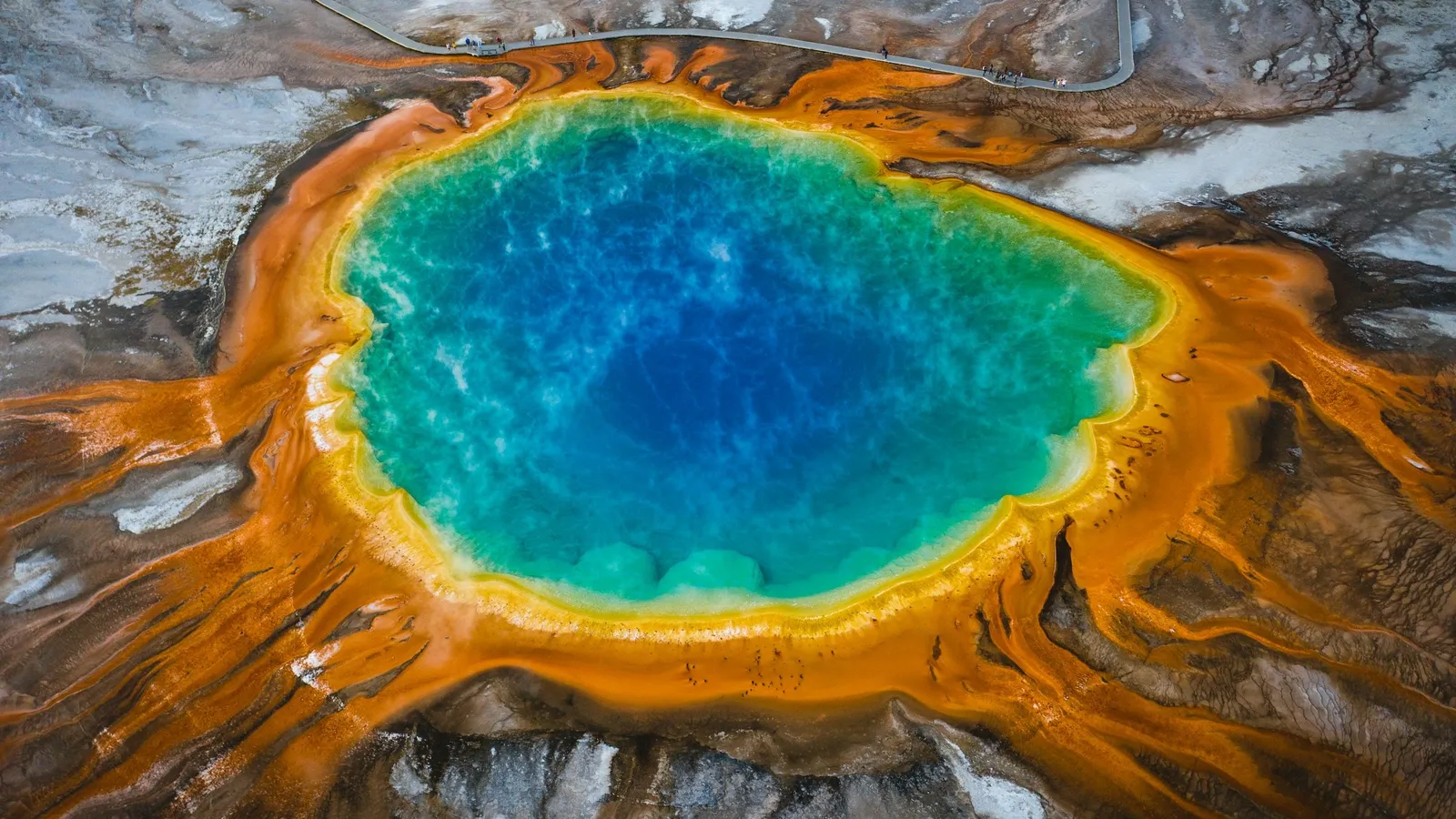
live in some of the harshest habitats: extremely salty areas (halophiles), hot springs (thermoacidophiles) and marshy areas (methanogens);
differ from other bacteria in their cell wall structure, which helps them survive extreme conditions;
include methanogens in the gut of ruminants such as cows and buffaloes, which produce methane (biogas) from their dung.
Worked example: reading relatedness from sequences
Here is the logic of Woese's method with made-up sample sequences, 20 bases each.
Organism A: GAUCCGAUGCAUCGGAUACG
Organism B: GAUCCGAUGCAUCGGAUUCG
Organism C: GACCCGUUGCUUCGCAAACG
Compare position by position. A and B differ at 1 position out of 20, so they are 19/20 = 95% identical. A and C differ at 5 positions (3, 7, 11, 15 and 17), so they are 15/20 = 75% identical. Conclusion: A and B shared a common ancestor more recently than either did with C.
Woese did this with real rRNA pieces from many organisms. The methanogens stood apart from all bacteria, the way C stands apart here.
Common mistakes to avoid:
"Archaebacteria are just old bacteria." The name suggests age, but the point is that they form a separate line of descent.
"They only live in extreme places." NCERT's own example puts methanogens in a cow's gut.
Mixing up the habitats. Halophiles: salt. Thermoacidophiles: hot springs. Methanogens: marshes and ruminant guts.
For the full chapter, read our guide to biological classification for NEET, and for the five-kingdom system Woese argued against, see Robert Whittaker and the five kingdoms.
What can a student learn from how Woese worked?
Pick the right measuring tool. The choice of rRNA was the discovery's foundation.
Build the method if it does not exist. His lab spent years setting up cataloguing before the big result.
Trust data that disagrees with the textbook. The methanogen catalogues did not fit, and he followed them.
When a classification term will not stick, the Fermi Concept Library covers every concept in biology with its own lesson.
Make a three-column table from memory, halophiles, thermoacidophiles and methanogens, and write one habitat and one fact under each.