

On this page
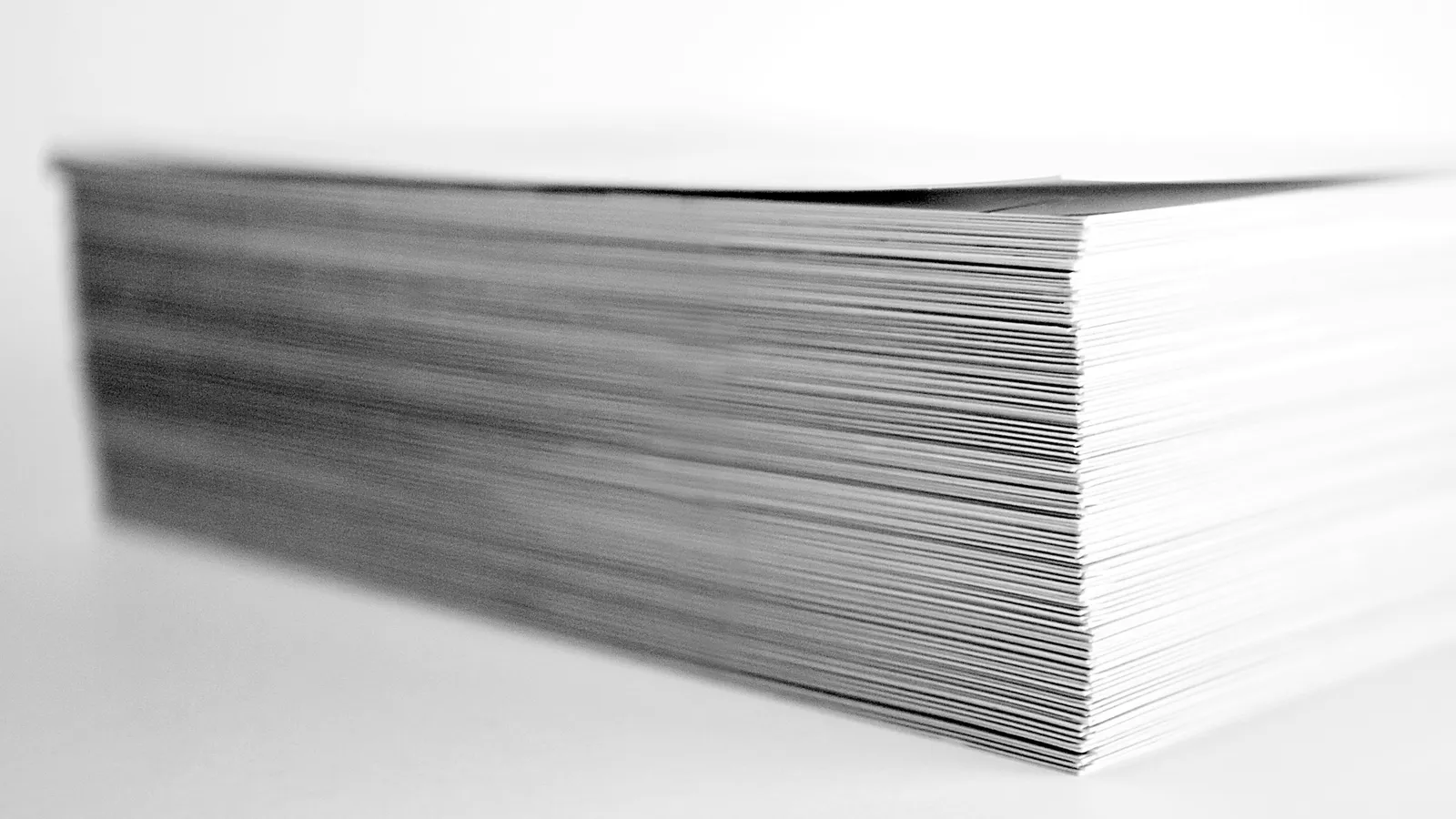
Push a neat stack of coins so it leans, and the stack still holds the same amount of metal. That simple observation, made precise, is Cavalieri's principle. It let a 17th-century monk find areas and volumes decades before calculus, and it gives a clean proof of a formula you memorise in Class 10.
Who was Bonaventura Cavalieri?
Cavalieri was born Francesco Cavalieri in Milan in 1598 and died in Bologna on 30 November 1647, according to his MacTutor biography. He joined the small religious order of the Jesuati in 1615 and took the name Bonaventura. In Pisa he was taught geometry by Benedetto Castelli, who introduced him to Galileo's ideas, and he came to consider himself Galileo's disciple. MacTutor counts more than 100 letters from Cavalieri to Galileo between 1619 and 1641.
He was turned down for several chairs, but in 1629 Bologna gave him its chair of mathematics, helped by Galileo's letter of support, which MacTutor quotes: "few, if any, since Archimedes, have delved as far and as deep into the science of geometry." He held the chair until his death, published eleven books there despite gout that left him unable to walk by the end, and helped bring logarithms into use in Italy.
What is the method of indivisibles?
He finished his *Geometria* in December 1627 and published it in 1635. Its idea: a flat shape can be thought of as made of all its parallel line segments, and a solid as made of all its parallel plane slices. MacTutor gives the two resulting rules:
If two flat shapes lie between the same pair of parallel lines, and every line parallel to them cuts both shapes in equal lengths, the shapes have equal area.
If two solids lie between the same pair of parallel planes, and every plane parallel to them cuts both in equal areas, the solids have equal volume.
The method was not rigorous, and Paul Guldin attacked it, arguing that no number of lines can make up a surface. Cavalieri answered with a clearer book, *Exercitationes geometricae sex* (1647). A detailed modern study is Kirsti Andersen's "Cavalieri's method of indivisibles" (*Archive for History of Exact Sciences*, 1985). The idea spread fast: the MacTutor page on calculus symbols shows John Wallis in 1655 introducing the symbol ∞ while building on "Bonaventura Cavalieri's Geometry of Indivisibles."
Worked example: the volume of a hemisphere
Your NCERT Class 10 chapter on surface areas and volumes uses the hemisphere volume (2/3)πr³ in combined-solid problems. Cavalieri's principle shows where it comes from.
Take a hemisphere of radius R, flat face down. Next to it, take a cylinder of radius R and height R with a cone removed: the cone's tip at the bottom centre and its base the top of the cylinder.
Hemisphere slice at height h. The slice is a circle of radius √(R² − h²), so its area is π(R² − h²).
Cylinder-minus-cone slice at height h. The cone's radius at height h equals h, so the slice is a ring with area πR² − πh² = π(R² − h²).
Compare. The areas match at every height, so the volumes are equal.
Volume. Cylinder minus cone = πR²·R − (1/3)πR²·R = (2/3)πR³.
With numbers: for R = 3 cm, the cylinder is 27π = 84.82 cm³, the cone 9π = 28.27 cm³, and the hemisphere 18π = 56.55 cm³. At h = 2 cm both slices have area π(9 − 4) = 5π cm².
A second check: a cylinder of radius 2 cm and height 10 cm has volume π × 4 × 10 = 40π = 125.66 cm³. Lean it like the coin stack, keeping the vertical height 10 cm, and every slice is still a circle of area 4π, so the volume is unchanged.
Common mistakes with Cavalieri's principle
Comparing only base and height. A cone and cylinder with the same base and height have different volumes (1 : 3) because their slices differ.
Using slant height. For a leaning solid, use the perpendicular height between the parallel planes.
Radius against diameter. Halve the diameter before squaring.
Our guide to surface areas and volumes in Class 10 has more practice. Slicing into thin pieces and adding is also the idea behind integration, which the JEE (Main) 2026 syllabus uses for areas. Check the syllabus for your exam year.
If you can follow the slices but not picture them, Fermi's Simulation Lab has interactive simulations for ideas that are easier to see than read.
What can a student take from Cavalieri?
Cavalieri took on a hard problem, the volume of a curved solid, by comparing it slice by slice with something he already knew. When you are stuck, ask whether your shape matches a familiar one at every level.
Practice routine for this week:
Use slices to show that a cone and a square pyramid with equal base areas and equal heights have equal volumes.
Find the volume of a hemispherical bowl of inner radius 7 cm, taking π = 22/7.
Explain why a twisted stack of 50 identical square tiles has the same volume as a straight one.
Start with step 3: if you can explain the tiles, you understand the principle.


