On this page
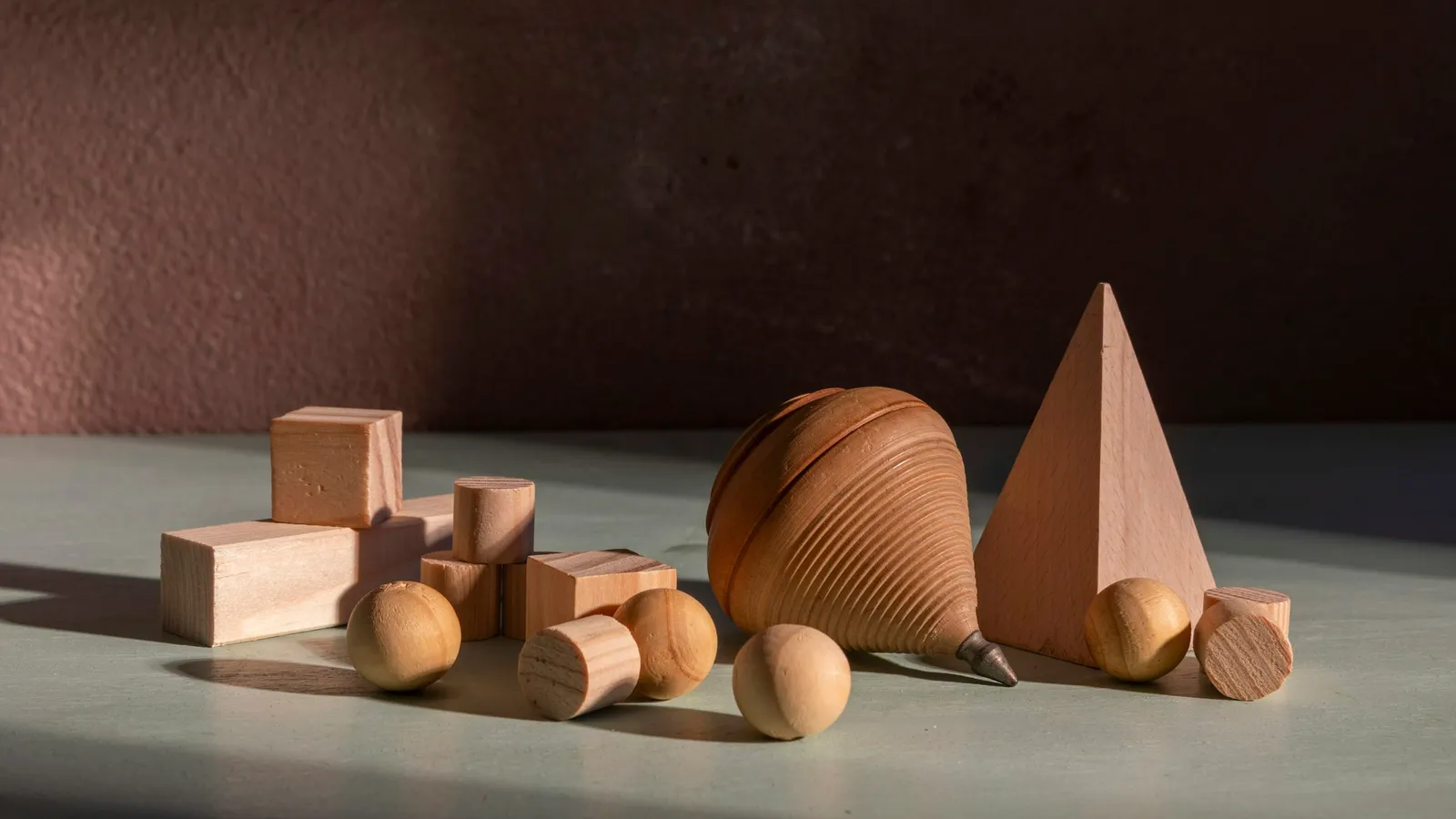
A toy shaped like a cone on a hemisphere, a capsule, a tent: combined solid questions look different each time, but they test one idea. Volumes add up, and surface areas only count what is on the outside. This post explains that rule, works three examples with full numbers and lists the slips that lose marks.
What is in the Class 10 syllabus for surface areas and volumes?
The CBSE Mathematics curriculum for Class X (2026-27) limits this topic to "surface areas and volumes of combinations of any two of the following: cubes, cuboids, spheres, hemispheres and right circular cylinders/cones". It sits in the Mensuration unit with areas related to circles, which carries 10 of the 80 theory marks.
The NCERT Class 10 chapter on surface areas and volumes, in its 2026-27 reprint, has two working sections: surface area of a combination of solids and volume of a combination of solids. Frustums and converting one solid into another (melting and recasting) are not in the current chapter, though older guide books still carry them. Check the curriculum for your own exam year.
You need these formulas, with r for radius, h for height and l for slant height:
Cube of side a: surface area 6a², volume a³.
Cuboid: surface area 2(lb + bh + hl), volume lbh.
Cylinder: curved surface 2πrh, volume πr²h.
Cone: curved surface πrl, where l = √(r² + h²), volume (1/3)πr²h.
Sphere: surface 4πr², volume (4/3)πr³.
Hemisphere: curved surface 2πr², total surface 3πr², volume (2/3)πr³.
Why don't surface areas simply add?
When you stick a cone onto a hemisphere, the flat circle of the cone and the flat circle of the hemisphere press against each other. Neither is on the outside any more. So the surface area of the toy is the curved surface of the cone plus the curved surface of the hemisphere, with no flat circles at all. NCERT frames it as the question of how much paint you would need to colour the toy.
Volume has no such problem. The space inside the toy is the space inside the cone plus the space inside the hemisphere. If a part is scooped out, subtract its volume.
Three worked examples
Use the value of π the question gives. With π = 22/7, radii that are multiples of 7 give clean answers, which is why so many questions use them.
Example 1: cone on a hemisphere. A toy is a cone of radius 7 cm and height 24 cm mounted on a hemisphere of the same radius. Find its surface area and volume.
Slant height: l = √(7² + 24²) = √(49 + 576) = √625 = 25 cm.
Surface area = curved surface of hemisphere + curved surface of cone = 2πr² + πrl = πr(2r + l) = (22/7) × 7 × (14 + 25) = 22 × 39 = 858 cm².
Volume = (2/3)πr³ + (1/3)πr²h = (1/3)πr²(2r + h) = (1/3) × (22/7) × 49 × (14 + 24) = (1/3) × 22 × 7 × 38 = 5852/3 ≈ 1950.67 cm³.
Example 2: a capsule. A capsule is a cylinder with a hemisphere at each end. The radius is 7 mm and the cylindrical part is 20 mm long. Find its surface area and volume.
The two hemispheres together make one sphere. Surface area = 2πrh + 4πr² = 2 × (22/7) × 7 × 20 + 4 × (22/7) × 49 = 880 + 616 = 1496 mm².
Volume = πr²h + (4/3)πr³ = (22/7) × 49 × 20 + (4/3) × (22/7) × 343 = 3080 + 4312/3 ≈ 3080 + 1437.33 = 4517.33 mm³.
Note the total length of this capsule is 20 + 7 + 7 = 34 mm. If a question gives the total length, subtract both radii to get the cylinder's length.
Example 3: a hollow scooped out. A wooden cube of side 10 cm has a hemispherical hollow of diameter 7 cm scooped out of one face. Find the new surface area and volume.
Surface: the cube had 6 × 10² = 600 cm². Scooping removes a flat circle of area πr² from the top face, but adds the curved inside of the hollow, 2πr². With r = 3.5 cm, the new area is 600 − πr² + 2πr² = 600 + πr² = 600 + (22/7) × 12.25 = 600 + 38.5 = 638.5 cm².
Volume: 1000 − (2/3)πr³ = 1000 − (2/3) × (22/7) × 42.875 ≈ 1000 − 89.83 = 910.17 cm³.
The surprise here is that the surface area goes up when you remove wood, because the curved hollow is larger than the circle it replaces.
What mistakes lose marks in combined solid questions?
Adding total surface areas. Using 3πr² for the hemisphere in Example 1 counts a flat circle that is hidden inside the toy.
Height in place of slant height. The curved surface of a cone is πrl, not πrh.
Using diameter as radius. Example 3 gives a diameter of 7 cm; the radius is 3.5 cm.
Mixed units. If radius is in mm and height in cm, convert first. Areas then come in square units and volumes in cubic units.
Rounding too early. Keep fractions until the last line, as in 5852/3.
The sample paper for this session has a cylinder-and-cone tent and a hemisphere-and-cone toy among its long questions, so expect this shape in Section D or E (CBSE Mathematics Standard sample paper 2026-27). For more common slips across the whole syllabus, see our list of Class 10 maths mistakes.
A practice routine for this chapter
Day 1: Write the formula list from memory. Check it against the list above.
Day 2: For each NCERT example, draw the solid, shade the surfaces you could paint and write which formula each shaded part needs. Do not calculate yet.
Day 3: Now solve the NCERT exercise questions with the shading habit, keeping fractions to the end.
Day 4: Make up one combination yourself, such as a cylinder with a cone on top, and solve it for both surface area and volume.
Before the exam: One timed long-answer question every few days.
Solids are easier to picture when you can turn them around. The Fermi Simulation Lab has interactive simulations for ideas that are easier to see than to read, which helps when you cannot tell which faces are hidden.
Pick one NCERT combined-solid question today and shade the paintable surfaces before writing a single formula.