

On this page
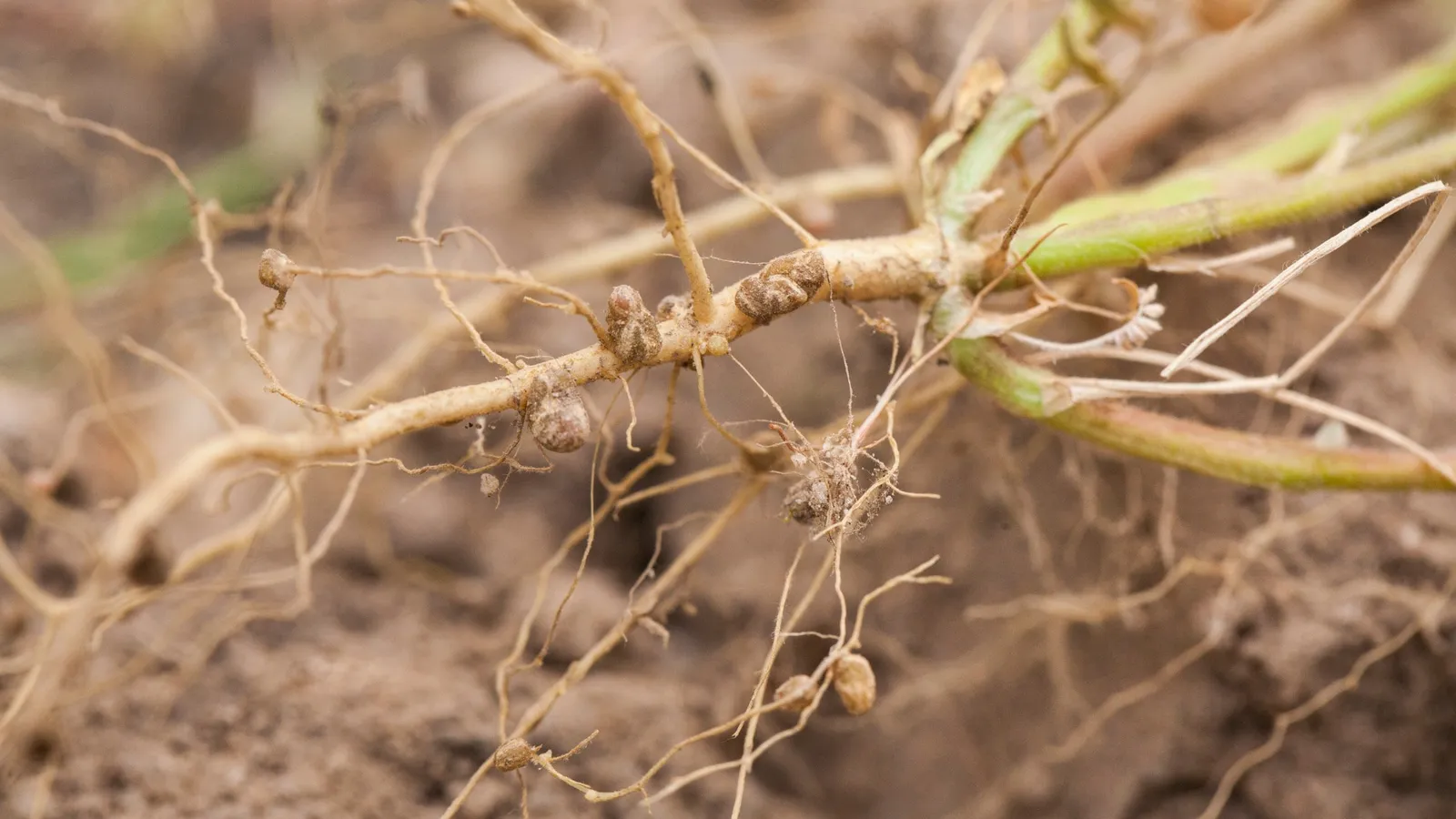
Pull up a moong, chana or groundnut plant and you will often find small round lumps on its roots. For centuries, people who noticed them guessed wrong about what they were. In 1888 a Dutch microbiologist, Martinus Beijerinck, took the bacteria out of those lumps and grew them by themselves. That step helped turn a farmer's old observation, that legumes enrich the soil, into textbook biology.
What did Beijerinck do in 1888?
Beijerinck took the microbe living inside legume root nodules and grew it in pure culture, meaning a culture containing only that one kind of organism. A 1976 review of nodule research in the Great Basin Naturalist puts it plainly: the causative organism "was isolated in pure culture by Beijerinck in 1888 and named by him as Bacillus radicicola", a name later changed to Rhizobium leguminosarum (Farnsworth, Romney and Wallace, 1976).
He published the work in the German journal Botanische Zeitung, in issues dated 16, 23 and 30 November 1888 (Shurtleff and Aoyagi, History of Research on Nitrogen Fixation in Soybeans). The same chronology records that the German botanist Bernhard Frank renamed the organism Rhizobium leguminosarum in October 1889.
Beijerinck was born in Amsterdam on 16 March 1851. He taught microbiology at the agricultural school in Wageningen and, from 1895, at the Polytechnic in Delft, where he founded the Delft School of Microbiology (Wikipedia: Martinus Beijerinck).
What was known before Beijerinck isolated Rhizobium?
The nodules themselves were old news. The 1976 review traces drawings of them to 1542, and notes that Marcello Malpighi in 1679 took them for galls caused by insect larvae (Farnsworth et al., 1976). The same review records that Woronin found bacteria inside nodules in 1866 but considered the nodules pathological outgrowths.
The turning point came from Germany. At the agricultural research station in Bernburg, Hermann Hellriegel found in 1886 that legumes can use free nitrogen from the air by forming root nodules (Hochschule Anhalt). With Hermann Wilfarth he grew peas in calcined (strongly heated) soil and added leachings from fertile soil to some pots: those peas formed nodules and grew well, while peas without the soil extract grew poorly and died early (Wikipedia: Hermann Hellriegel).
That experiment showed that something living in soil caused the nodules and the nitrogen gain. It did not show what that something was.
Did the pure culture prove bacteria fix nitrogen in legumes?
It supplied the missing piece. According to the 1976 review, Hellriegel, Wilfarth and Atwater had shown between 1884 and 1886 that nodules are caused by a bacterial organism and that nitrogen is fixed in them; Beijerinck then isolated that organism (Farnsworth et al., 1976). The review concludes that by 1890 the significance of nitrogen fixation in leguminous plants "had been firmly established".
So the honest answer is that no single paper did it. A soil-transfer experiment plus a named, cultured organism made the case together. Today we know the bacteria fix nitrogen inside the nodule, where a protein called leghaemoglobin gives the nodule interior its typical pink colour (David Dalton, Reed College).
How can you check the evidence yourself?
You can repeat the observation half of this story in a pot on a balcony. Here is a weekend plan:
Sow a few moong or chana seeds in ordinary garden soil.
Once the plants are well grown and leafy, gently wash the roots of one plant in a bucket of water.
Look for round lumps on the roots, then cut one in half with a clean blade.
Check the colour inside. Pink suggests leghaemoglobin, the oxygen-binding protein described above.
Write down what you saw, and what this cannot tell you: you have seen nodules, not proved what lives in them.
That last step is the habit Beijerinck's story teaches. When you answer a question on the discovery, use this chain of evidence:
Observation: nodules on legume roots (known for centuries).
Transfer: soil extract makes sterile-soil peas form nodules and thrive (Hellriegel and Wilfarth).
Isolation: the organism grown alone in pure culture (Beijerinck, 1888).
Naming: Bacillus radicicola, later Rhizobium leguminosarum (Frank, 1889).
If the chain of nitrogen in soil, air and plants still feels hazy, the Fermi Concept Library has a lesson for every concept in biology and chemistry, each with its place in the map, so you can see how nitrogen fixation connects to the rest.
What else did Beijerinck discover?
Nodule bacteria were only the start. In 1901 he showed that the bacterium Azotobacter chroococcum could fix atmospheric nitrogen (Wikipedia: Nitrogen fixation). He also invented the enrichment culture method, and in 1898 he reported that tobacco mosaic disease is caused by an agent smaller than a bacterium (Wikipedia: Martinus Beijerinck). You can read that second story in how Ivanovsky and Beijerinck discovered viruses.
His contemporary, Sergei Winogradsky, found bacteria that run on chemical energy. For the factory route to fixed nitrogen, read about Fritz Haber and ammonia synthesis.
If you want to work through the whole topic in one sitting, Fermi's AI tutor works out what you already know and builds a plan for the session, so you start with a clear next step.


