On this page
Your NCERT biology book gives the discovery of viruses in about five lines: Ivanovsky in 1892, Beijerinck in 1898, Stanley in 1935. Those lines hide a good story about how two scientists can look at almost the same result and draw very different conclusions. This post tells that story, links it to what NEET expects, and ends with a habit you can use in your own studying.
What does the NCERT textbook say?
The NCERT Class 11 chapter on Biological Classification (reprint 2026–27) says that Dmitri Ivanowsky (1892) recognised certain microbes as the cause of mosaic disease of tobacco, and that these were smaller than bacteria "because they passed through bacteria-proof filters". It says M.W. Beijerinck (1898) showed that extract of infected tobacco plants could infect healthy plants, named the new pathogen "virus" and called the fluid *contagium vivum fluidum*, or infectious living fluid. It adds that W.M. Stanley (1935) showed viruses could be crystallised and that the crystals consist largely of proteins.
That is the version to learn for the exam. The history behind it is a little more interesting.
What did Ivanovsky actually find?
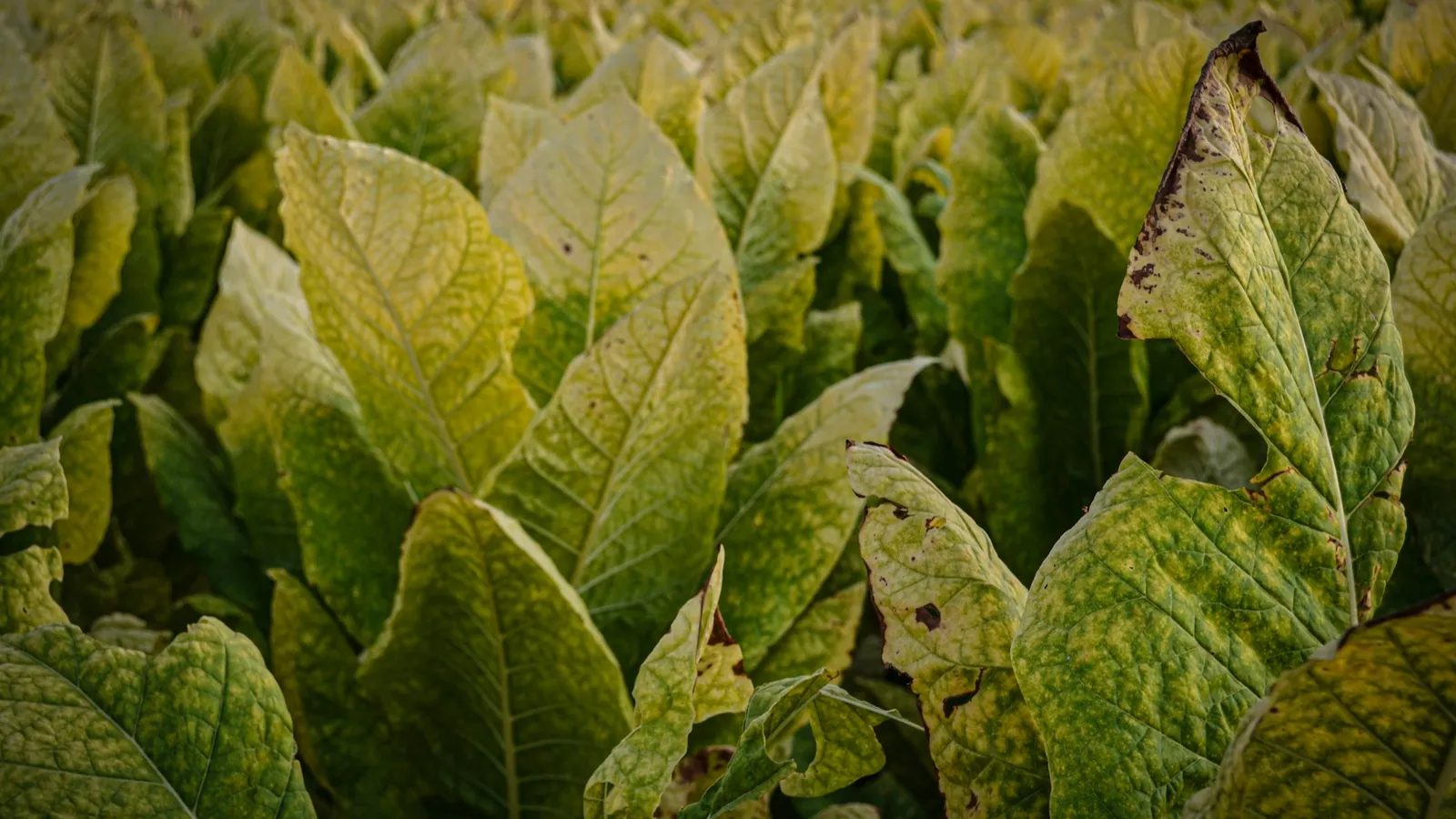
Tobacco mosaic disease mottles and wrinkles the leaves of tobacco plants, and it spreads when sap from a sick plant is rubbed onto a healthy one. In the 1890s the germ theory was at its height: every infectious disease was expected to have a bacterium behind it. Bacteriologists had bacteria-proof filters that held bacteria back.
Ivanovsky pushed the sap of diseased plants through such a filter and found it was still infectious. According to the plant virologist Lute Bos, writing in Philosophical Transactions of the Royal Society B (1999), Ivanovsky "had already in 1892 detected filterability of the agent of tobacco mosaic but kept looking for a microbe". As late as 1903 he claimed he had grown it in an artificial medium, as you would grow bacteria.
In other words, Ivanovsky had the key observation, but he explained it with the theory he already had: a microbe small enough to slip through.
What did Beijerinck add?
Martinus Beijerinck went further. Bos summarises his 1898 concept as "a filterable contagium vivum fluidum which multiplied in close association with the host's metabolism and was distributed in phloem vessels together with plant nutrients". The important word is *multiplied*. A poison or toxin in the sap would only get weaker as it was diluted and spread. An agent that multiplies inside living tissue is something new: not a bacterium that grows on its own, and not a chemical that just sits there.
The same year, Bos notes, Friedrich Loeffler and Paul Frosch showed that the agent of foot-and-mouth disease in cattle was also filterable. Yet Bos argues Beijerinck's idea did not change biology at once, because nobody had tools to study such an agent and it did not fit the bacterial model.
How did viruses finally become visible?
The answer came from chemistry. In 1935 Wendell Stanley published the isolation of a crystalline protein possessing the properties of tobacco mosaic virus in *Science*. A disease agent that formed crystals, like a chemical, was a shock. Bos records that within two years it was better described as a nucleoprotein, protein plus nucleic acid. Stanley shared the 1946 Nobel Prize in Chemistry with John Northrop "for their preparation of enzymes and virus proteins in a pure form".
Today tobacco mosaic virus is drawn as a protein coat (capsid) around RNA, as in NCERT's Figure 2.6. NCERT notes that plant viruses generally have single-stranded RNA, and that no virus contains both RNA and DNA.
Are viruses alive?
NCERT itself asks this question. Viruses are inert outside a host cell, but once inside they take over the cell's machinery to make copies of themselves. They are obligate parasites. The fair answer is that viruses sit on the boundary, which is exactly why Beijerinck struggled to find words for what he saw. For NEET, be ready to list the features that make them look non-living (crystallisable, no metabolism of their own) and living (genetic material, reproduction inside hosts, mutation).
For more on how microbes were first seen and named, read our posts on Antonie van Leeuwenhoek's microbes and on the whole chapter of biological classification for NEET.
What can a student learn from Ivanovsky and Beijerinck?
Separate the observation from the explanation. Ivanovsky's filter result was correct. His interpretation, a tiny bacterium, was not. When you get a surprising answer in a practical or a numerical, write down what you saw before you decide what it means.
Look for the test that splits two explanations. Beijerinck's dilution-and-passage logic separated "toxin" from "living agent". In physics and chemistry, ask which measurement would come out differently under each idea.
Expect resistance to new categories. Viruses did not fit the boxes of 1898. When a topic does not fit your notes, the fix may be a new heading, not forcing it into an old one.
If the line between viruses, viroids and prions still blurs for you, the Fermi Concept Library has every concept in biology with its own lesson and its place in the map, so you can see how each one connects to the next.
Before your next biology session, close your book and write the three dates, the three names and what each person showed; then check against NCERT.