On this page
When you squash an onion root tip in the biology practical and look for dividing cells, you are using a technique family that Indian scientists helped refine. Archana Sharma spent her career making chromosomes visible and asking what they reveal about how species form and how pollutants damage cells. This post covers her life and science, works through the chromosome arithmetic that NEET and Class 11 questions test, and ends with what students can learn from her.
Who was Archana Sharma?
The Indian National Science Academy biographical memoir of Archana Sharma, written by Sudhir K. Sopory, records that she was born on 16 February 1932 in Pune, the daughter of N. P. Mookherjee, a professor of chemistry at Bikaner. After a BSc from Bikaner she joined the Department of Botany at the University of Calcutta, where she took her MSc in 1951, a PhD in 1955 under Professor A. K. Sharma, and a DSc in 1960. She was the second woman to receive a DSc from the University of Calcutta.
She joined the botany faculty in 1967, became Professor of Genetics in 1972 and head of the department in 1980. With A. K. Sharma, whom she married, she built a School of Cytogenetics and the Centre for Advanced Studies in Cell and Chromosome Research. The memoir credits her with supervising about 70 PhD students and publishing over 400 research papers and ten books. She also founded the journal The Nucleus and edited it until 2007.
How did she make chromosomes easier to see?
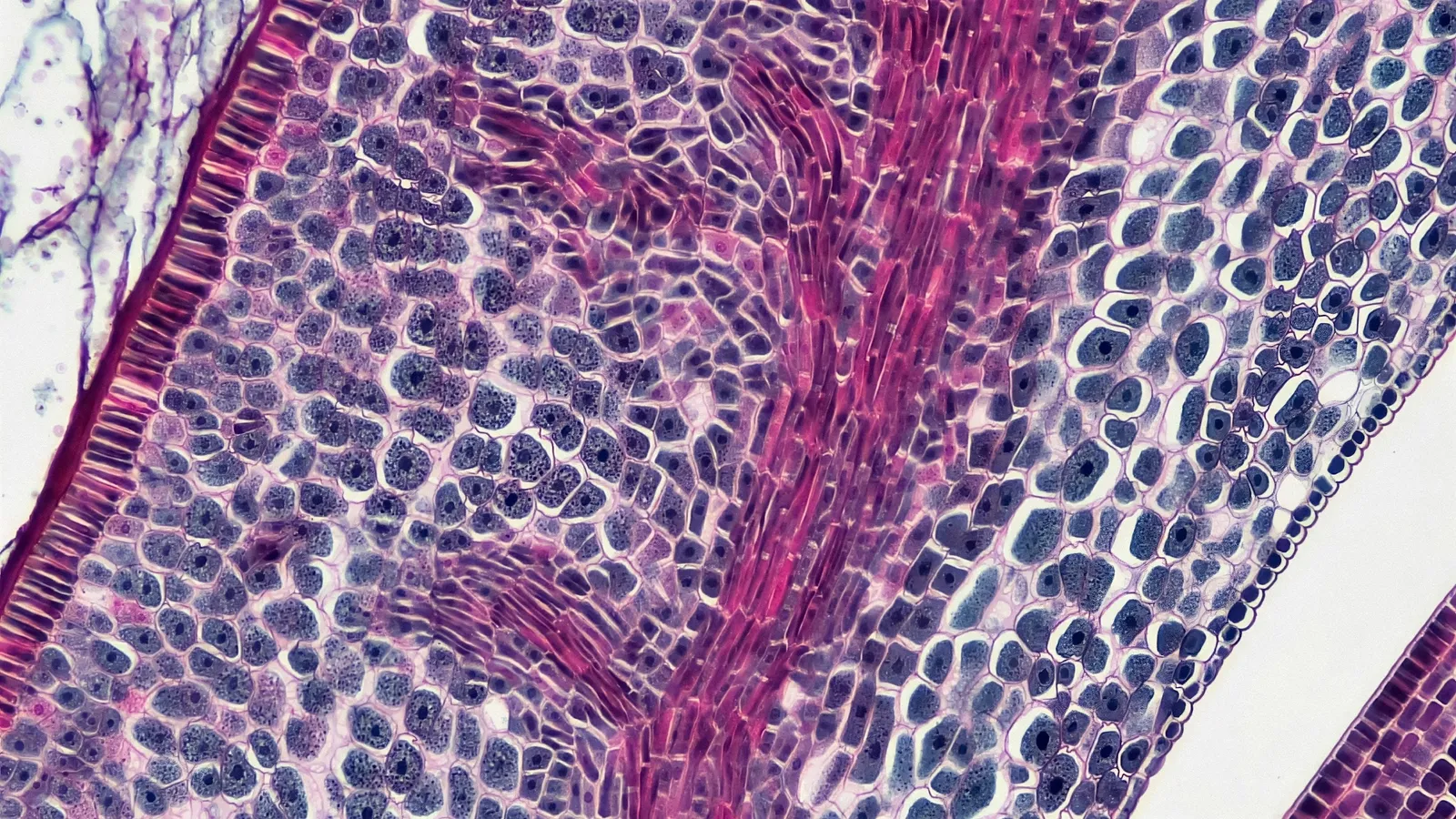
Chromosomes are only visible as separate bodies when a cell is dividing, and plant cells have tough walls. The memoir explains that the two Sharmas developed new methods of pre-treating and staining cells to show chromosome structure, which worked for many kinds of plant cells and became popular worldwide. They gathered the methods into the book Chromosome Techniques: Theory and Practice, published by Butterworths in London in 1965, with later editions in 1972 and 1980. A 1967 review of Chromosome Techniques in the journal Taxon shows how quickly it reached botanists abroad.
How can plants that do not use seeds form new species?
The memoir singles this out as one of the important contributions from her laboratory. In 1956 the two Sharmas published Fixity in chromosome number of plants in Nature, and in 1959 a review on chromosomal alterations in relation to speciation. The memoir summarises the finding. In many vegetatively reproducing plants, mostly monocots, the chromosome complement was not constant across body cells. Daughter shoots carried chromosomally variant cells, which could grow into plants with new genotypes. So even without sexual reproduction, a plant lineage can generate the variation that new species need.
Worked example: counting chromosomes
Take a hypothetical plant with 2n = 16.
Mitosis. Each daughter cell gets 16 chromosomes, the same as the parent.
Meiosis. Each gamete gets n = 8.
At metaphase of mitosis. There are 16 chromosomes but 32 chromatids, because each chromosome has been copied.
An error in one body cell. If one chromosome fails to separate (non-disjunction), one daughter cell gets 17 and the other 15.
Doubling. If the chromosomes copy but the cell does not divide, it becomes 4n = 32.
In a plant that spreads by shoots or bulbs, a shoot that grows from a 17-chromosome cell would pass 17 to every cell it makes, without any seed involved. That is the kind of variant her work described.
Common mistakes. Mixing up chromosomes and chromatids at metaphase, so 16 becomes 32 by mistake. Writing n for the gamete number of a polyploid without checking the basic set. And assuming every body cell must have the same count; her work shows that is not always true in plants. Our guide to the cell cycle, mitosis and meiosis has practice questions.
What else did she work on?
Later, the memoir notes, she moved into human genetics and environmental mutagenesis. Her group studied genetic polymorphism in populations of eastern India and the effects of pesticides and metals on chromosomes. Its work on arsenic in drinking water is singled out as especially noteworthy, and later papers tested whether plant products could reduce the damage, such as a 1999 study of black tea extract protecting mouse chromosomes against two heavy metals.
The memoir lists the honours. She received the Shanti Swarup Bhatnagar Prize of CSIR in biological sciences, and the Birbal Sahni Medal of the Indian Botanical Society in 1984. She was elected to all three national science academies, and was General President of the Indian Science Congress in 1986 and 1987. In 1984 she was awarded the Padma Bhushan. She died on 14 January 2008.
What can a student take from how she worked?
Good methods open questions. Before she could study speciation, she needed a reliable way to see chromosomes. Practise your lab techniques until they are routine.
Question the textbook rule. Chromosome number is usually constant, but she looked carefully and found where it is not.
Follow the problem. Her career moved from plant evolution to human health when the same chromosome tools could answer new questions.
Mentor widely. Seventy PhD students spread her methods across India.
For another Indian pioneer of plant chromosomes, read our profile of Janaki Ammal. If chromosome terms keep blurring together, the Fermi Concept Library covers every concept in physics, chemistry, biology, mathematics and computing.
Your next step: in your next practical, count the chromosomes in one clear metaphase cell and check your count against the species' known 2n number.