On this page
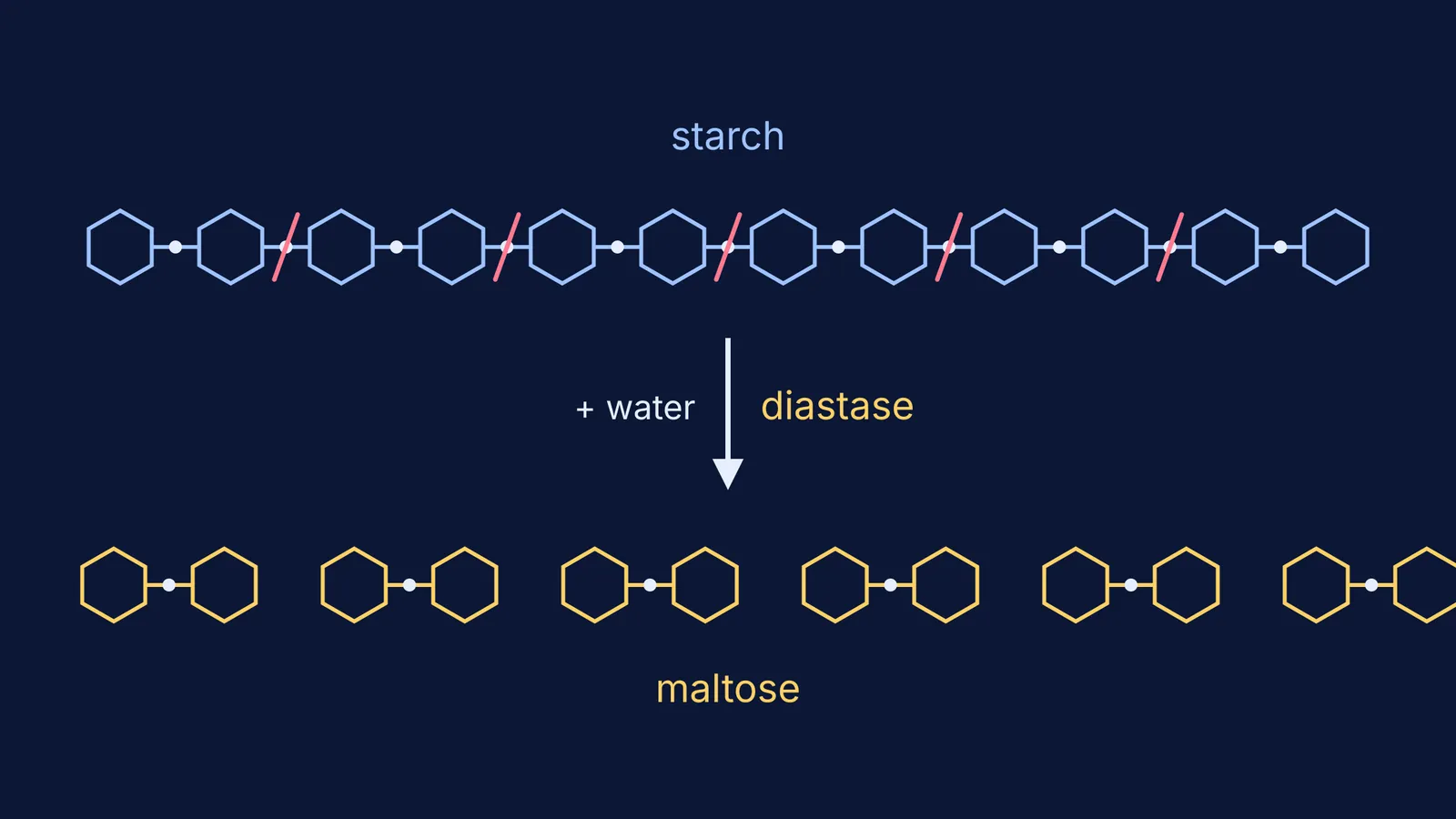
Every time you chew rice or roti, an enzyme in your saliva starts cutting starch into sugar. The first time anyone isolated such a substance, as a solid that could be dried and stored, was in 1833, when two French chemists, Anselme Payen and Jean-François Persoz, pulled it out of sprouting barley and called it diastase.
Who discovered the first enzyme?
Anselme Payen (1795 to 1871) was a French chemist also remembered for isolating and naming cellulose (Wikipedia: Anselme Payen). Jean-François Persoz (1805 to 1868) became a professor of chemistry at the University of Strasbourg in 1833 (Wikipedia: Jean-François Persoz). Wikipedia's diastase article calls them chemists at a French sugar factory (Wikipedia: Diastase).
Diastase is the name Payen and Persoz gave to an amylase complex they isolated from germinating barley and described in the Annales de chimie et de physique in 1833 (Christakopoulos and Topakas, Computational and Structural Biotechnology Journal, 2012).
How did Payen and Persoz get diastase out of malt?
Malt is barley that has been soaked and allowed to sprout. In a sprouting seed, stored starch turns into sugar. Payen and Persoz wanted to know what was doing it.
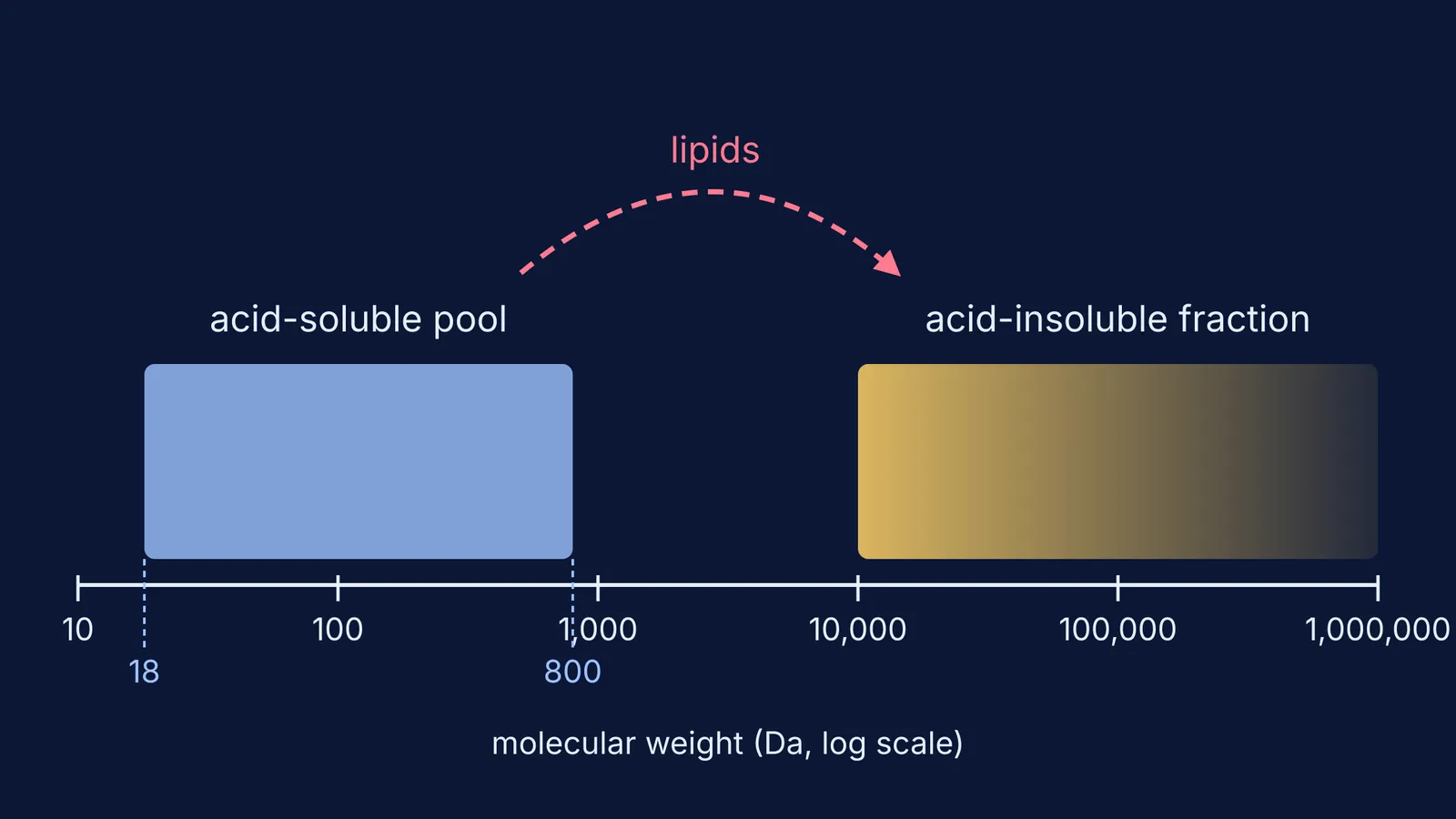
Their method had three steps. Make a watery extract of the malt. Add alcohol, so that a solid comes out of the solution. Dry that solid. A 1933 editorial marking the centenary records that they "precipitated by alcohol from such extracts a substance that could be dried and preserved and that had a powerful action on starch" (JAMA, 1933).
The Oxford Companion to Beer adds two observations: small amounts of diastase could liquefy starch to form sugars, and it was unstable at high temperatures (Craft Beer and Brewing, from The Oxford Companion to Beer). Remember that heat detail.
The name comes from the Greek diastasis, a parting or separation, because in a heated mash the starch turns into soluble sugar and the husk separates from the rest of the seed (Wikipedia: Diastase).
Why does diastase count as the first enzyme?
Others had seen starch break down before; in 1831 Erhard Friedrich Leuchs described saliva breaking down starch (Wikipedia: Amylase). What was new in 1833 was a separate, storable substance that kept its power outside the living seed. You could keep it in a jar and add it to starch whenever you liked.
The name stuck, too. The French scientist Émile Duclaux began giving enzymes the ending -ase in his 1899 Traité de Microbiologie, to honour the discoverers of diastase (Wikipedia: Diastase).
What did Payen and Persoz not know yet?
A lot. The same 2012 editorial sets out what followed (Christakopoulos and Topakas, 2012):
1835: Berzelius showed malt extract broke down starch more efficiently than sulphuric acid, and coined the word catalysis.
1836: Theodor Schwann named pepsin, the first enzyme prepared from animal tissue.
1876: Wilhelm Kühne proposed the word "enzyme".
1926: James Sumner purified and crystallised urease and identified it as a protein.
Even the sugar was not pinned down in 1833. Maltose is two glucose units joined by an α(1→4) bond, and its identity was confirmed by Cornelius O'Sullivan in 1872 (Wikipedia: Maltose). For the chemistry of that bond, read our guide to sucrose, maltose, starch and glycosidic links. For the next turning points, see Eduard Buchner and the yeast juice that fermented sugar and James Sumner and the proof that enzymes are proteins.
How can you see what diastase does?
You can repeat the logic of 1833 in a school lab with saliva, which carries its own amylase (Wikipedia: Amylase). The readout is the iodine test: starch and iodine together turn an intense blue-black (Wikipedia: Iodine-starch test). Do this with your teacher, and never taste anything in the lab.
Make a thin starch solution from a little cooled rice water.
Tube A: starch solution plus plain water.
Tube B: starch solution plus a little fresh saliva.
Tube C: starch solution plus saliva your teacher has boiled and cooled.
Predict each tube, wait as long as your teacher suggests, then add a few drops of iodine to each.
Check your result against this reasoning. Tube A should go blue-black, because nothing touched the starch. Tube B should stay pale or only faintly blue, because amylase has cut the starch into sugars. Tube C should go blue-black like A, because boiling destroyed the enzyme, just as heat stopped diastase. If B turns dark, the saliva sample may have been too small or the wait too short: change one thing and run it again.
If enzymes as catalysts still feel fuzzy after this, the Fermi Concept Library has a lesson for every concept in biology and chemistry, each with its place in the map, so you can see how enzymes connect to digestion and reaction rates.