

On this page
It is a familiar household problem: a forgotten plastic bag of vegetable scraps or a tightly packed kitchen bin starts to emit a foul odour. The reason comes down to oxygen, or rather, the lack of it.
What happens when food breaks down?
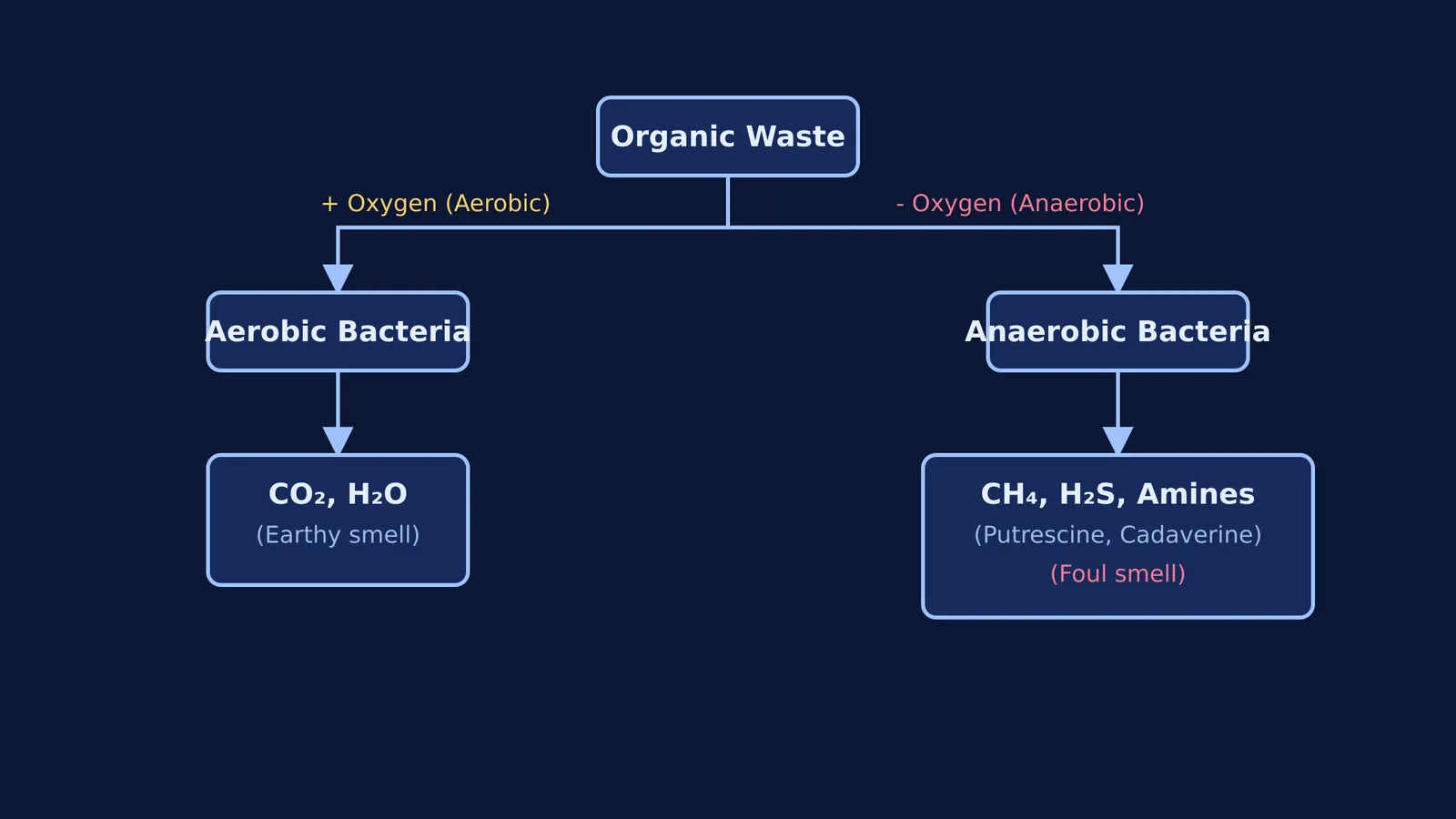
The decomposition of organic matter follows two distinct biological pathways, and the outcome depends entirely on whether oxygen is available. In a well-aerated compost pile, aerobic bacteria consume the food waste. They use oxygen to burn through carbon, releasing carbon dioxide and water vapour as the primary byproducts. Because this process is highly efficient and fully oxidises the carbon, it produces only a mild, earthy smell. You can see a similar aerobic breakdown of molecules in Respiration as an amphibolic pathway: where fats and proteins enter, which explores how living cells oxidise different fuels.
However, when kitchen waste is packed tightly into a plastic bin or sits in stagnant water, oxygen cannot reach the centre of the mass. The environment turns anaerobic, and specialised microorganisms take over. Without oxygen, these bacteria must rely on different chemical reactions to extract energy. Instead of harmless carbon dioxide, they produce methane, a potent greenhouse gas that traps 27 to 30 times more heat than carbon dioxide over a 100-year period. More importantly for your kitchen experience, these anaerobic bacteria also produce the foul-smelling trace gases that we associate with rot.
Why does rotting kitchen waste smell so bad?
The signature "rotten egg" stink of a decaying bin comes from hydrogen sulphide (H₂S). In an oxygen-free environment, anaerobic bacteria break down the sulphur compounds found in plant material and proteins. When these microbes digest sulphur-containing amino acids like cysteine and methionine, they release hydrogen sulphide gas. Human noses are incredibly sensitive to this chemical, and you can detect its odour at very low concentrations.
This sensitivity is an evolutionary defence mechanism to warn us of decaying matter. Hydrogen sulphide is frequently produced by the microbial breakdown of organic matter in swamps, sewers, and landfills. If you want to understand how waste is managed on a larger scale to prevent these gases from building up, read about Sewage treatment and BOD: the stages and the numbers behind them.
Where do the other foul smells come from?
Hydrogen sulphide is not the only chemical culprit. When bacteria break down the amino acids in protein-rich waste, they produce biogenic amines through a process called decarboxylation. Two of the most infamous examples are putrescine and cadaverine.
These diamines are responsible for the sickly sweet smell of rotting flesh and decaying matter. Their names describe exactly what they smell like, and they are both created when specific amino acids lose their carboxyl groups. Bacteria create cadaverine by breaking down the amino acid lysine. Similarly, putrescine is formed as a natural byproduct of protein decomposition, specifically when microbes digest arginine and ornithine.
They are so potent that humans can detect them at very low concentrations, warning us to stay away from the spoiled food.
If you are learning about these metabolic pathways, the Fermi Simulation Lab has interactive simulations for the ideas that are easier to see than to read, helping you picture how these functional groups behave during decomposition.
How can you stop the smell?
The secret to a smell-free compost pile is keeping the decomposition process aerobic. If a steady supply of oxygen is present, the anaerobic bacteria that produce hydrogen sulphide, putrescine, and cadaverine cannot survive.
Here is a simple checklist to keep your waste breakdown aerobic and odour-free:
Aerate the pile: Turn your outdoor compost regularly with a pitchfork to introduce fresh oxygen to the centre.
Add "browns": Mix wet kitchen scraps ("greens") with dry, bulky materials like torn cardboard, dry leaves, or wood chips. These coarse materials create structural air pockets.
Control moisture: Anaerobic bacteria thrive in soggy, waterlogged environments. Keep the bin damp like a wrung-out sponge, but never dripping wet.
Use breathable containers: If you collect food scraps in your kitchen for several days, use a container with air holes rather than a sealed plastic bag.
By actively managing the airflow and moisture, you encourage aerobic bacteria to do the work, efficiently turning your food waste into harmless carbon dioxide and water instead of noxious gases.


