

On this page
Why does a parked car get so hot inside in the sun?
A parked car acts as an efficient solar collector. When left in direct sunlight, the temperature inside the cabin rises much faster than most people expect. This rapid heating is driven by a miniature greenhouse effect, which traps solar energy inside the vehicle. The resulting heat can quickly reach dangerous levels, even on days when the outside weather feels mild.
The greenhouse effect inside a car
The process begins when short-wave solar radiation—visible light—passes through the car's transparent glass windows. The interior surfaces, such as the dashboard, seats, and steering wheel, absorb this light and begin to heat up.
As these surfaces become hot, they emit thermal energy in the form of long-wave infrared radiation. Unlike visible light, long-wave infrared radiation cannot easily pass back out through the glass. The heat becomes trapped, causing the air temperature inside the cabin to spike. If you are learning about heat transfer, the Fermi Simulation Lab has interactive simulations for the ideas that are easier to see than to read, which can help in visualising hard physics ideas like the greenhouse effect.
Because the dashboard sits directly under the windshield at a shallow angle, it absorbs the most direct sunlight. The steering wheel and front seats also receive intense solar radiation. A 2018 study by researchers at Arizona State University and the University of California San Diego (10.1080/23328940.2018.1468205) compared vehicles parked in the sun versus the shade. They found that after one hour parked in the sun, a car's dashboard reached an average of 156 °F (69 °C), while the cabin air reached 118 °F (48 °C). The steering wheel averaged 128 °F (53 °C), which is hot enough to cause discomfort or even minor burns upon contact. Parking in the shade significantly lowered these temperatures, keeping the dashboard closer to 118 °F (48 °C), but the interior air still reached levels unsafe for occupants.
What happens when you leave windows cracked?
Many people assume that heat behaves like a simple fluid that will flow out of any available opening. They believe that rolling down the windows by an inch or two will create a cross-breeze or allow the trapped hot air to escape, keeping the car safe. However, research proves this is completely ineffective against the overwhelming power of the greenhouse effect.
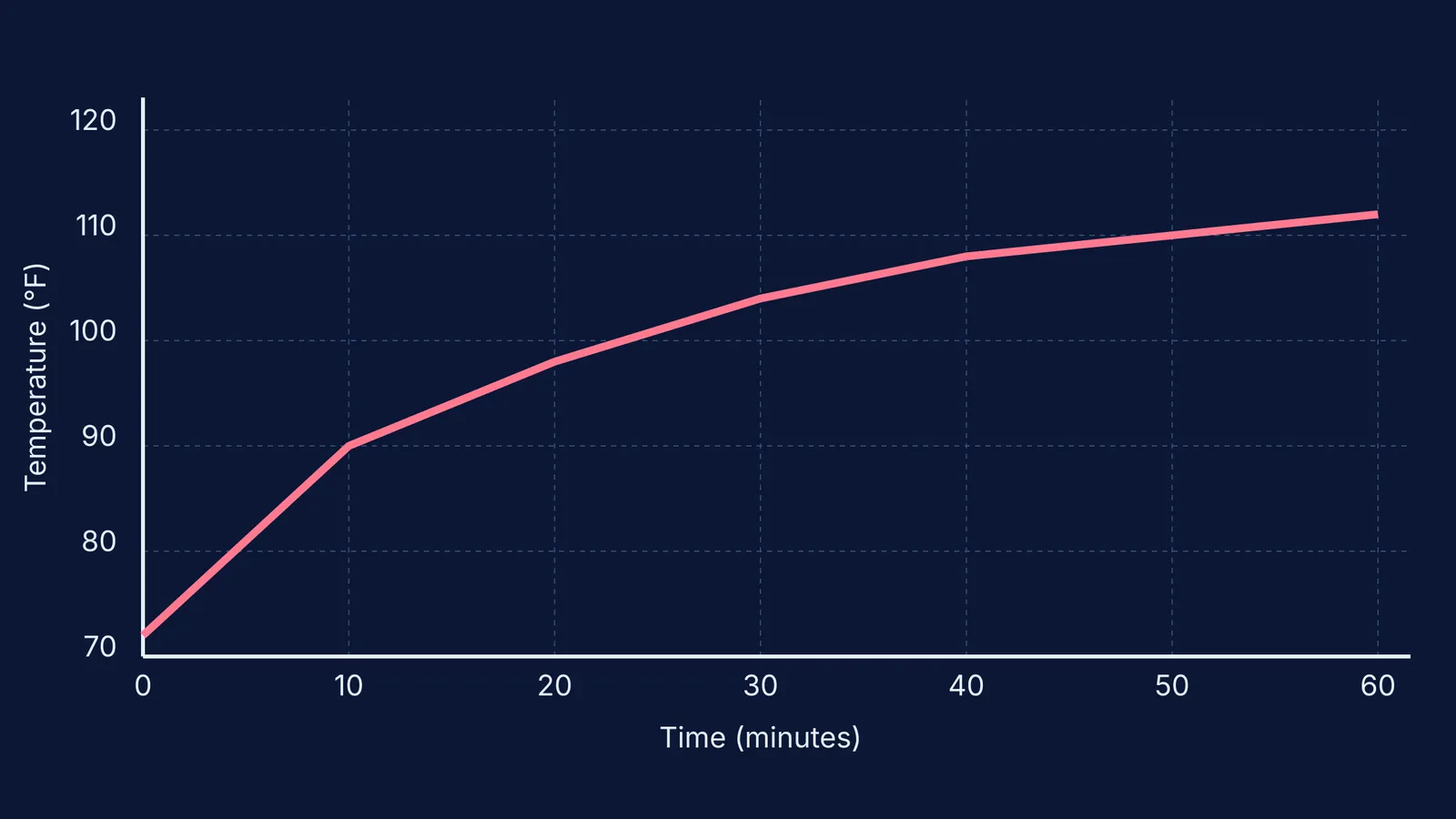
A 2005 study published in *Pediatrics* by Stanford University researchers (10.1542/peds.2004-2368) measured the temperature rise in parked vehicles on sunny days with varying ambient temperatures. The researchers tested cars with windows fully closed and cars with windows left "cracked" open by about 1.5 inches. They found that cracking the windows had a negligible effect on both the rate of heating and the final maximum temperature.
The same study revealed how quickly the danger escalates: 80% of the total temperature increase happens in the first 30 minutes. On average, the internal temperature of the car increased by 40 °F (22 °C) within one hour, regardless of whether the starting temperature outside was 72 °F or 96 °F. If you want to know how to solve physics problems step by step, this is a classic example of rapid exponential change where everyday intuition often fails us. Even running the air conditioning to pre-cool the car only delayed the inevitable temperature spike by about five minutes.
The danger to children and pets
The human body maintains a constant core temperature of around 98.6 °F (37 °C) through thermoregulation processes like sweating. When the environment becomes significantly hotter than the body, these cooling mechanisms are overwhelmed, and the body struggles to cool itself down.
This is particularly dangerous for infants and toddlers. Children have a smaller surface area relative to their body mass compared to adults, meaning they absorb heat faster and lose it more slowly. According to the 2018 ASU study (10.1080/23328940.2018.1468205), a child trapped in a hot car can reach a dangerous core body temperature of 104 °F (40 °C)—the threshold for clinical heatstroke—in about one hour when parked in the sun. If the car is parked in the shade, it only buys roughly one extra hour before reaching the same lethal temperature. Because the heating happens so quickly and a child's physiology is so vulnerable, there is no safe amount of time to leave a child or pet unattended in a vehicle.
A practical checklist to prevent hot car incidents
It is easy for a busy parent or caregiver to experience a lapse in memory and accidentally leave a quiet child in the back seat. To build a foolproof habit, use this "Look Before You Lock" routine:
Leave an essential item in the back. Place your bag, laptop, or left shoe on the floorboard behind the driver's seat. You will have to open the back door to retrieve it before leaving the car.
Keep a stuffed toy in the car seat. When you buckle your child in, move the toy to the front passenger seat as a visual reminder that the child is in the back.
Lock the car at home. Always keep your vehicle locked when parked in the driveway or garage, and store the keys out of reach so children cannot climb inside to play.
Set an alarm. If someone else is driving your child to school or daycare, set an alarm on your phone to call them and confirm the drop-off.


