

On this page
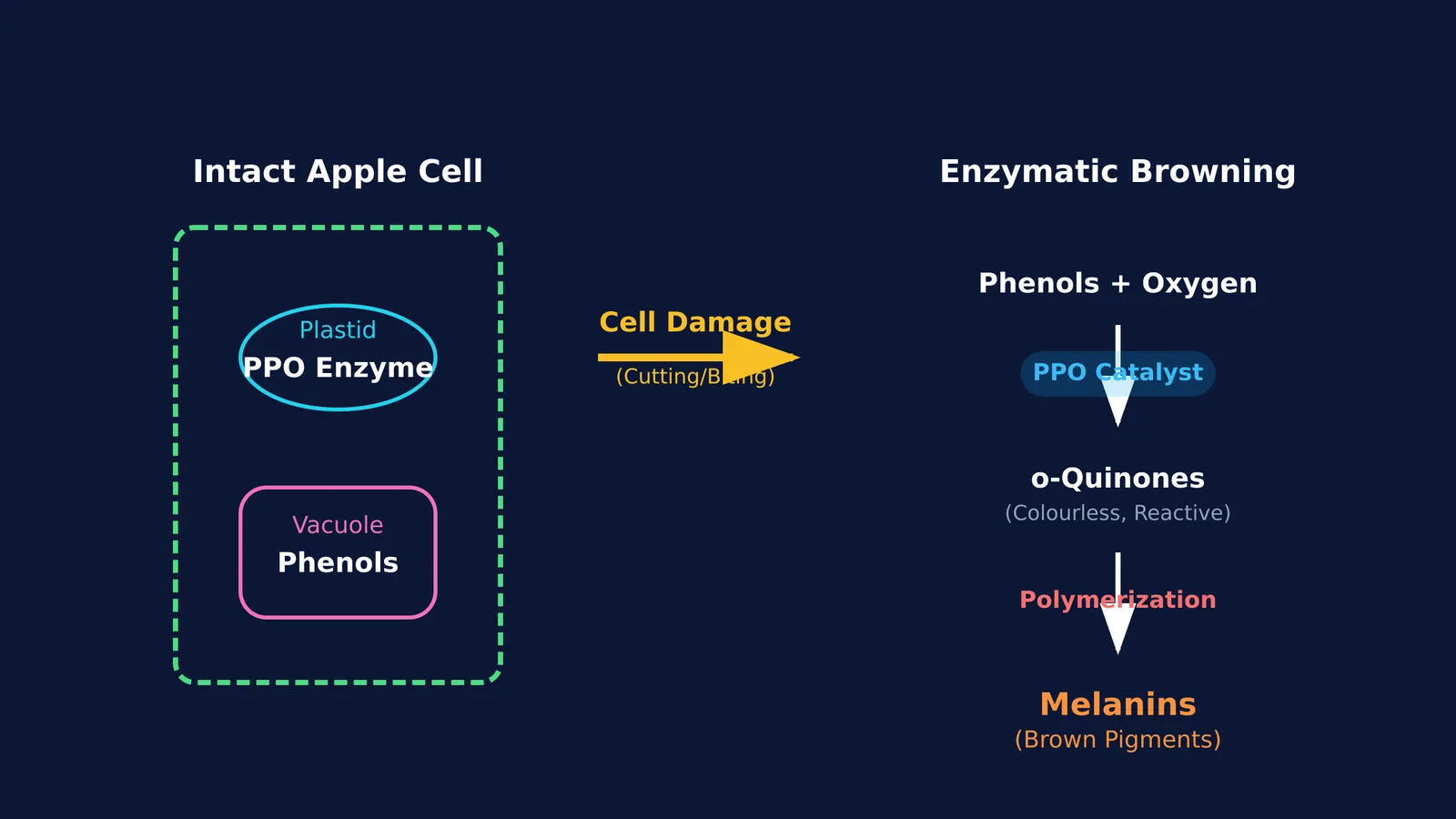
The browning of cut apples is a biochemical process called enzymatic browning. It is a defense mechanism that plants use to protect themselves when their tissues are damaged. Inside an intact apple cell, the enzyme polyphenol oxidase (PPO)—part of the oxidoreductase group covered in the six enzyme classes—is safely stored in the chloroplasts. Meanwhile, phenolic compounds are kept separate in the cell's central vacuole.
When you cut, drop, or bite into an apple, you break these cellular walls and compartments. The PPO and the phenols mix together and are instantly exposed to oxygen. Much like the rusting of iron discussed in everyday oxidation in Class 10 science, this reaction depends entirely on the surrounding air. In the presence of oxygen, PPO catalyzes the rapid oxidation of the colourless phenols into highly reactive compounds called ortho-quinones.
These ortho-quinones do not stay in that state for long. They rapidly link together, or polymerize, with amino acids in the fruit to form melanins. Melanins are the dark brown pigments that stain the fruit's flesh, and they are from the exact same class of pigments that give human skin, hair, and eyes their colour. For the apple, this brown layer acts as an antimicrobial shield, protecting the exposed flesh from fungi and bacteria.
How does lemon juice stop apples from browning?
If you want to keep a fruit salad looking fresh, you have to disrupt the enzyme's ideal environment. As James Sumner's proof that enzymes are proteins established, an enzyme's three-dimensional shape dictates how well it functions. PPO functions best at a near-neutral pH and at room temperature. Lemon juice is highly acidic, with a commercial lemon juice pH typically around 2.25 1.
When you apply lemon juice to the apple slices, the severe drop in pH denatures the PPO enzyme. The acidic environment disrupts the delicate ionic bonds that hold the enzyme's protein structure together. Once the enzyme unfolds and loses its shape, it can no longer catalyze the reaction, rendering it inactive.
Furthermore, lemon juice provides a second line of defense. The ascorbic acid (Vitamin C) present in citrus fruits acts as a powerful antioxidant. It reacts with the oxygen before the oxygen can reach the PPO enzyme, and it can even reverse the initial oxidation of the phenols back into their colourless state. Citric acid also acts as a chelating agent, binding to the copper ions that the PPO enzyme requires to function properly.
For everyday use, a common home remedy is to toss your freshly cut apple slices in a mixture of lemon juice and water. This will keep them bright and crisp.
Can you engineer apples that stay white?
Because cosmetic browning leads to perfectly edible food being thrown away, biotechnology has tackled enzymatic browning at the genetic level. Genetically engineered varieties, such as the Arctic apple, are specifically designed to resist browning 2.
These apples use a technique called RNA interference to "silence" the specific genes responsible for producing the PPO enzyme. Because the enzyme is suppressed from the start, the cut or bruised flesh lacks the necessary catalyst and does not turn brown. Regulatory agencies have concluded that these low-PPO apples are as safe and nutritionally similar to conventional apple varieties, offering a high-tech solution to household food waste.
What is a good experiment to try at home?
To see these variables at work, you can set up a small kitchen experiment to test different anti-browning strategies.
Cut a fresh apple into four equal slices.
Slice 1 (The Control): Leave it exposed to the open air on a plate.
Slice 2 (The Barrier): Submerge it completely in a bowl of plain tap water. This restricts the amount of oxygen that can reach the cut surface.
Slice 3 (The Acid): Submerge it in a solution of lemon juice and water.
Slice 4 (The Inhibitor): Coat it in a mild salt brine. The chloride ions in the salt act as a competitive inhibitor, binding to the PPO enzyme and temporarily stopping it from working.
Check the slices after a few hours. The control slice will show prominent brown melanins, while the treated slices will demonstrate how limiting oxygen, altering pH, or introducing inhibitors can halt enzymatic browning.
Visualising chemical reactions
Understanding how pH drops, enzyme denaturation, and competitive inhibition work is much easier when you can see the molecules in action. If you are struggling to picture how an enzyme loses its shape or how oxidation fundamentally alters a compound, the Fermi Simulation Lab provides interactive simulations for the ideas that are easier to see than to read.


