

On this page
'Two Stories about Flying' is Chapter 3 of First Flight, the NCERT Class 10 English reader, and it holds two short pieces: 'His First Flight' by Liam O'Flaherty and 'The Black Aeroplane' by Frederick Forsyth (NCERT chapter PDF).
What happens in His First Flight?
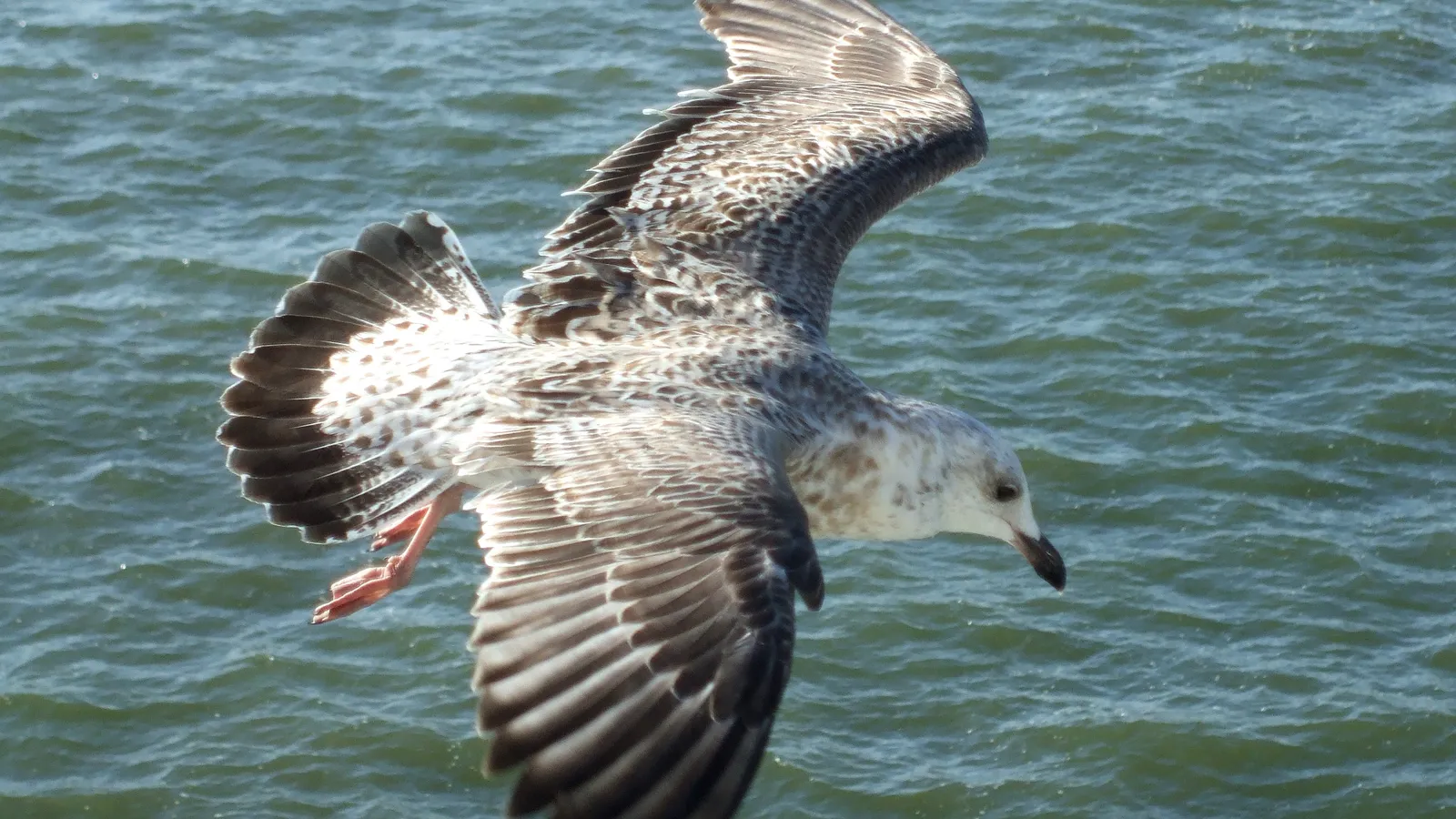
In our own words, checked against the NCERT text: a young seagull sits alone on a cliff ledge. His brothers and sister flew the day before, but the sea looked miles below and he was sure his wings would not hold him. His parents scolded him and threatened to let him starve. For twenty-four hours nobody has come near him, and he has not eaten since the previous nightfall.
He begs his mother for food. She flies towards him with a piece of fish, then stops just out of reach. Maddened by hunger, he dives at it and falls. After a moment of terror his wings spread, and he is flying. He tries to land on the 'green flooring', which is the sea, sinks a little and floats. His family praises him and offers him scraps of dog-fish. He has made his first flight.
What happens in The Black Aeroplane?
The narrator, a pilot, is flying his old Dakota over France back to England at one thirty in the morning, looking forward to his holiday and his family (NCERT text). Paris Control tells him to turn twelve degrees west. Switching to his second and last fuel tank, he looks forward to an English breakfast.
About 150 kilometres past Paris he meets storm clouds 'like black mountains', too high to climb over, with too little fuel to go around. He should turn back, but he wants that breakfast. 'I'll take the risk,' he thinks. Inside the storm his compass, radio and other instruments die. Then a black aeroplane with no lights appears and its pilot waves: follow me. The narrator follows 'like an obedient child' for half an hour. With fuel for only five or ten minutes left, the other plane leads him down to a runway and vanishes. The woman in the control centre laughs: no other aeroplanes were flying that night, and his was the only one she could see on the radar. Who helped him? The story never says.
What are the themes of Two Stories about Flying?
Fear of the first try. The seagull's fear breaks when need, here hunger, becomes stronger than fear.
A push, not a lecture. His mother does not argue; she makes him act.
Risk and judgement. The pilot chooses danger for a breakfast, and a calm flight becomes a crisis.
Help at the edge. Both are saved at the last moment: the seagull by his mother's trick, the pilot by a stranger nobody else saw.
Mystery. NCERT's note for teachers asks whether the black aeroplane was really there or the pilot imagined it.
How do you write the character sketches?
Give three traits, each proved by one moment from the text.
The young seagull: timid (he runs back to the hole under his ledge), attention-seeking (he pretends to fall asleep, but still nobody notices him), and quick to forget fear once he flies (he dives, soars and shrieks).
His mother: firm, patient and caring. She is the only one still watching him, and the fish she holds back is a lesson, not cruelty.
The pilot: impulsive in the moment, honest and grateful afterwards. He admits he was frightened and goes to the control centre to thank the other pilot.
Which questions are likely in the exam?
The textbook's own 'Thinking about the Text' questions are the safest guide (NCERT chapter). Expect versions of these:
Why was the young seagull afraid to fly?
'The sight of the food maddened him.' What does this suggest?
Why did the seagull's father and mother threaten him and cajole him to fly?
'I'll take the risk.' What is the risk, and why does the narrator take it?
What made the woman in the control centre look at the narrator strangely?
Who do you think helped the narrator to reach safely? Give reasons.
For a short answer, use three parts: point (what), proof (a line from the text), purpose (what it shows). A worked answer to question 4:
'The risk was flying his old Dakota into huge storm clouds without enough fuel to fly around them. He knew he ought to go back to Paris, but he wanted to reach home in time for an English breakfast. A small wish made him take a big risk.'
If you revised from an AI summary, match its claims to the textbook pages, because invented details cost marks. The same point-and-proof habit carries into the Class 10 analytical paragraph.
If English is under control and science revision is the bigger worry, Fermi's AI tutor can work out what you already know and build a plan for the session, so you sit down to a clear next step.
Tonight, reread both stories once and answer question 6 in your own words.


