

On this page
Nearly every question on The Sermon at Benares comes back to one idea: death comes to everyone. In the current NCERT reprint it is Chapter 8 of First Flight, and CBSE lists it under First Flight prose in the English Language and Literature syllabus for 2026-27.
What happens in The Sermon at Benares?
The NCERT text opens with the Buddha's life: Prince Siddhartha Gautama saw a sick man, an aged man, a funeral procession and a monk begging for alms, and went out into the world to seek enlightenment about these sorrows. After seven years of wandering he sat under a peepal tree, was enlightened, and renamed it the Bodhi Tree. He preached his first sermon at Benares. NCERT credits the text to Betty Renshaw's Values and Voices: A College Reader (1975).
The story in five steps:
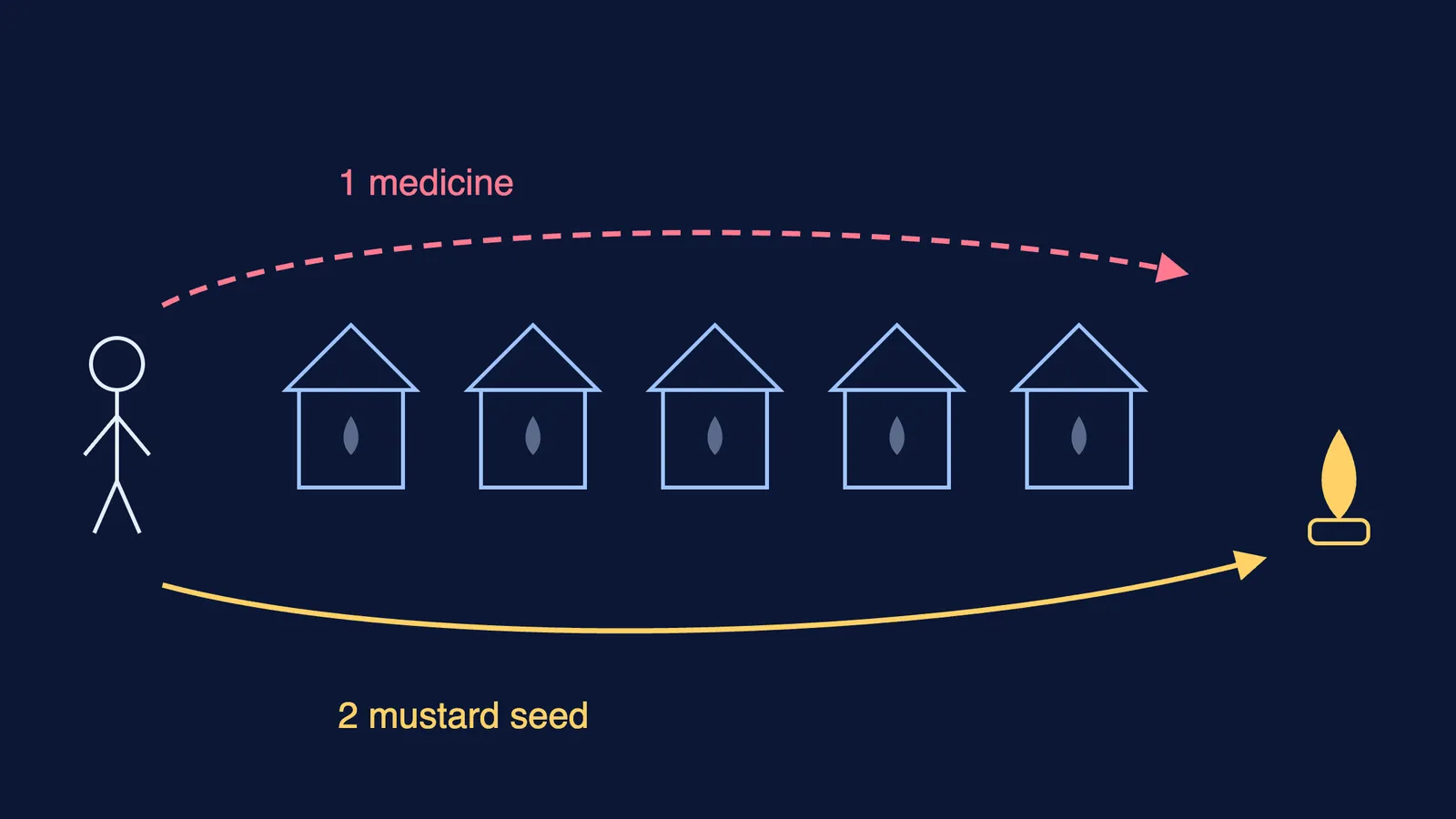
Kisa Gotami's only son dies. She carries the dead child to all her neighbours asking for medicine; they say she has lost her senses.
A man sends her to the Buddha, and she begs him for medicine that will cure her boy.
The Buddha asks for a handful of mustard seed from a house where no one has lost a child, husband, parent or friend.
Everyone offers seed, but every family has lost someone: "the living are few, but the dead are many."
By the wayside she watches the city lights flicker up and go out, like human lives, and calls herself selfish in her grief. The Buddha teaches that all who are born must die, and that whoever seeks peace should draw out "the arrow of lamentation, and complaint, and grief."
What are the main themes of The Sermon at Benares?
Death is universal. The Buddha compares mortals to ripe fruit in danger of falling and to earthen pots that end in being broken. Young and adult, fools and wise, all are subject to death.
Grief can turn inward. Kisa Gotami's word "selfish" suggests she had seen only her own loss and not the sorrow in every home around her.
Learning by experience. The Buddha does not lecture her first. He sends her on a task, and she reaches the truth herself.
Peace through acceptance. Weeping does not save the dead; it only makes the pain greater. The wise accept "the terms of the world."
How do you write a character sketch of Kisa Gotami and the Buddha?
Kisa Gotami: a loving young mother (the text calls her "the girl") who at first cannot accept her son's death. She is persistent, going from house to house twice, and reflective: in the dark she thinks about the fate of all people and honestly calls her grief selfish.
The Buddha: compassionate and wise. He neither dismisses her like the neighbours nor tells her bluntly that the boy is dead. He lets her discover the truth, then explains it through everyday images: fruit, clay pots, an ox led to slaughter.
What questions come in the exam from The Sermon at Benares?
The CBSE 2026-27 syllabus sets short answers from First Flight in 40-50 words, a long First Flight answer in about 100-120 words worth 6 marks, and an extract question from drama or prose. Likely questions:
Why did the Buddha ask Kisa Gotami for mustard seed? (short)
What did Kisa Gotami understand the second time that she missed the first time? (short)
Why did she call herself "selfish" in her grief? Do you agree? (short or long)
How is the Buddha's way of teaching different from a lecture? (long)
An extract around the city lights or the Buddha's sermon, with questions on meaning and vocabulary.
A worked answer to the first question, in under 50 words: "The Buddha knew no house had escaped death. By asking for mustard seed from such a house, he sent Kisa Gotami to discover this herself. Seeing grief in every home, she understood that death is common to all and accepted her loss."
Long-answer plan: one line on the situation, two or three points from the text (the two journeys, the flickering lights, the Buddha's images), one quoted phrase, and a closing line linking the lesson to life today. Revising from an AI summary? Match each claim in an AI chapter summary to the page. For extracts, see how to answer case-based questions in CBSE board exams.
This story is about real loss. If it brings up a death in your own family, talk to a parent, teacher or friend, or call Tele MANAS, the national tele mental health helpline, on the short code 14416 or toll-free 1800-89-14416 (listed on the Ministry of Health's National Mental Health Programme page).
Then fit your other subjects into the week-by-week Class 10 board plan. For science and maths, Fermi's AI tutor can work out what you already know and build a plan for the session, so you start each sitting with a clear next step.


