

On this page
What happens in The Making of a Scientist?
The chapter, by Robert W. Peterson, is Chapter 6 of NCERT's Class 10 supplementary reader, Footprints without Feet (NCERT textbook PDF, Chapter 6).
Ebright grew up an only child north of Reading, Pennsylvania, and collected things: butterflies from kindergarten, plus rocks, fossils and coins. His father died when he was in the third grade. His mother bought him telescopes, microscopes and cameras, and the two spent almost every evening at the dining-room table. When he had nothing to do, she found him "learning things".
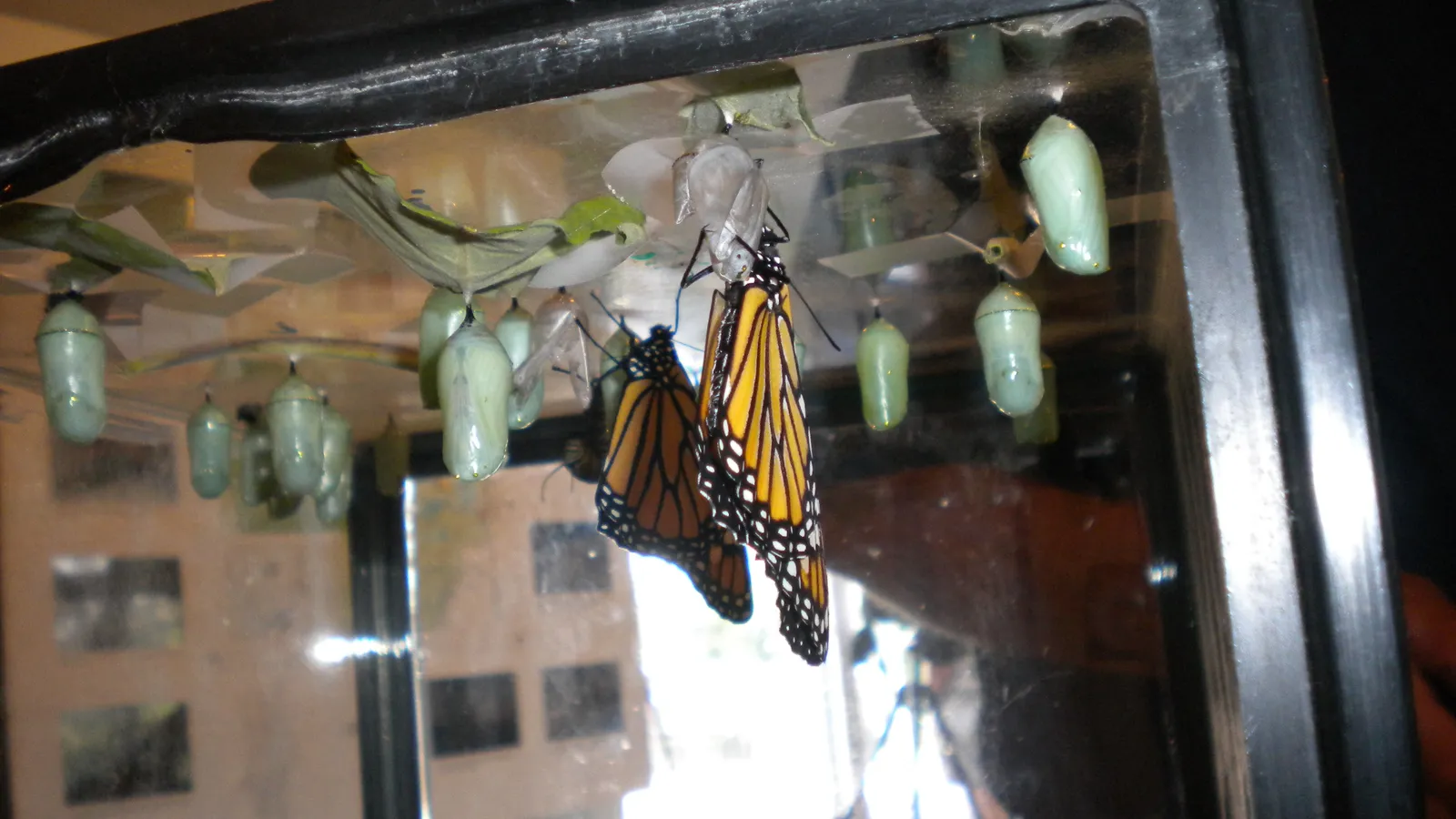
By the second grade he had collected all twenty-five butterfly species around his hometown. Then his mother gave him a children's book, The Travels of Monarch X, about monarchs migrating to Central America. It asked readers to tag butterflies for Dr Frederick A. Urquhart of the University of Toronto. Ebright tagged monarchs, then raised them; for several years his basement held thousands. Only two of the butterflies he tagged were ever recaptured.
The turning point came in the seventh grade, when he lost at a county science fair with a neat display of frog-tissue slides. The winners had tried to do real experiments. From then on, so did he, using ideas Dr Urquhart sent him:
Eighth grade: was the viral disease that kills monarch caterpillars carried by a beetle? He got no real results, but he showed he had tried, and won.
The next year: would birds eat monarchs? A starling ate all the monarchs it could get. It tested the theory that viceroys copy monarchs and placed first in zoology at the county fair.
High school: what are the twelve tiny gold spots on a monarch pupa for? With another student he showed they produce a hormone the butterfly needs to develop fully. It earned him summer work at the Walter Reed Army Institute of Research, and the follow-up won first place at the International Science Fair.
After his freshman year at Harvard, working at a Department of Agriculture laboratory, he identified the hormone's chemical structure. Later, X-ray photos of a hormone's structure gave him an idea about how a cell "reads" its DNA. With his room-mate James R. Wong he explained the theory in the Proceedings of the National Academy of Science, at twenty-two.
He graduated from Harvard with highest honours, second in a class of 1,510.
What are the themes of The Making of a Scientist?
Curiosity that is fed. His mother's books, equipment and evenings at the dining table kept his curiosity alive.
Failure as a teacher. Losing in the seventh grade showed him the difference between a display and an experiment.
One question leads to the next. A book led to tagging, tagging to letters with Dr Urquhart, his suggestions to the gold spots, and the gold spots to a theory about cells.
Competing for the right reasons. In his teacher's words, he wanted to do the best job he could, not win for winning's sake.
A full life. He also became a champion debater, a good canoeist and an expert photographer of nature.
Who are the main characters in the chapter?
From the NCERT text:
Richard Ebright: curious, determined, competitive. His teacher says he put in three or four hours at night on debate research besides his butterfly work.
His mother: his only companion until he started school. "Richie was my whole life after his father died," she says.
Dr Frederick A. Urquhart: a mentor by post. He sent experiment ideas and did not believe the gold spots were just ornamental.
Richard A. Weiherer: his social studies teacher and debate adviser, who "opened my mind to new ideas", Ebright says. Weiherer says Ebright "wasn't interested in winning for winning's sake."
What questions should you practise for the exam?
Practise the textbook's "Read and find out" questions:
How did a book become a turning point in Richard Ebright's life?
How did his mother help him?
What lesson does Ebright learn when he does not win anything at a science fair?
What experiments and projects does he then undertake?
What are the qualities that go into the making of a scientist?
A model answer to question 3, built as point, proof, link:
Losing taught Ebright that science means testing an idea, not displaying it. In the seventh grade his frog-tissue slides won nothing, and he saw that the winners had tried to do real experiments. He wrote to Dr Urquhart for ideas, and in the eighth grade tested whether a beetle carried a disease that kills monarch caterpillars. That shift from showing to testing led, through Dr Urquhart's suggestions, to his prize-winning work on the gold spots.
If the DNA part feels hazy, the Fermi Concept Library covers every concept in biology, so you can read what DNA does before the textbook's "Think about it" question on cells.
Next, read our A Letter to God summary, themes and exam answers, then practise answering case-based questions in CBSE board exams.
Tonight, write the model answer from memory and check it against page 35 of the chapter.


