

On this page
Every year, a massive share of the world's harvest is lost to pests, fungi and dampness before it ever reaches a plate. For students preparing for NEET-UG or learning Class 8 biology, understanding how crops are protected is a key part of the curriculum. Whether it is a few kilos of wheat in a kitchen or thousands of tonnes in a commercial facility, the principles of keeping grain safe from insects and rodents remain the same: control the water, seal the container and eliminate the pests.
Why does moisture matter for grain storage?
Freshly harvested grains naturally carry a high water content. If stored immediately without drying, this moisture allows fungi and bacteria to thrive, spoiling the crop and destroying its ability to germinate. Just as you learn about food spoilage in Corrosion and rancidity: everyday oxidation in Class 10 science, excess moisture is the enemy of preservation.
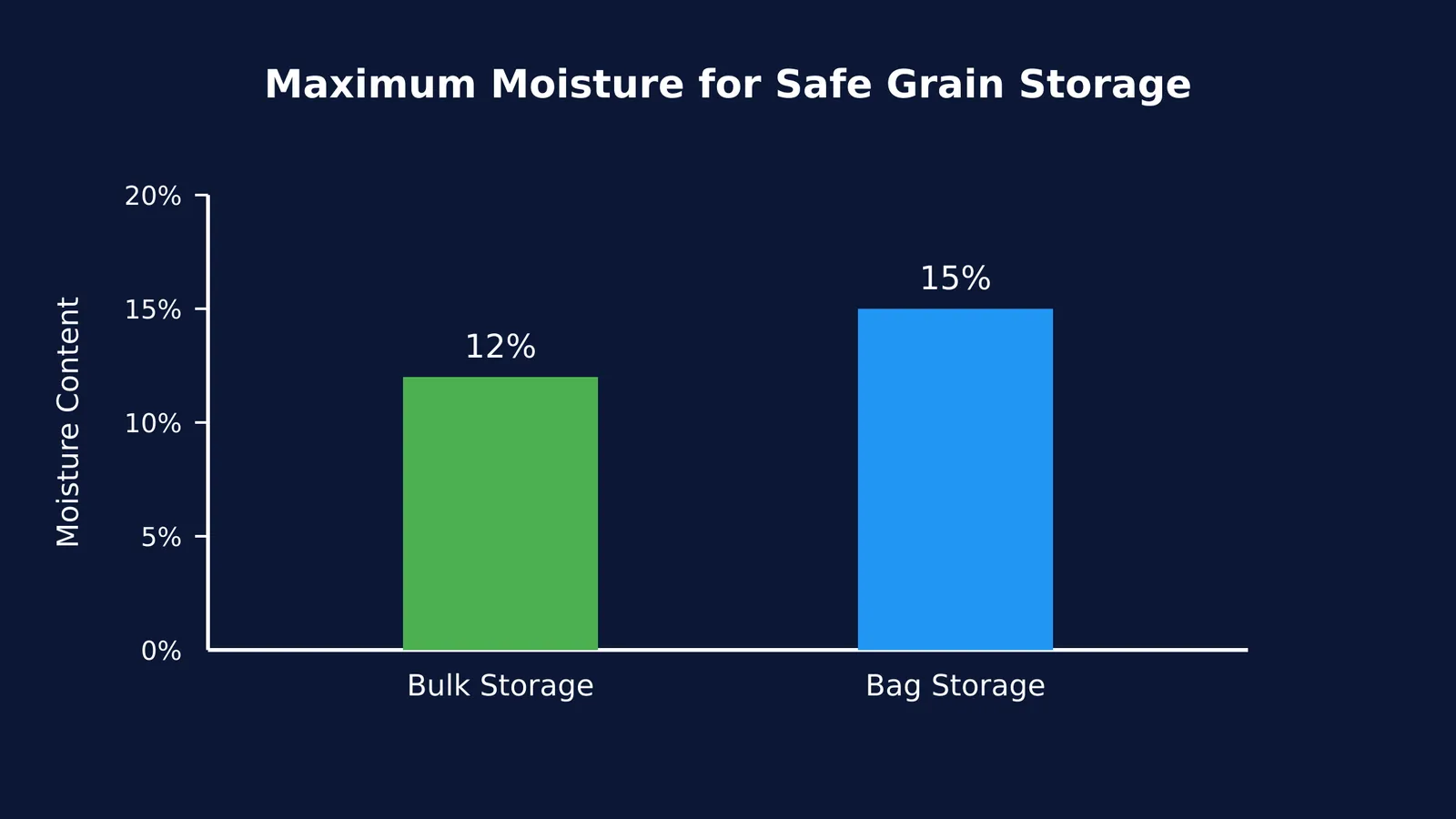
Before grains go into bins or bags, they are usually spread out for sun drying. For safe bulk storage in tropical climates, the Food and Agriculture Organization (FAO) recommends drying grains to a maximum moisture content of 12%. For storage in bags, the FAO advises keeping grain moisture between 13 and 15%. Keeping the moisture low is the most effective way to prevent insect eggs from hatching and fungi from taking hold.
What are silos and granaries?
For large-scale commercial storage, farmers and governments use specialized structures designed to handle thousands of tonnes of produce. The NCERT Class 8 curriculum highlights two main structures:
Silos: These are tall, airtight cylindrical towers built from metal or concrete. Because they are tightly sealed, they keep both moisture and rodents out while allowing the internal temperature to be carefully controlled.
Granaries: These are large warehouses where grain is stacked in jute bags or metallic bins. In these godowns, bags are placed on wooden pallets away from the walls to stop dampness from rising from the floor.
How do neem leaves protect stored grains?
Not all storage happens on an industrial scale. For small-scale home storage in India, dried neem leaves are a traditional and highly effective method.
Neem leaves act as a natural biopesticide. When mixed with wheat or rice in metallic bins or jute bags, their compounds repel insects and microorganisms. This protects the food safely over long periods without the need for synthetic chemicals, avoiding the long-term environmental issues seen in Biological magnification: how pesticides build up, Class 10.
How does fumigation work?
When pests do breach a large granary or silo, fumigation is used as a curative treatment. Unlike standard insect sprays that only sit on the surface, fumigants are gases that penetrate deep into a bulk pile of grain.
A common chemical used for this is phosphine, which is often released from aluminium phosphide tablets. According to the Food and Agriculture Organization (FAO), effective phosphine fumigation requires a completely gas-tight seal and takes at least 3 to 5 days to kill insects at all life stages. If the silo is not airtight, the gas concentration drops, which can allow insects to survive and build resistance. Once the treatment is done and the gas is ventilated, the grain is safe for consumption.
A checklist for safe grain storage
Whether you are storing a bag of rice at home or managing a commercial harvest, follow this checklist to prevent spoilage:
Dry it first: Spread grains in the sun until moisture drops below 12%.
Clean the container: Remove any old grain or dust from bins and bags, as these hide insect eggs.
Seal it tight: Use airtight containers, such as metallic bins at home or sealed silos on a farm.
Add protection: Mix in dried neem leaves for home storage, or use professional fumigation for bulk silos.
Keep it off the ground: Stack bags on pallets to prevent rising dampness.
When revising agricultural science for school or competitive exams, memorising facts about silos and pesticides can feel endless. If you need a better way to map out these ideas, the Fermi Concept Library connects every concept in biology and chemistry. Fermi's AI tutor can work out what you already know about crop management and build a plan for your session, so you sit down to a clear next step instead of just re-reading a textbook.


