

On this page
Many students know the words chiral, enantiomer and meso, and still lose marks because they cannot tell whether two drawings show the same molecule. This post gives you a step-by-step method: find the stereocentres, count the isomers, catch meso forms, and use R/S and E/Z labels to compare structures without rotating them in your head.
What does the syllabus actually ask for?
The JEE (Main) 2026 syllabus lists "Isomerism - structural and stereoisomerism" in its basic organic chemistry unit and "Geometrical isomerism" under alkenes. The NEET (UG) 2026 syllabus uses the same wording. The JEE (Advanced) 2026 Information Brochure is more specific: it asks for "enantiomers, diastereomers, meso" in compounds with up to two asymmetric centres, and adds "(R,S and E,Z configurations excluded)".
So assigning R/S or E/Z is outside the JEE Advanced list, but comparing and counting stereoisomers is in it, and R/S labels are the most reliable way to do that on paper. Check the brochure for your exam year.
How do you know a molecule is chiral?
NCERT's Class 12 chapter on haloalkanes and haloarenes defines a chiral object as one that cannot be superimposed on its mirror image, like your left and right hands. A carbon with four different groups is an asymmetric carbon, or stereocentre. Propan-2-ol is achiral because its central carbon carries two identical methyl groups. Butan-2-ol is chiral because its C2 carries H, OH, CH₃ and C₂H₅.
The same chapter makes a point students often miss: the sign of optical rotation, (+) or (−), "is not necessarily related to the absolute (actual) configuration". An R compound can be dextrorotatory or laevorotatory. Never try to work out R or S from a rotation value.
How do you assign R or S?
The rules come from Cahn, Ingold and Prelog (1966), who set out a general system for specifying molecular chirality. In practice it is four steps.
Rank the four groups by atomic number of the atom directly attached. Higher atomic number wins.
Break ties at the first point of difference. List the atoms attached to each tied atom, highest first, and compare. –CH₂Br has (Br, H, H) and –C(CH₃)₃ has (C, C, C). Compare the highest first: Br beats C, so –CH₂Br ranks higher, even though the tert-butyl group is larger.
Point the lowest-priority group away from you and trace 1 → 2 → 3. Clockwise is R, anticlockwise is S.
If the lowest group points towards you, reverse your answer.
Worked example. A Fischer projection of butan-2-ol has CH₃ at the top, C₂H₅ at the bottom, H on the left and OH on the right. Priorities: OH (O, atomic number 8) is 1; C₂H₅ is 2, because its carbon carries (C, H, H) against (H, H, H) for CH₃; CH₃ is 3; H is 4.
Trace 1 → 2 → 3: right, then bottom, then top. That runs clockwise, which suggests R. But in a Fischer projection the horizontal groups come towards you, and H is horizontal. Reverse it: this is (S)-butan-2-ol.
Check it by swapping H and C₂H₅. One swap inverts the configuration, and H now points away at the bottom. OH → C₂H₅ → CH₃ runs clockwise, so the swapped molecule is R and the original is S.
How many stereoisomers can a molecule have?
With n stereocentres, the maximum is 2ⁿ. The actual number is lower when the molecule has a meso form: a compound with stereocentres that is still achiral because of an internal mirror plane.
Worked example: tartaric acid, HOOC–CH(OH)–CH(OH)–COOH. Two stereocentres give at most four combinations: (2R,3R), (2S,3S), (2R,3S) and (2S,3R).
(2R,3R) and (2S,3S) are mirror images that do not superimpose: a pair of enantiomers.
(2R,3S) and (2S,3R) describe the same molecule. The two halves are built alike, so the molecule has an internal mirror plane that cuts the central C–C bond in half. This is the meso form, and it is optically inactive.
That gives three stereoisomers, not four. The labels also tell you relationships at a glance: if every label flips, the two are enantiomers; if only some flip, they are diastereomers.
When is cis/trans not enough for alkenes?
NCERT's hydrocarbons chapter explains geometrical (cis-trans) isomerism from restricted rotation about the C=C bond. Cis and trans work when the two carbons carry a matching pair of groups. When they do not, E/Z uses the same priority rules: rank the two groups on each carbon, then Z (zusammen, together) means the higher-priority groups are on the same side and E (entgegen, opposite) means opposite sides.
Worked example: 3-methylpent-2-ene, CH₃–CH=C(CH₃)–CH₂CH₃. On C2, CH₃ beats H. On C3, ethyl beats methyl. Suppose the two methyl groups are on the same side, the isomer many students call "cis". Then the C2 methyl is opposite the C3 ethyl, so this isomer is E. "Cis" by the methyls and E by priority can describe the same molecule, which is exactly why E/Z exists.
Which mistakes cost the most marks?
Ranking by size instead of atomic number at the first point of difference.
Forgetting to reverse when the lowest-priority group points towards you.
Linking R/S to (+)/(−), or stopping at 2ⁿ without checking for meso forms.
Treating cis as Z. They often agree, but not always.
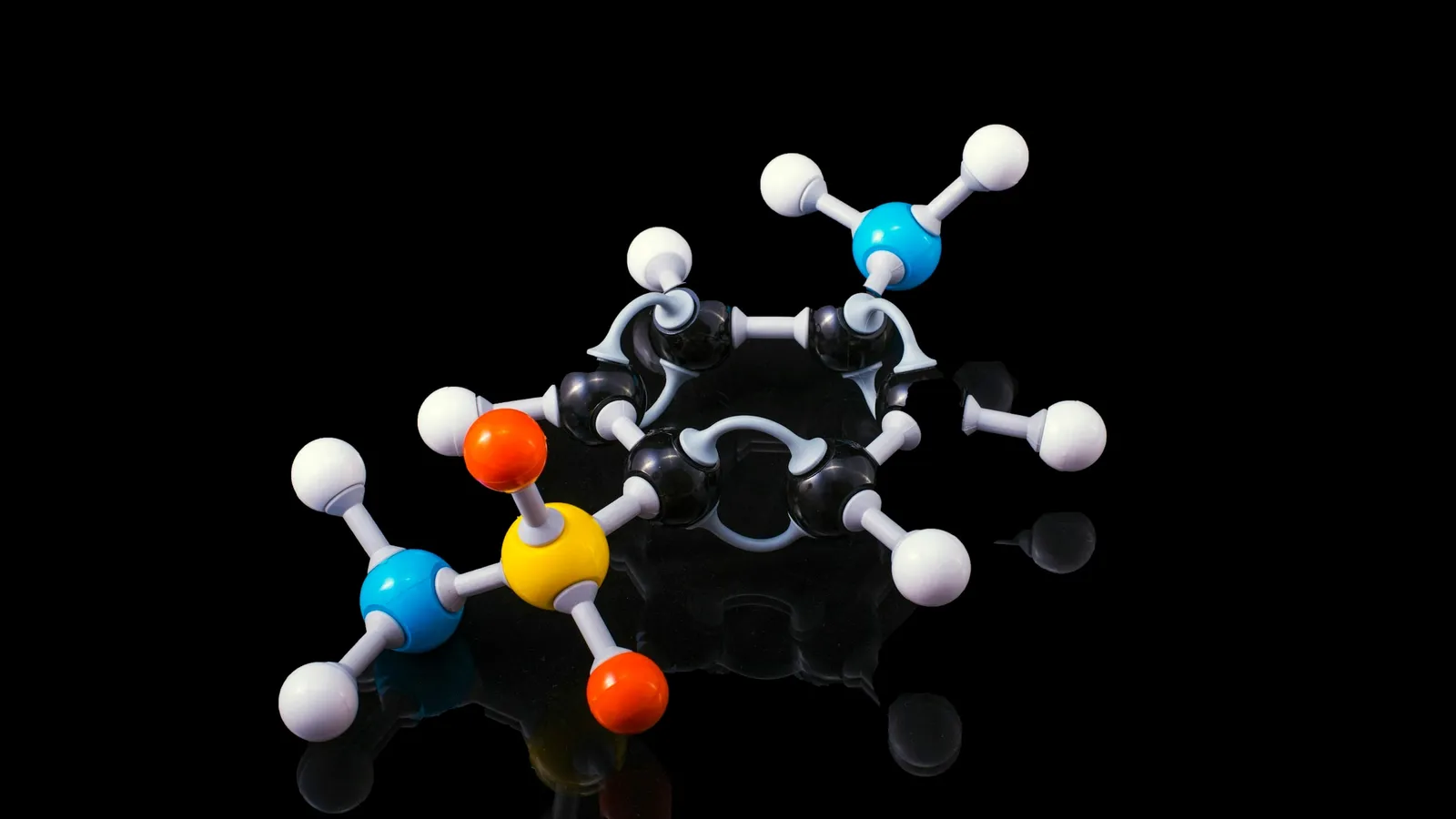
If you find it hard to picture these shapes, our guide to molecule visualisation tools covers ways to see them in 3D, and learning mechanisms rather than lists shows why configuration matters in SN1 and SN2 reactions.
A practice routine for this week
Day 1: Mark every stereocentre in ten molecules.
Day 2: Assign R/S to six Fischer projections and check each by the swap method.
Day 3: Count stereoisomers for five compounds with two stereocentres, including two with a meso form.
Day 4: Label E/Z for five alkenes where cis/trans would mislead you.
Day 5: Ten mixed past-paper questions, then mark each error as ranking, reversal or counting.
When a rule will not stick, go back to the idea behind it. The Fermi Concept Library covers every concept in physics, chemistry, biology, mathematics and computing, so you can revisit chirality or priority rules on their own before trying problems again.
Tonight, take tartaric acid and 2,3-dibromobutane and write out every R/S combination for each, then circle the meso forms.


