

On this page
When studying plant morphology for exams like NEET or board biology, the botanical definitions of fruits and seeds can be tricky because everyday language uses the terms differently. In your kitchen, a tomato is a vegetable and a pea pod is just a pod, but in botany, both are fruits containing seeds.
Understanding this botanical distinction helps you avoid simple mistakes in multiple-choice questions.
What is the difference between a seed and a fruit?
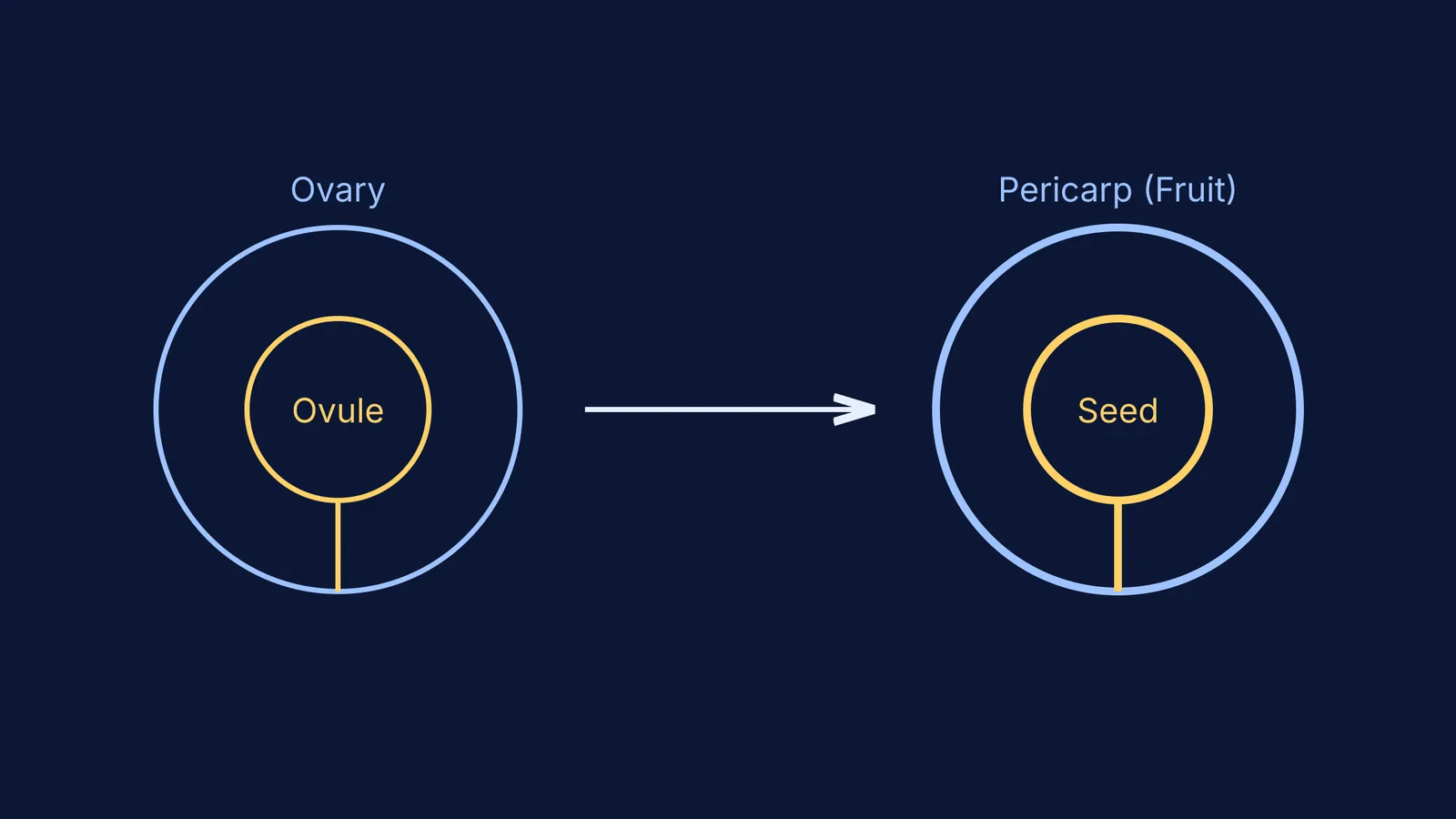
The fundamental difference lies in which part of the flower they develop from. According to the NCERT biology curriculum for Class 11, a fruit is defined as a mature or ripened ovary that develops after fertilisation. The wall of the ovary thickens and develops into the fruit wall, known scientifically as the pericarp.
Inside that ovary are the ovules. After fertilisation, these ovules develop into seeds. A seed consists of a protective seed coat and an embryo, which holds the potential to grow into a new plant.
The pericarp can be dry or fleshy. When fleshy, it is often differentiated into three distinct layers: the outer epicarp, the middle mesocarp, and the inner endocarp. The seed inside is covered by a seed coat, which itself has two layers called the testa and the tegmen. The embryo inside the seed consists of a radicle, an embryonal axis, and one or two cotyledons.
To summarise the post-fertilisation changes:
The ovary becomes the fruit.
The ovary wall becomes the pericarp.
The ovule becomes the seed.
If a fruit forms without the fertilisation of the ovary, it does not contain seeds. This is called a parthenocarpic fruit.
How do the mango, pea and wheat differ?
Exam questions often test your understanding of fruits and seeds by asking you to classify common plants. Let us look at three classic examples that show how the ovary and ovule relationship can look very different in practice.
The Mango: In a mango, the fruit develops from a superior, monocarpellary ovary and is called a drupe. The fleshy part you eat is the mesocarp. The hard, stony pit in the centre is the endocarp, and the thin outer skin is the epicarp. Together, these three layers make up the pericarp. Inside that stony endocarp lies a single seed, which means the original mango flower had only one ovule in its ovary.
The Pea Pod: A pea pod is a fruit, even though we rarely call it one at the dinner table. The green pod itself is the ripened ovary, and the individual green peas inside it are the seeds. Because a pea pod contains multiple seeds, we know the original flower's ovary contained multiple ovules. The pea is a dicotyledonous seed, meaning its embryo has two cotyledons. If you want to review how these compare to other structures, you can explore how monocot vs dicot seed structures differ.
The Wheat Grain: Wheat presents a unique case that frequently confuses students. A grain of wheat is technically a dry fruit. In cereals like maize and wheat, the seed coat is membranous and generally fused with the fruit wall (pericarp). Because the fruit wall and the seed coat are inseparable, we often refer to the entire structure simply as a grain.
Is a wheat grain a seed or a fruit?
Because the pericarp is fused with the seed coat in a wheat grain, it is botanically classified as a fruit. When you plant a grain of wheat, you are technically planting an entire fruit, not just a seed. The single seed inside is a monocotyledonous seed, meaning it contains only one cotyledon.
When you are reviewing concepts like this, having a structured way to test yourself makes a big difference. The Fermi Concept Library contains dedicated lessons for plant morphology, where the AI tutor teaches rather than answers, checking your understanding as it goes.
A quick checklist for exam questions
When you face multiple-choice questions on morphology, use this three-point checklist to avoid common traps:
Identify the origin: Did the structure come from the ovary or the ovule?
Check the pericarp: Is the fruit wall fleshy and differentiated (like a mango), dry and separable (like a pea pod), or fused with the seed coat (like wheat)?
Count the seeds: A single seed means a single ovule (mango, wheat), while multiple seeds mean multiple ovules (peas).
You can also test this knowledge by looking at the floral formulas of different plant families. For example, comparing how Fabaceae, Solanaceae and Liliaceae handle their ovaries will give you a deeper understanding of how fruits develop across the plant kingdom.


