

On this page
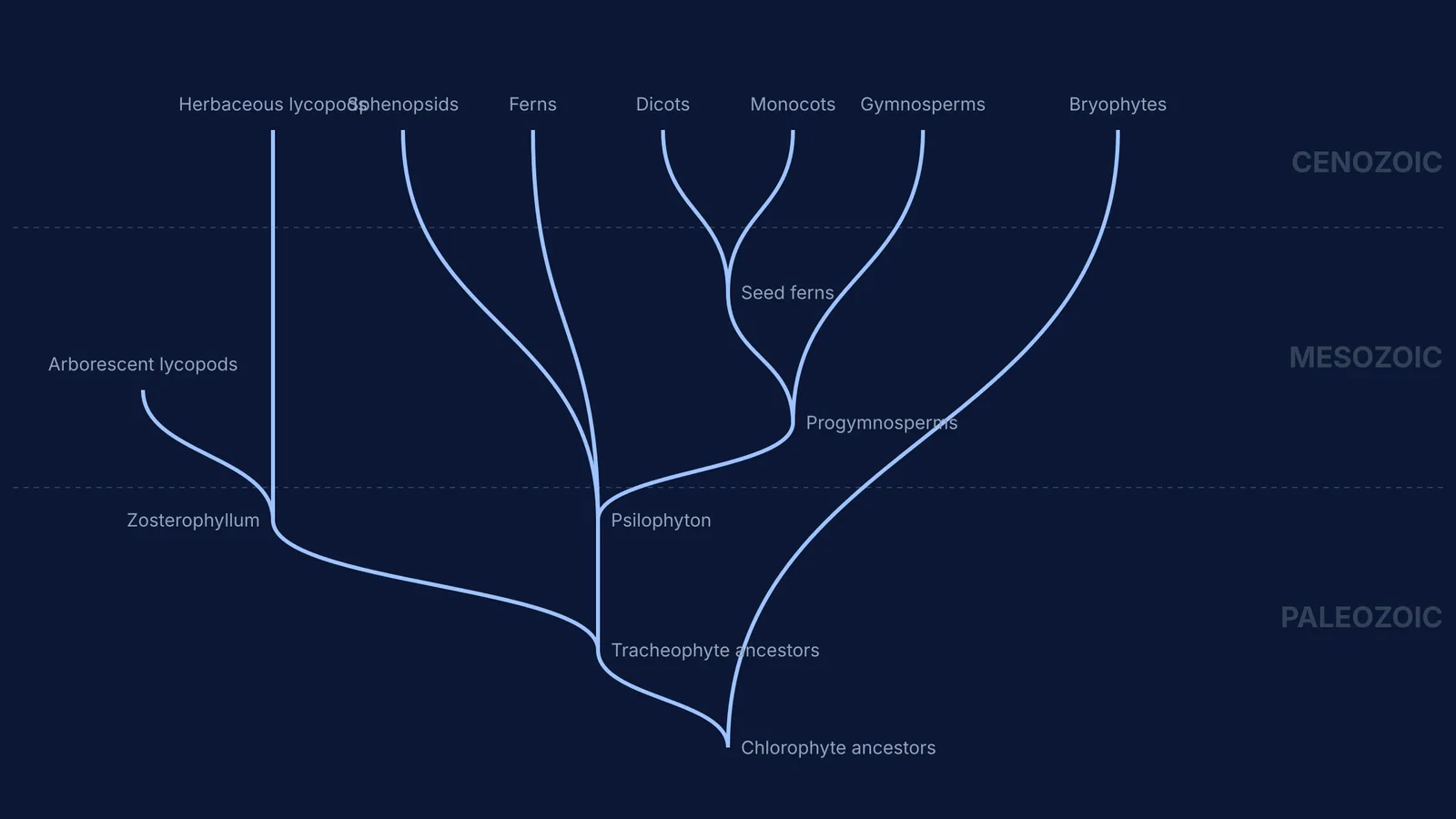
Figure 7.9 in the NCERT Class 12 Biology text, outlining the evolution of plant forms through geological periods, is a high-yield topic for NEET. Instead of a straightforward list, the book presents a branching tree mapped across three geological eras: the Paleozoic, Mesozoic, and Cenozoic.
Many students lose marks by memorising the endpoints without tracing the lines. When you read the chart from the bottom up, you can see exactly which lineages died out and which gave rise to the forests we see today. While you might focus heavily on active processes like phototropism, geotropism and other tropic movements, the historical timeline is equally tested.
What is the common ancestor of all modern plants?
The evolutionary map begins at the very bottom with the Chlorophyte ancestors. These early green algae form the root of the entire plant kingdom.
The chart shows the Chlorophyte lineage branching in two directions. One branch leads directly to modern Bryophytes (mosses and liverworts), which remain non-vascular and tied to wet environments. The other branch leads to the Tracheophyte ancestors—the first vascular plants. It was the tracheophytes that truly conquered land, supported by xylem and phloem. While the first cellular forms of life appeared around 2000 million years ago, seaweeds and a few primitive plants existed probably around 320 million years ago (Source).
How did Psilophyton shape the plant kingdom?
If you trace the line upward from the Tracheophyte ancestors, you hit a major splitting point: Psilophyton.
Evolving in the Devonian period, Psilophyton acted as a central hub for plant diversification. The chart shows several major branches radiating outward from this single ancestor:
Sphenopsids (horsetails) and Ferns.
Progymnosperms, which later gave rise to gymnosperms (like Ginkgos, Conifers, and Gnetales) and seed ferns.
If you struggle to picture how these lineages diverge over millions of years, the Fermi Concept Library puts every concept into its place in the map, so you can see exactly where ancestors and descendants split.
Which plants dominated the Paleozoic and Mesozoic eras?
The chart also tracks the rise and fall of plant dynasties. While Psilophyton was branching out, another lineage from the Tracheophyte ancestors—Zosterophyllum—gave rise to the Lycopods.
During the Carboniferous period of the Paleozoic era, Arborescent lycopods (giant, tree-like club mosses) dominated the landscape. However, the chart shows their lineage ending abruptly. They fell and were compressed over millions of years to form the Earth's coal deposits, leaving only their smaller relatives, the herbaceous lycopods, to survive into the modern age.
As the Earth moved into the Mesozoic era (the age of dinosaurs), the climate changed. The chart shows Cycads, Conifers, and Ginkgos expanding during the Triassic and Jurassic periods. Their hardy seeds allowed them to thrive where spore-bearing plants could not.
Why do seed ferns matter for angiosperm evolution?
One of the most heavily tested branches in NEET is the origin of flowering plants (Angiosperms).
The chart traces Angiosperms back to Progymnosperms, which evolved into Seed ferns. Just as viruses, viroids and lichens sit outside the standard five-kingdom classification, extinct ancestors like seed ferns bridge the gaps between major plant families. Though seed ferns are entirely extinct today, their line did not end. During the Cretaceous period, the seed fern lineage branched into Dicotyledons (dicots). From the dicots, a subsequent branch gave rise to the Monocotyledons (monocots).
By the time the Cenozoic era began, angiosperms were taking over. If you trace the dicot and monocot lines to the top of the graph (the Quaternary period), you will see they represent the vast majority of modern flora.
A framework for reading evolutionary charts
When facing diagram-based questions on this chart, use a three-step check:
Locate the ancestor: Find the branching node (e.g., Psilophyton or Zosterophyllum).
Follow the lines: Trace every line that physically touches that node. Do not skip over intermediate ancestors like the seed ferns or the arithmetic and geometric growth phases of early plant forms.
Check the era: Look horizontally to the Y-axis to see when a group flourished or went extinct.
If you are constantly mixing up which era a plant dominated, Fermi's AI tutor can run through practice problems with you, checking your understanding as it walks back down the evolutionary tree step by step.


