

On this page
Your endocrine system relies on glands that act as chemical messengers. Two of the most fascinating are the pineal gland, which helps you sleep, and the thymus, which trains your immune system. While they serve different purposes, both change significantly as you grow from childhood into adulthood.
How does the pineal gland control your daily rhythm?
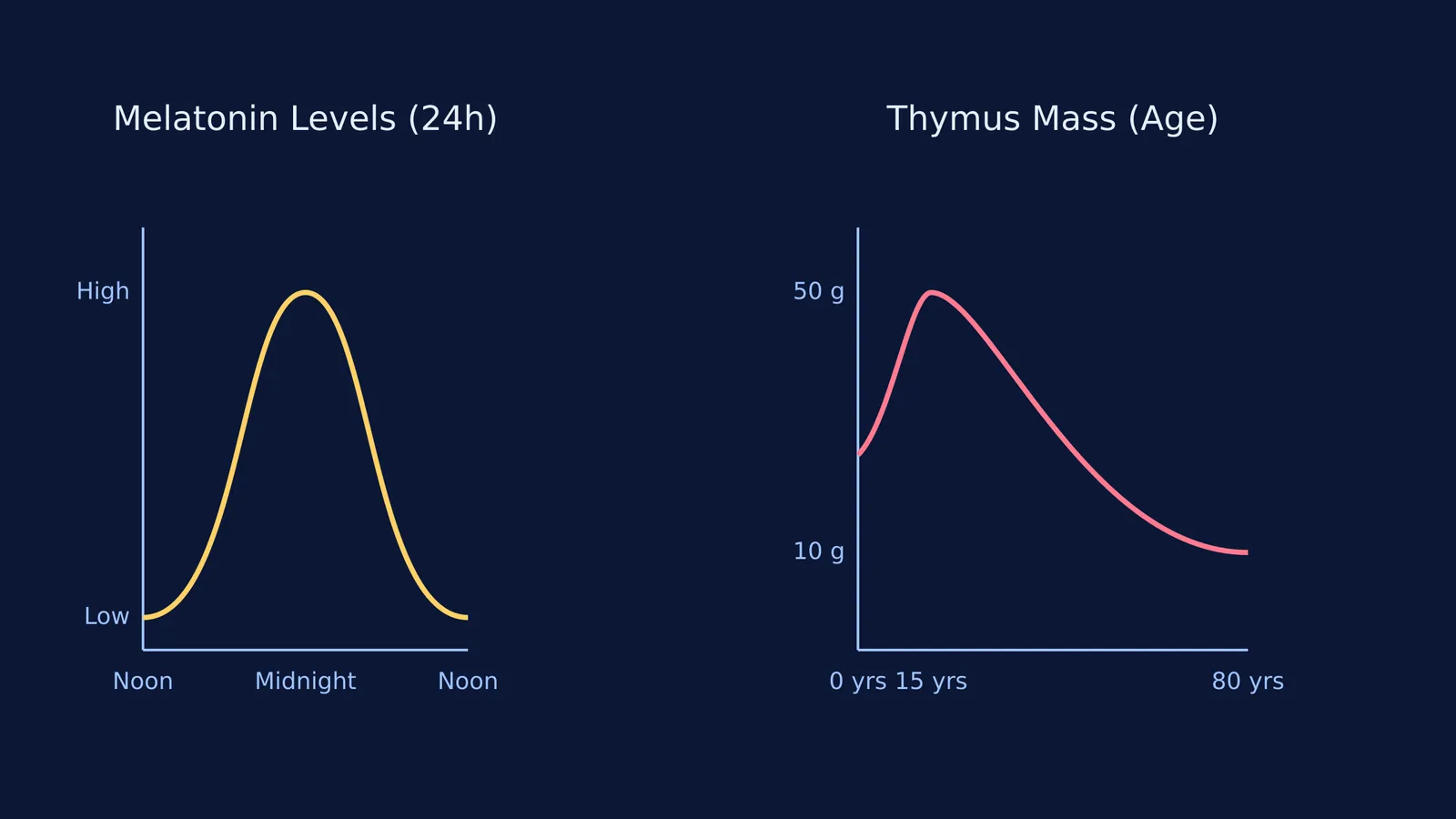
The pineal gland is a small endocrine gland that produces melatonin. Melatonin is a hormone derived from serotonin. Its primary function is to modulate sleep patterns by following diurnal cycles, according to the pineal gland's function.
Its production is directly tied to light. When your retina detects light, it sends signals to the suprachiasmatic nucleus (SCN), which then relays information to inhibit the pineal gland. Melatonin production is stimulated by darkness and inhibited by light.
This biological clock is why studying late into the night with bright screens can disrupt your sleep cycle. For students preparing for rigorous exams, understanding this daily rhythm is critical for maintaining focus.
If you are struggling with biological pathways or need a structured way to review the endocrine system, Fermi's AI tutor can work out what you already know and build a plan for the session, so you sit down to a clear next step. You can explore the Fermi Concept Library for every concept in physics, chemistry, biology, mathematics and computing, each with its own lesson.
What do thymus thymosins do for T-cells?
While the pineal gland manages your sleep, the thymus manages your adaptive immunity. The thymus is the primary lymphoid organ where T-cells mature.
These T-cells originate as hematopoietic precursors in the bone marrow but migrate to the thymus to develop. The thymus secretes hormones, including thymosins, which facilitate the further maturation of T-cells as they prepare to exit the thymus and enter peripheral circulation.
Inside the thymus, cells undergo positive and negative selection. T-cells must successfully react with the body's immune receptors to survive in the cortex. T-cells that react against the body's own proteins are eliminated in the medulla to prevent autoimmune diseases. This ensures your immune system attacks foreign invaders rather than your own healthy tissue.
Why does the thymus shrink with age?
Unlike most organs that grow and maintain their size in adulthood, the thymus follows a different trajectory. The thymus is largest and most active during neonatal and pre-adolescent periods. It reaches a maximum mass of 20 to 50 grams by puberty.
Following puberty, the organ undergoes involution, where thymic tissue is gradually replaced by fatty and connective tissue. This atrophy is primarily driven by increased circulating levels of sex hormones.
By old age, the thymus typically weighs only 5 to 15 grams. In many elderly individuals, this mass represents less than 30% of its peak adolescent mass. Despite this dramatic shrinkage, the thymus continues to produce a small but vital supply of new T-cells throughout adult life.
A practical checklist for sleep and immunity
Understanding how your body regulates sleep and immunity can change how you study. Here is a science-backed checklist to keep your pineal gland and immune system functioning well during exam season:
Dim the lights in the evening: Because melatonin is inhibited by light, lower your room lighting and use a blue-light filter on your screens to help your pineal gland start production.
Sleep in total darkness: Ensure your bedroom is completely dark to maximise the midnight melatonin peak.
Protect your T-cells with rest: Chronic sleep deprivation suppresses immune function, making the T-cells trained by your thymus less effective against infections.
Keep a consistent wake time: Waking up at the same time every day, even on weekends, anchors your suprachiasmatic nucleus and keeps your daily rhythm stable.
Read more about how the body coordinates these processes in our posts on Hormonal feedback loops: how the body keeps hormone levels steady and Sleep before an exam beats an all-nighter: what research shows. For a deeper look at immune history, read about Jacques Miller and the role of the thymus in immunity.


