

On this page
Microorganisms are easy to memorise as two lists, "useful" and "harmful", and easy to get wrong when a question mixes them up. This post explains what microbes are, what they do for and against us, works one number problem, and lists the mistakes Class 8 students make most often.
Where is this topic in the 2026-27 books?
NCERT's current Class 8 book is Curiosity, marked "Reprint 2026-27". The topic is split across two chapters. Chapter 2, "The Invisible Living World: Beyond Our Naked Eye", covers what microbes are and how they help. Chapter 3, "Health: The Ultimate Treasure", covers disease-causing microbes, vaccines and antibiotics. The older Class VIII book had a single chapter, "Microorganisms: Friend and Foe". If your school still uses it, the core ideas are the same.
What counts as a microorganism?
Chapter 2 defines microorganisms, or microbes, as tiny creatures that cannot be seen with the naked eye. Students look at pond water and soil suspension under a microscope that, the book says, magnifies 100 to 400 times, and sort what they see into four groups:
Bacteria: single cells shaped like spheres, rods, commas or spirals. They have no well-defined nucleus, only a nucleoid region.
Protozoa: single cells such as Amoeba and Paramecium.
Fungi: yeast is a single-celled fungus; bread mould is many-celled.
Algae: green, because they contain chlorophyll.
Viruses get a separate box. The book calls them acellular: they multiply only after entering a living cell.
How do microbes help us?
The chapter's activities each show one job:
Manure. Bacteria and fungi break down peels and leaves into manure. This decomposition returns nutrients to the soil.
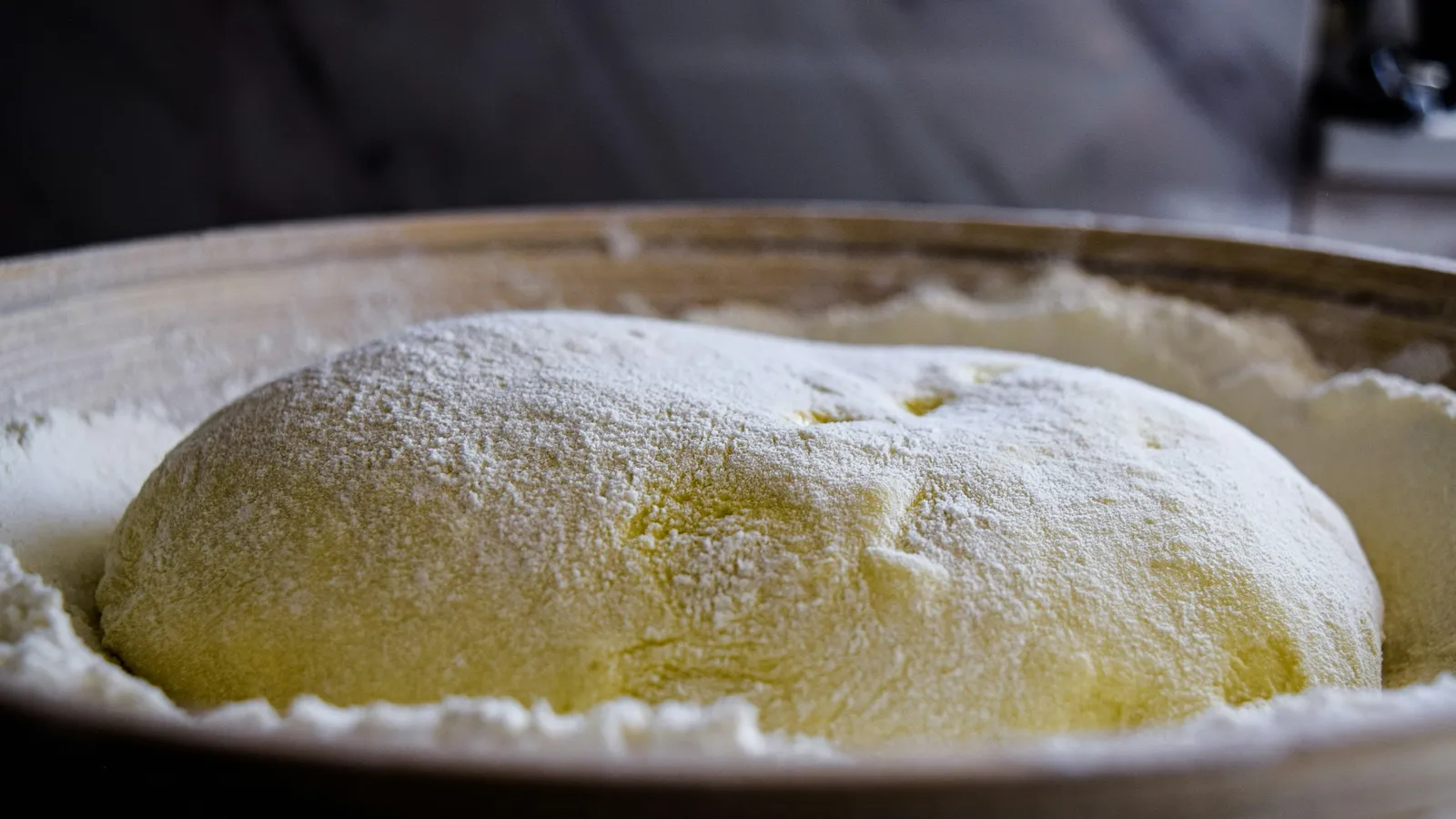
Bread. Yeast respires and releases carbon dioxide, and the bubbles make dough rise. It also makes a little alcohol, which explains the smell.
Curd. Lactobacillus feeds on lactose in milk and makes lactic acid, so curd tastes sour. It grows well when warm, which is why curd sets in a warm place but not in the fridge.
Nitrogen. Rhizobium lives in the root nodules of legumes and traps nitrogen from the air for the plant.
Biogas. Some bacteria that live without oxygen break down waste and release a gas mixture rich in methane.
The chapter also profiles Ananda Mohan Chakrabarty, who in 1971 developed a bacterium that could break down oil spills.
How do microbes cause disease, and what stops them?
Chapter 3 calls disease-causing microbes pathogens. Communicable diseases, such as typhoid and dengue, spread through air, water, food, contact or insects such as mosquitoes. Two tools fight them:
Vaccines train the body to fight a disease. The book traces the first vaccine to Edward Jenner's smallpox work in the late 1700s.
Antibiotics kill bacteria. Alexander Fleming discovered penicillin in 1928. Our post on Fleming and penicillin tells that story.
The book stresses that antibiotics do not work against viruses or protozoa. It also warns about antibiotic resistance: taking antibiotics when they are not needed, or stopping a course early, helps resistant bacteria survive and spread.
Worked example: how fast can bacteria multiply?
Many bacteria reproduce by splitting into two. Suppose one bacterium in warm milk divides every 30 minutes, and every new cell keeps dividing at the same rate. How many bacteria are there after 4 hours?
Number of divisions in 4 hours = 4 × 60 / 30 = 8.
Each division doubles the count: 1 → 2 → 4 → 8 → 16 → 32 → 64 → 128 → 256.
So after 8 divisions there are 2⁸ = 256 bacteria.
The common mistake is to multiply, 2 × 8 = 16, instead of doubling eight times. Doubling grows much faster than adding, which is why milk left out on a hot day turns quickly, and why refrigeration slows spoilage. Real bacteria run out of food and space, so the growth does not continue forever.
Which mistakes cost marks?
Calling yeast a bacterium. Yeast is a fungus.
Saying Lactobacillus makes alcohol. It makes lactic acid. Yeast makes alcohol.
Calling viruses cells. The book calls them acellular.
Thinking all microbes are harmful. Chapter 2 is mostly about the helpful ones.
Forgetting why pickles keep. High salt or sugar stops microbes growing, a point the book makes in a side note.
A practice routine for this chapter
Reviews of study techniques rate practice testing and spreading study over days as high-utility, and re-reading as low-utility. So:
Day 1: From memory, write the four microbe groups with one example each.
Day 2: List five uses of microbes and name the microbe behind each.
Day 4: Redo the doubling problem with a 20-minute division time over 2 hours (answer: 6 divisions, 64 bacteria).
Day 7: Explain antibiotic resistance to someone at home without the book.
If cell structure or decomposition still feels hazy, the Fermi Concept Library covers every concept in physics, chemistry, biology, mathematics and computing, so you can look up one idea at a time. For the scientist who first saw bacteria, read our post on Antonie van Leeuwenhoek.
Today, set curd in two bowls, one warm and one cold, and write down your prediction before you check.


