On this page
Mendel's 3:1 ratio holds only when one allele fully hides the other. Exams like to test the cases where it does not: a pink flower, an AB blood group, a gene with three alleles. These look similar but follow different rules, and mixing them up is a common way to lose marks. This post separates the three patterns, solves blood-group crosses step by step, and ends with a short practice plan.
Where is this in the syllabus?
The NEET (UG) 2026 syllabus lists "Deviations from Mendelism - Incomplete dominance, Co-dominance, Multiple alleles and Inheritance of blood groups, Pleiotropy". The CBSE Class 12 curriculum for 2026-27 uses almost the same words. Both follow the NCERT chapter on inheritance, which is the text to learn first. Check the current year's syllabus before your exam.
What is incomplete dominance?
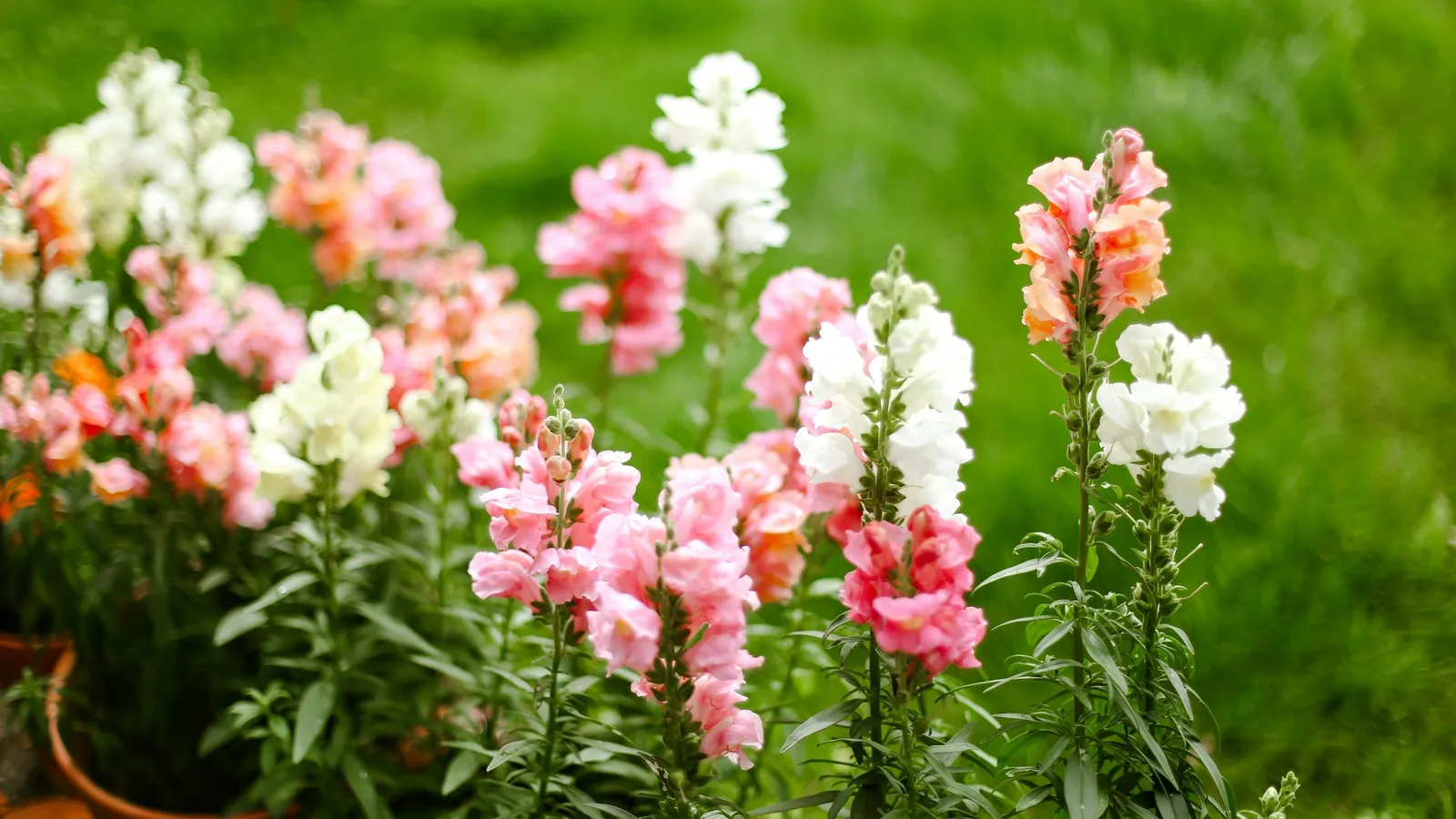
In incomplete dominance the heterozygote has a phenotype between the two parents. NCERT's example is the snapdragon (Antirrhinum). Crossing true-breeding red (RR) with true-breeding white (rr) gives pink F1 plants (Rr). Selfing the F1 gives 1 red : 2 pink : 1 white.
The genotype ratio is the usual 1:2:1. What changes is the phenotype ratio: because Rr looks different from RR, each genotype has its own phenotype, so the 3:1 disappears.
NCERT also makes a subtler point with pea seeds. One gene controls starch synthesis. BB seeds make large starch grains and are round; bb seeds make small grains and are wrinkled. Bb seeds are round, so B looks dominant for seed shape. But their starch grains are intermediate in size, so for grain size the same alleles show incomplete dominance. Dominance depends on which phenotype you measure.
What is codominance?
In codominance the heterozygote shows both parental phenotypes fully. NCERT's example is the ABO blood group. The gene I has three alleles: IA and IB each make a slightly different sugar on the red blood cell surface, and i makes none. IA and IB are both dominant over i, but in an IA IB person both sugars appear, which is why the blood group is AB.
The molecular reason was found later. Yamamoto and colleagues (Nature, 1990) showed that the A and B alleles code for glycosyltransferases that differ by a few single-base substitutions, changing four amino acids, while the O allele has a single-base deletion that produces an inactive protein. That is why i is recessive: it adds nothing. Karl Landsteiner received the 1930 Nobel Prize in Physiology or Medicine "for his discovery of human blood groups".
Why do three alleles give six genotypes?
ABO is also NCERT's example of multiple alleles: more than two alleles for one gene in a population, though each person carries only two. With n alleles the number of genotypes is n(n + 1)/2. For three alleles that is 3 x 4 / 2 = 6: IA IA, IA i, IB IB, IB i, IA IB and ii. These give four phenotypes: A, B, AB and O. With four alleles you would get 4 x 5 / 2 = 10 genotypes.
Worked example: blood-group crosses
Cross 1. A mother with group A (IA i) and a father with group B (IB i).
Gametes: mother IA or i; father IB or i, each with probability 1/2.
Offspring: IA IB, IA i, IB i, ii, each 1/4.
Phenotypes: AB, A, B and O, each 1/4. Parents of groups A and B can have a child of any of the four groups.
Probability that two children are both group O: 1/4 x 1/4 = 1/16.
Cross 2. A parent of group AB (IA IB) and a parent of group O (ii).
Gametes: IA or IB from one parent; only i from the other.
Offspring: IA i (group A) or IB i (group B), each 1/2.
No child can be AB or O. This is the kind of reasoning questions on disputed parentage rely on.
Cross 3. Pink snapdragon crossed with white. Rr x rr gives 1/2 Rr (pink) and 1/2 rr (white). There are no red offspring, because one parent cannot pass on R.
What mistakes do students make?
Calling AB blood incomplete dominance. AB cells carry both sugars, not an intermediate sugar.
Saying one person can carry three ABO alleles. Multiple alleles exist in the population; a diploid person has two.
Giving the genotype ratio when asked for the phenotype ratio, or the reverse. Write both down before choosing.
Writing "O" as a genotype. O is the phenotype; the genotype is ii.
Treating dominance as a fixed property of a gene. The pea starch example shows it depends on the trait you look at.
A practice routine
Write all six ABO genotypes and their phenotypes from memory.
Work out offspring for every pair of parental genotypes. With six genotypes there are 21 such pairs; do six a day.
Make up two snapdragon crosses and give both ratios.
Revisit the Mendelian methods in our genetics problems guide and mark where each method still applies.
If a cross keeps going wrong at the same step, the Fermi Problem Library has a step-by-step solver that explains the reasoning rather than printing an answer, so you can see which step broke.
Start with Cross 1: redo it without looking, then change the father to IB IB and see which groups disappear.