

On this page
Every morning in kitchens across India, fresh rotis are stacked and wrapped in a gleaming sheet of aluminium foil. By lunchtime, they are usually still soft and warm. But how does a thin, metallic sheet — one that feels instantly hot when you touch it — prevent food from cooling down? The answer lies in how aluminium manipulates the three fundamental mechanisms of heat transfer: radiation, convection, and conduction.
How does aluminium foil keep rotis warm?
When food is hot, it loses thermal energy to the surrounding air. Aluminium foil acts as a selective barrier that interrupts this cooling process. Its greatest strength is handling thermal radiation.
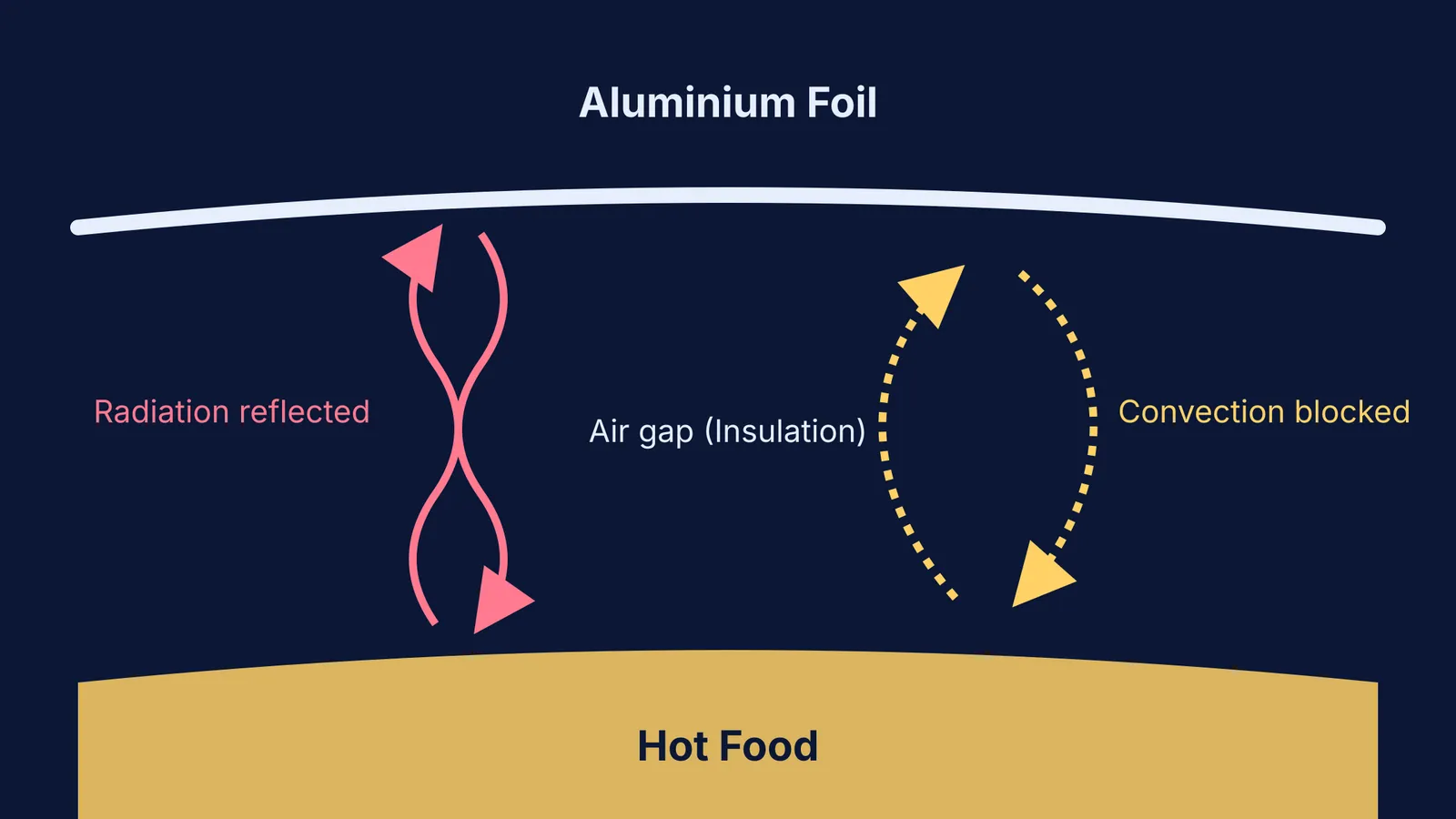
Every object above absolute zero emits infrared radiation. A hot roti radiates its heat outwards as electromagnetic waves. Polished aluminium has an emissivity of just 0.05, meaning it emits very little thermal radiation itself and instead reflects 95% of incident infrared energy. When that radiant heat hits the foil wrapper, the shiny surface bounces the infrared waves directly back toward the stack of rotis.
The foil also tackles convection. As the food heats the air immediately around it, that hot air naturally wants to rise, carrying thermal energy away and pulling cooler air in to replace it. A foil wrapper creates a sealed physical boundary that traps this convection current, ensuring the warm air stays near the rotis.
However, aluminium is a metal, which means it is an excellent thermal conductor. If the foil is in tight, direct contact with the rotis, heat will quickly transfer through the metal via conduction and bleed out into the cooler environment. This is why the trapped layer of air — a poor conductor — is critical to the foil's performance. (If you are dealing with how gases handle heat and work in calculations, read about heat in isobaric and isochoric processes.)
Does the shiny or dull side of the foil matter?
A common kitchen debate is whether the shiny side or the dull side of the foil should face the food to maximise heat reflection.
The two different finishes are simply a result of the manufacturing process. Aluminium foil is rolled extremely thin; to prevent the metal from tearing in the final pass, two sheets are rolled through the heavy steel cylinders at the same time. The sides that touch the highly polished rollers emerge shiny, while the sides that face each other end up with a dull, matte finish.
For keeping your lunch warm, the difference is negligible. While the shiny side reflects slightly more visible light, both sides are highly reflective to the longer wavelengths of thermal infrared radiation. You can place the rotis facing either side without measurably changing how fast they cool down.
Why do rotis get soggy in foil?
If foil is so effective at trapping heat, why do rotis sometimes end up wet and soggy at the bottom of a lunchbox?
The same physical barrier that stops convection also traps water vapour. Freshly cooked rotis release a significant amount of steam. When this steam hits the inner surface of the foil — which is slightly cooler than the food itself — it condenses back into liquid water droplets. Since the foil is impermeable, the water has nowhere to go and drops back onto the bread, leading to a damp texture.
If you are studying thermal physics and want to visualise these invisible heat flows, the Fermi Simulation Lab provides interactive simulations for the ideas that are easier to see than to read. But for practical lunch-packing, there is an easy fix that relies on the physics of insulation: use a cloth.
Here is the best practice for packing soft, warm rotis:
Cool briefly: Let the rotis sit on a wire rack or mesh sieve for a short moment right after taking them off the pan. This allows the initial burst of heavy steam to escape.
Wrap in cotton: Stack the rotis and wrap them entirely in a clean, dry cotton cloth. The natural fibres will absorb any excess moisture, keeping the rotis soft without turning them soggy.
Seal with foil: Wrap the cloth bundle loosely in aluminium foil. The cloth creates a thicker insulating gap that slows down conduction, while the foil layer outside continues to reflect the infrared radiation and block convection drafts.
By combining the moisture control of cotton with the reflective power of aluminium, you manipulate all three modes of heat transfer to keep your meal exactly as it should be. Understanding these principles helps in everyday life, just as knowing how thermal conductivity governs the time for ice to form on a pond.


