

On this page
If you walk through an abandoned field in India, you will often spot the *Calotropis* weed (also known as aak, madar, or milkweed) growing untouched. While we often study how plants respond to their environment through tropic movements like phototropism, their defensive responses against herbivores are equally robust. Despite the lack of thick thorns or spines, grazing animals like cattle and goats instinctively avoid this particular plant.
This observation is a classic example in biology and a frequent question in biology exams. The answer lies not in how the plant looks, but in what it produces: a highly toxic chemical cocktail designed to stop herbivores at the cellular level.
What are cardiac glycosides?
Rather than growing physical barriers, *Calotropis* relies on a chemical defence system. When a grazing animal damages the plant's leaves, it releases a milky latex packed with secondary metabolites called cardiac glycosides (specifically, a class known as cardenolides).
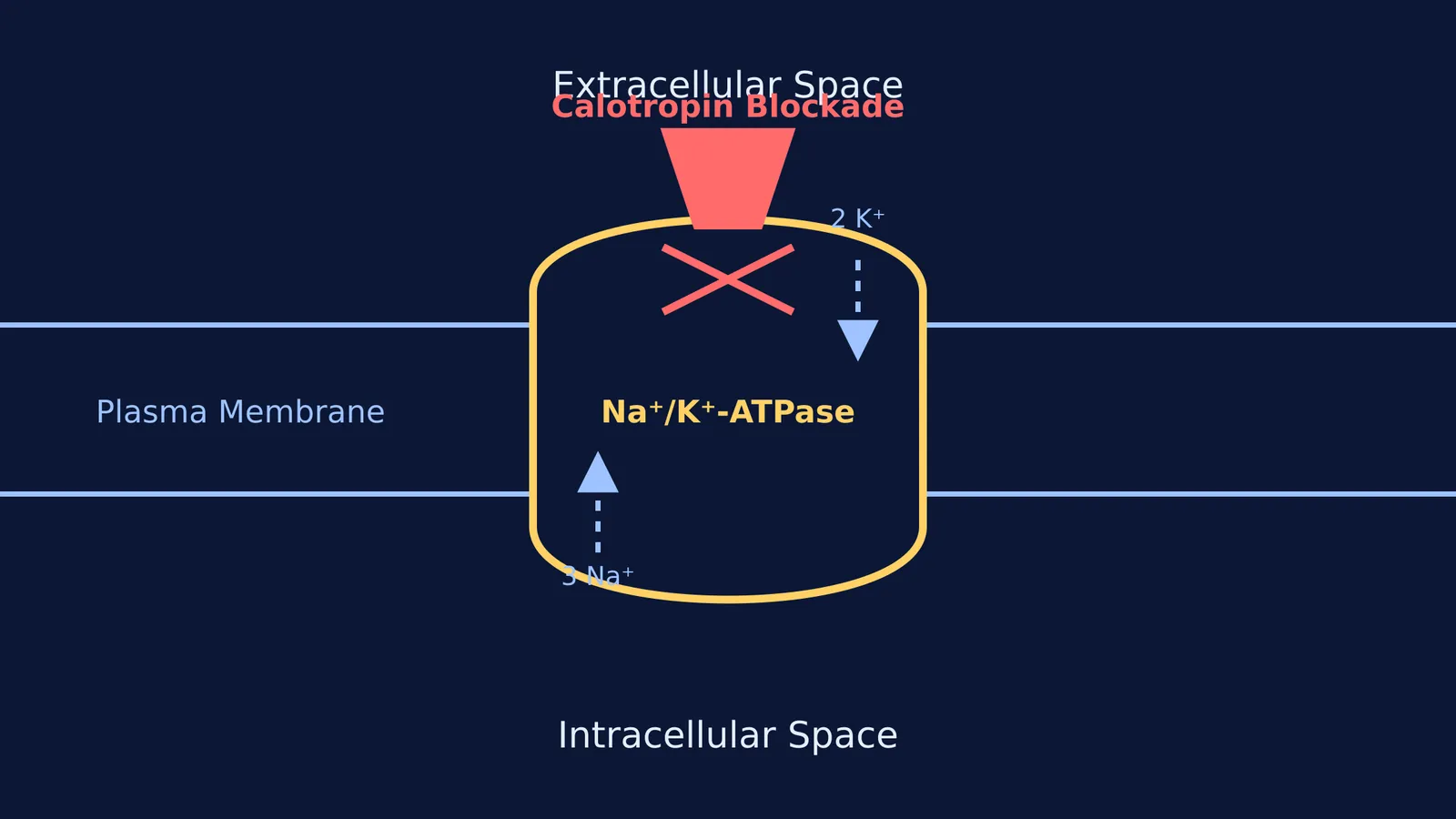
According to a 2020 study on *Calotropis gigantea* in the *Journal of Natural Products*, these compounds are remarkably potent. They target and inhibit the Na⁺/K⁺-ATPase pump—an essential enzyme that maintains the sodium and potassium ion balance across animal cell membranes.
The pump normally moves three sodium ions (Na⁺) out of the cell and two potassium ions (K⁺) in, using energy from ATP. This balance is crucial for nerve impulses and muscle contractions. The study found that cardenolides from *Calotropis* bind to the extracellular face of the pump, locking it in a state that prevents ion movement.
By shutting down the sodium-potassium pump, the toxins disrupt heart muscle contractions. For cattle and goats, eating *Calotropis* leads to severe gastrointestinal distress and irregular heart rhythms. The animals sense the danger—often tipped off by the latex's intensely bitter taste—and learn to avoid grazing on it entirely.
How do some insects survive the poison?
While the plant is lethal to most grazers, evolution has allowed a few exceptions. The Monarch butterfly (*Danaus plexippus*) and the Plain Tiger butterfly (*Danaus chrysippus*) actively seek out *Calotropis* during their larval caterpillar stage.
Instead of being poisoned, these caterpillars have evolved a resistant Na⁺/K⁺-ATPase pump. A classic 1975 paper in *Science* demonstrated that Monarchs not only tolerate these cardiac glycosides but actively sequester (store) them in their own body tissues. Further research over the years has shown exactly how: these specialist insects have evolved specific amino acid substitutions in their own Na⁺/K⁺-ATPase pumps. Because the binding site on their pump has a slightly different shape, the plant's poison cannot attach to it.
This borrowed chemical defence makes the caterpillars—and the brightly coloured adult butterflies they become—highly toxic to birds and other predators.
If you have a concept gap on how the Na⁺/K⁺-ATPase pump works in human physiology, you can find its own lesson and its place in the map in the Fermi Concept Library.
What is the difference between morphological and chemical plant defences?
For students preparing for biology exams, plant defences are broadly categorised into two strategies. Here is a quick revision checklist of the differences you need to know:
Morphological (Physical) Defences
Thorns and Spines: Modified structures (like the stem modifications seen in *Acacia* or *Citrus*) that physically pierce or deter grazers.
Hairy Leaves: Plants like cotton or wheat use trichomes (hairs) to resist insects like jassids and cereal leaf beetles.
Tough leaves and silica: Some grasses accumulate silica to wear down the teeth of herbivores.
Chemical Defences
Toxic Metabolites: Compounds like the cardiac glycosides in *Calotropis* that disrupt predator physiology at the cellular level.
Repellents and Stimulants: Commercial chemicals we use daily—such as nicotine, caffeine, quinine, strychnine, and opium—are actually produced by plants as chemical defences against grazers.
Next time you see an isolated *Calotropis* plant thriving where other vegetation has been eaten away, you are looking at one of nature's most effective chemical laboratories at work.


