

On this page
Is a potato a root? Is a cucumber tendril the same organ as a pea tendril? These questions keep appearing, yet many students cannot find the topic in their current NCERT book. This post explains where stem modifications went, lists the examples by function, and gives you a test for telling a modified stem from a modified root or leaf.
Are stem modifications still on the syllabus?
The NEET (UG) 2026 syllabus lists "Morphology and modifications" in the unit on structural organisation. The current NCERT Class 11 chapter Morphology of Flowering Plants (reprint 2026-27) describes the stem in section 5.2 and says some stems store food, give support or protection, or spread the plant. It no longer has the subsection on modifications or its figure.
That subsection, 5.2.1 Modifications of Stem, is in the 2022-23 edition of the chapter (archived copy). So the syllabus still names the topic while the current text has dropped the detail. Learn it from the older text, and check the syllabus for your exam year.
How do you prove an organ is a stem?
The current NCERT text gives you the test. A stem develops from the plumule, bears nodes and internodes, and carries buds, which may be terminal or axillary. A leaf develops at a node and has a bud in its axil.
So ask three questions of any odd-looking organ:
Does it have nodes, or buds on it?
Does it grow out of an axillary bud?
Does it bear scale leaves or leaves at regular points?
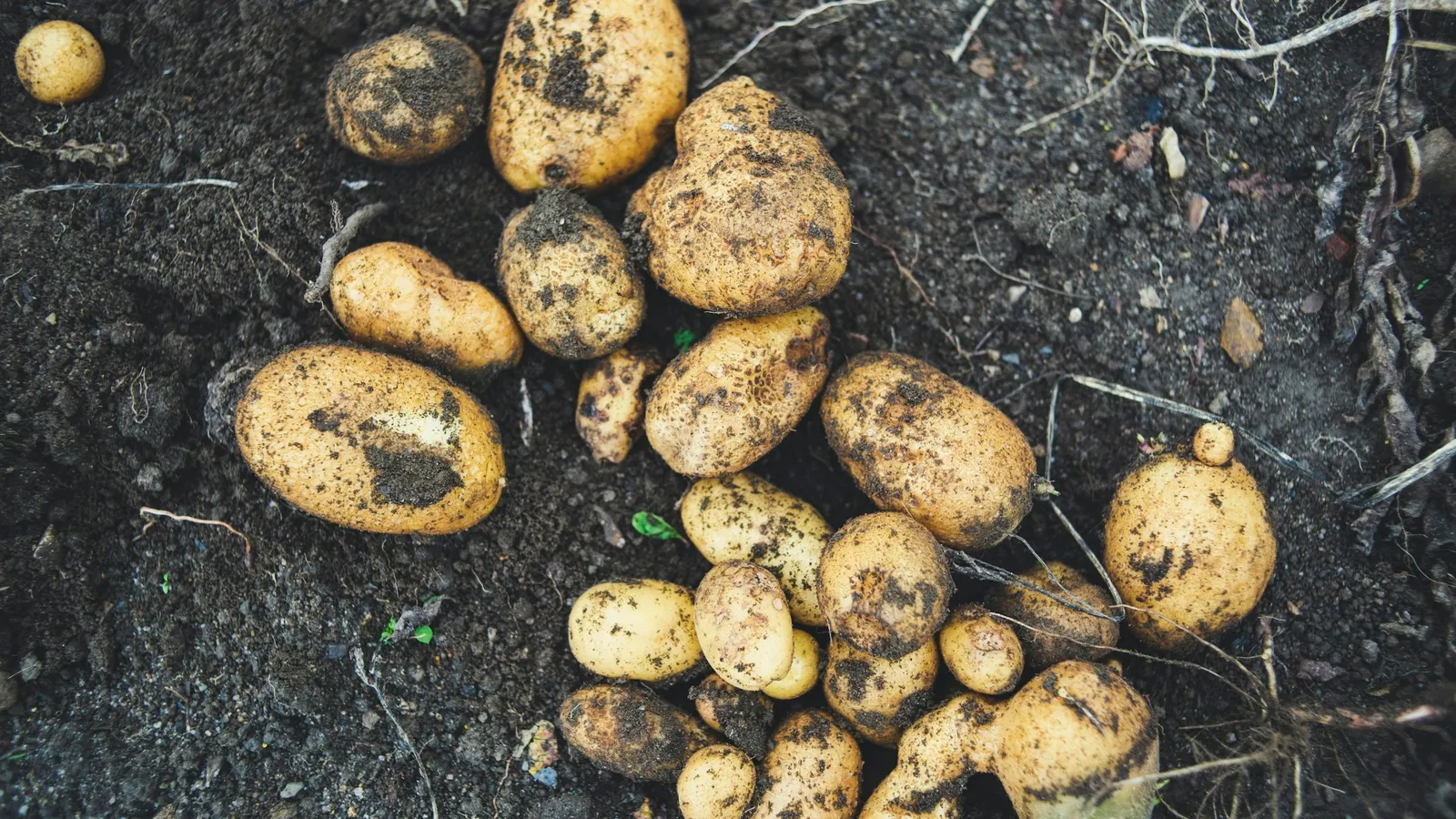
A yes to any of these points to a stem. The eyes of a potato are buds, which is why a piece with an eye can sprout. A sweet potato looks similar, but NCERT's older edition lists it as a swollen adventitious root.
Which stem modifications should you know?
The 2022-23 NCERT text groups them by job.
Storage and perennation. Underground stems of potato, ginger, turmeric, zaminkand and *Colocasia* store food. They also help the plant survive conditions unfavourable for growth.
Support. Stem tendrils grow from axillary buds. They are slender and spirally coiled, and help gourds (cucumber, pumpkin, watermelon) and grapevines climb.
Protection. Axillary buds can become woody, straight, pointed thorns, as in *Citrus* and *Bougainvillea*. They protect the plant from browsing animals.
Photosynthesis in dry places. *Opuntia* has a flattened stem and *Euphorbia* a fleshy cylindrical one. Both contain chlorophyll and do the work leaves normally do.
Spread and vegetative propagation. Underground stems of grass and strawberry spread to new places. In mint and jasmine, a slender side branch grows in the air, then arches down to touch the ground. In *Pistia* and *Eichhornia*, a side branch with short internodes bears a rosette of leaves and a tuft of roots at each node. In banana, pineapple and *Chrysanthemum*, side branches start underground, grow horizontally and then turn up to form leafy shoots.
Question banks often name the last four as runner, stolon, offset and sucker. Learn the description with the name, because NCERT describes them without always naming them.
Worked example: stem, root or leaf?
Each pair below looks alike but comes from different organs. The leaf and root facts are also from the 2022-23 NCERT chapter.
Cucumber tendril and pea tendril. The cucumber tendril grows from an axillary bud, so it is a stem. In pea, leaves are converted into tendrils, so it is a leaf.
Bougainvillea thorn and cactus spine. The thorn comes from an axillary bud: stem. NCERT gives cactus spines as leaves modified for defence: leaf.
Potato and sweet potato. Potato is an underground stem. Sweet potato is a swollen adventitious root that stores food.
Ginger and carrot. Ginger is an underground stem. Carrot is a swollen tap root.
Onion. Its fleshy leaves store food, so the stored food sits in leaves, not in the stem.
***Opuntia* and Australian acacia.** Both are green and flat where you would expect leaves. In *Opuntia* it is the stem. In Australian acacia, the petiole expands and makes food: part of a leaf.
Write the reason each time, such as "arises from an axillary bud, so stem". A one-word answer earns little in a long question and teaches you nothing.
Which mistakes cost marks?
Calling every underground organ a root. Potato, ginger, turmeric and *Colocasia* are stems.
Treating thorn and spine as the same. In NCERT's examples, thorns are stems and cactus spines are leaves.
Forgetting where tendrils come from. Gourds and grapes have stem tendrils; pea has leaf tendrils.
Putting onion in the stem storage list.
Revising only from the current book and missing the topic entirely.
When a structure is easier to understand drawn than described, Fermi's AI tutor writes on a board, draws the figure and checks understanding as it goes.
A practice routine
Copy the five job headings above and fill in the examples from memory.
Make cards with one plant on the front and "organ, job, reason" on the back. Shuffle in leaf and root examples.
Pick three vegetables in your kitchen and decide stem, root or leaf, with a reason.
Revise the rest of the chapter, including floral formulae, with our guide to morphology of flowering plants.
Today, open a potato and a ginger and find the nodes and buds yourself.


