

On this page
Glimpses of India is chapter 5 of First Flight, NCERT's Class 10 English textbook, in the 2026-27 reprint. Some older guides number it differently; the current contents page lists it as chapter 5. If your guide disagrees with your book, see how to check the rationalised NCERT syllabus before buying a guide.
What is Glimpses of India about?
Three short pieces by three writers, each showing one corner of India.
A Baker from Goa (Lucio Rodrigues)
In the NCERT text, the narrator remembers his childhood in Goa, when the village baker, called a pader, came at least twice a day. He announced himself with the "jhang, jhang" of his bamboo staff, a basket of loaves on his head. Children ran to him for the bread-bangles, not the loaves. The Portuguese have gone, yet the old furnaces still burn and sons carry on the family profession. Bread runs through Goan life, from weddings to Christmas. In Portuguese days bakers wore a knee-length frock, the kabai. Bills were collected at the end of the month from accounts pencilled on a wall, and the baker's plump family showed that baking paid.
Coorg (Lokesh Abrol)
In the NCERT text, Coorg, or Kodagu, is the smallest district of Karnataka, midway between Mysore and Mangalore. Evergreen rainforests cover thirty per cent of the district. Its people, the Kodavus, may be of Greek or Arab descent; their long black coat with an embroidered waist-belt, the kuppia, is offered as support for the Arab story. The Coorg Regiment is one of the most decorated in the Indian Army, and General Cariappa, the first Chief of the Indian Army, was a Coorgi. Visitors come for coffee, the Kaveri, river rafting, the Brahmagiri hills and the Tibetan settlement at Bylakuppe.
Tea from Assam (Arup Kumar Datta)
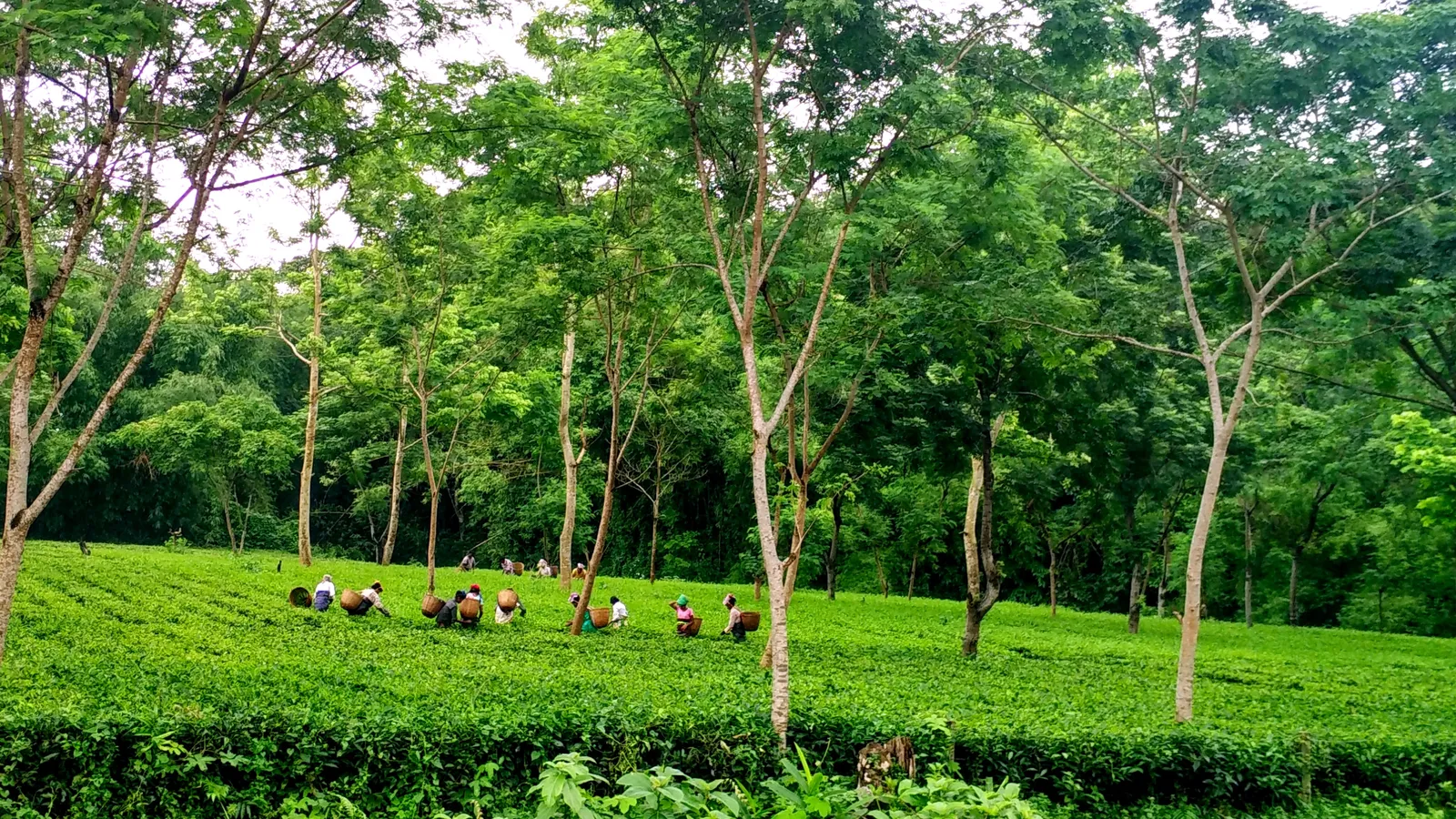
In the NCERT text, Rajvir travels by train with his Delhi classmate Pranjol, whose father manages a tea garden in Upper Assam. Over chai, Rajvir says that over eighty crore cups of tea are drunk every day throughout the world, then tells two legends: a Chinese emperor whose boiling water caught a few leaves from the burning twigs, and Bodhidharma, whose cut-off eyelids grew into tea plants. At Dhekiabari Tea Estate he names the second flush, May to July, and Pranjol's father, Mr Barua, says he has done his homework.
What are the themes of Glimpses of India?
India's variety. NCERT's own lesson note says the three parts give an idea of how varied and charming the country is.
Tradition that outlasts change. The pader outlived Portuguese rule; sons still bake.
Nostalgia. The Goa piece looks back fondly; one exercise asks you to name the author's tone.
Land and livelihood. Bread in Goa, coffee in Coorg, tea in Assam.
Curiosity. Rajvir reads about tea before he sees it.
Character sketches: who are the main people?
The pader: the children's friend, part of every celebration, prosperous.
The Kodavus: fiercely independent, hospitable, proud of their soldiers; the text says they are the only people in India allowed to carry firearms without a licence.
Rajvir: curious, well read, thrilled by the greenery, polite.
Pranjol: born and brought up on a plantation, so unimpressed; buries his nose in his detective book.
What questions come in the exam from Glimpses of India?
Check your school's current sample paper for marks and word limits. The first three questions below are printed in the chapter; Tea from Assam has no comprehension questions in the book, so the last two are ours:
Is bread an important part of Goan life? How do you know?
What did the bakers wear in the Portuguese days, and when the author was young?
What is the story about the Kodavu people's descent?
What are the two legends about how tea was discovered?
Why is Pranjol less excited than Rajvir?
A worked answer
Question: Is bread an important part of Goan life? How do you know?
Answer: Yes. Marriage gifts mean nothing without the sweet bol, a party loses its charm without bread, the lady of the house must make sandwiches for her daughter's engagement, and cakes and bolinhas are a must at Christmas. So the narrator calls the baker's furnace absolutely essential to the village.
The same claim-then-evidence habit is what the analytical paragraph in Class 10 asks for.
A 30-minute revision plan
Five minutes: write one sentence per part from memory.
Ten minutes: list key words per part. Goa: pader, kabai, bol. Coorg: Kodagu, kuppia, Cariappa. Assam: Dhekiabari, second flush, Mr Barua.
Ten minutes: answer two questions above with the three-step method.
Five minutes: check every detail against the NCERT chapter. If you used an AI summary, match its claims to the pages.
For science and maths, where the hard part is knowing where to start, Fermi's AI tutor works out what you already know and builds a plan for the session, so you sit down to a clear next step.
Open the chapter tonight and try question 1 before reading our answer.


