

On this page
Have you ever noticed your heart pounding, your palms sweating, and your breathing speeding up when you are startled by a loud noise or when you turn over an exam paper? That sudden jolt of energy is the work of adrenaline.
Adrenaline, also known as epinephrine, is a chemical messenger produced by the adrenal glands, which sit like small caps on top of your kidneys. Because it prepares your body to deal with sudden danger or high-stress situations, biologists often refer to it as the "emergency hormone".
Why is adrenaline called the emergency hormone?
When your brain perceives a threat—whether it is a physical danger or a high-stakes situation like an exam—the sympathetic nervous system springs into action. It sends a rapid signal to the inner part of the adrenal glands, known as the adrenal medulla.
The adrenal medulla secretes adrenaline directly into your bloodstream. This triggers what Walter Cannon's work on the fight-or-flight response described a century ago: an evolutionary adaptation that readies your body to either fight the threat or run away from it. Because the hormone is the chemical key to this rapid emergency response, it earned its famous nickname. In the context of chemical coordination for NEET and CBSE biology, it is also sometimes called the "Triple F" hormone (Fight, Fright, Flight).
What are the effects of adrenaline on the body?
Once adrenaline enters the bloodstream, it binds to specific receptors across multiple organs, driving rapid physiological changes:
Heart rate and blood pressure: Your heart pumps faster and more forcefully. This increases your cardiac output, pushing oxygenated blood quickly to your vital organs and major muscle groups.
Airway dilation: The smooth muscles in your lungs (specifically the bronchioles) relax. This widening of the airways allows you to take in more oxygen with each breath.
Blood sugar surge: The liver breaks down stored glycogen into glucose (a process called glycogenolysis). This floods the bloodstream with sugar, giving your muscles and brain an immediate fuel source.
Redirected blood flow: Blood vessels in your skin and digestive system constrict, which is why people often look pale when frightened. Meanwhile, vessels in your skeletal muscles dilate, diverting blood to where it is needed for physical action.
Sharpened senses: Your pupils dilate (widen) to let in more light, improving your vision, and your brain becomes hyper-alert to focus entirely on the immediate threat.
How long does an adrenaline rush last?
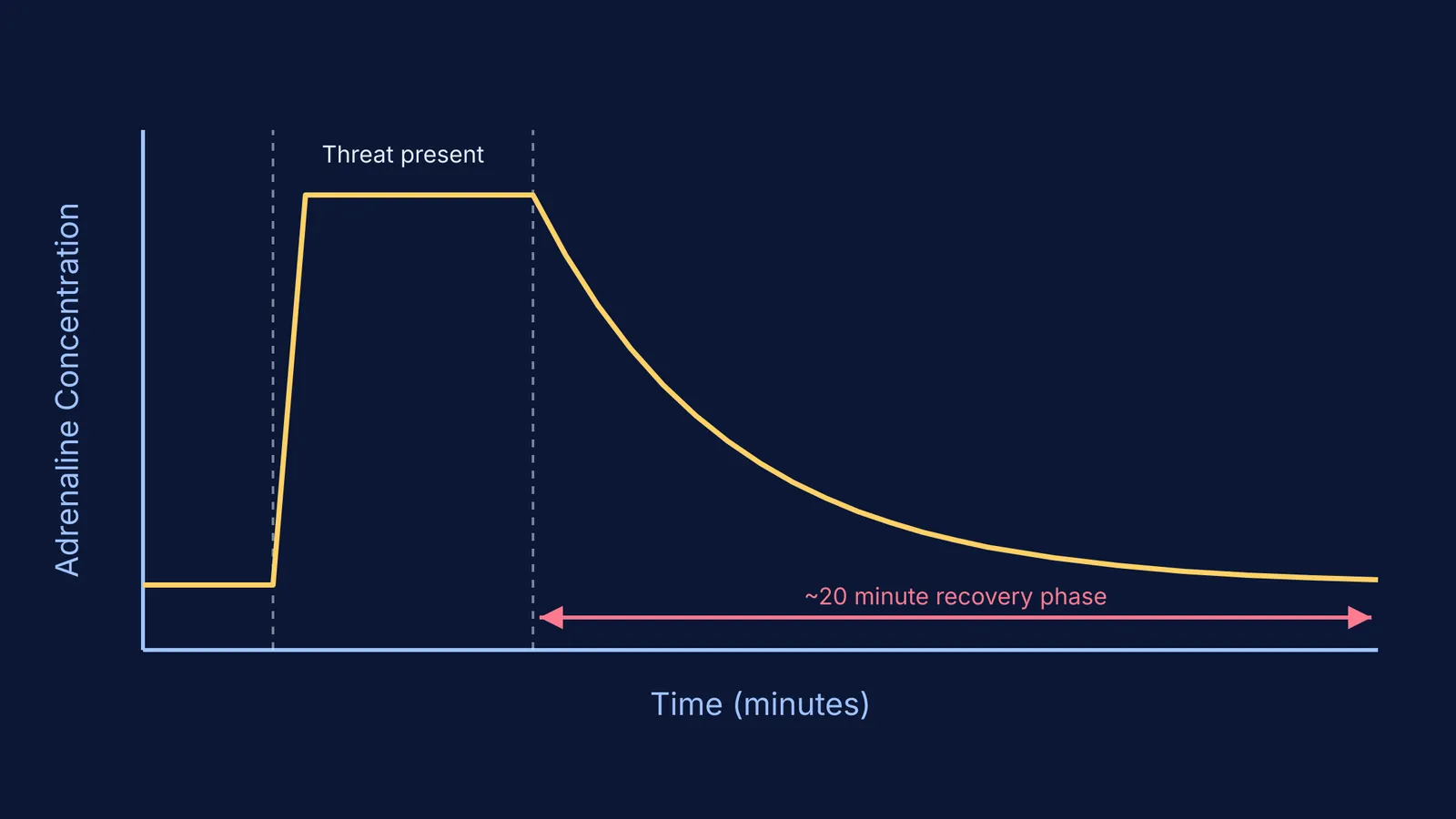
The onset of an adrenaline rush is very quick. According to Medical News Today, the physiological changes take effect within a few minutes of the stressful event.
However, the comedown takes much longer. According to Healthdirect Australia, once the stressor is gone and your glands stop releasing the hormone, it takes approximately 20 minutes for the physical effects—such as trembling, a fast heartbeat, or looking pale—to leave your system. The hormone must be metabolised and cleared from the blood, while your parasympathetic nervous system (the "rest and digest" system) slowly brings your heart rate and breathing back to normal levels.
Mastering control and coordination
Understanding how the nervous system and the endocrine system work together is a core part of learning about control and coordination in Class 10 and beyond. The interplay between the brain's signals and the adrenal glands is a perfect example of chemical coordination happening in real time.
If you struggle to remember which gland secretes which hormone or how feedback loops keep the body balanced, the Fermi Concept Library maps out every concept in biology, chemistry and physics. Our AI tutor will teach through the topic, draw the pathways on the board, and check your understanding of hormone actions as it goes until the ideas stick.


