On this page
Leave a field unploughed and it does not stay a field. Weeds arrive first, then grasses, then shrubs and young trees. On bare rock the same thing happens far more slowly, starting with organisms that can live without soil. This post explains the stages of succession, the difference between primary and secondary succession, three models ecologists use to explain it, and how to read succession data.
Is ecological succession in the NEET or CBSE syllabus?
Not at present. The NEET (UG) 2026 syllabus limits the ecosystem unit to "Patterns, components; productivity and decomposition; Energy flow; Pyramids of number, biomass, energy", and the CBSE Class 12 curriculum for 2026-27 uses the same line. The topic is listed in the HBCSE syllabus for NSEB and INBO, which includes "nutrient cycles; ecological succession", so it matters for biology olympiad students, and it supports the ecology you need for any exam. Check the current syllabus for your own exam. Our guide to the biology olympiad and NSEB covers how that exam works.
What are the stages of succession?
Pioneer species colonise first. They tolerate harsh conditions and usually grow and reproduce quickly.
Seral stages follow, each changing the conditions: building soil, shading the ground, adding nutrients.
A climax community is the relatively stable stage that persists while conditions stay the same. What it looks like depends on climate and soil, so it is not always a forest.
The whole sequence of communities is called a sere. Succession that starts in water and moves towards land is called hydrarch; succession that starts on dry rock is xerarch.
What is the difference between primary and secondary succession?
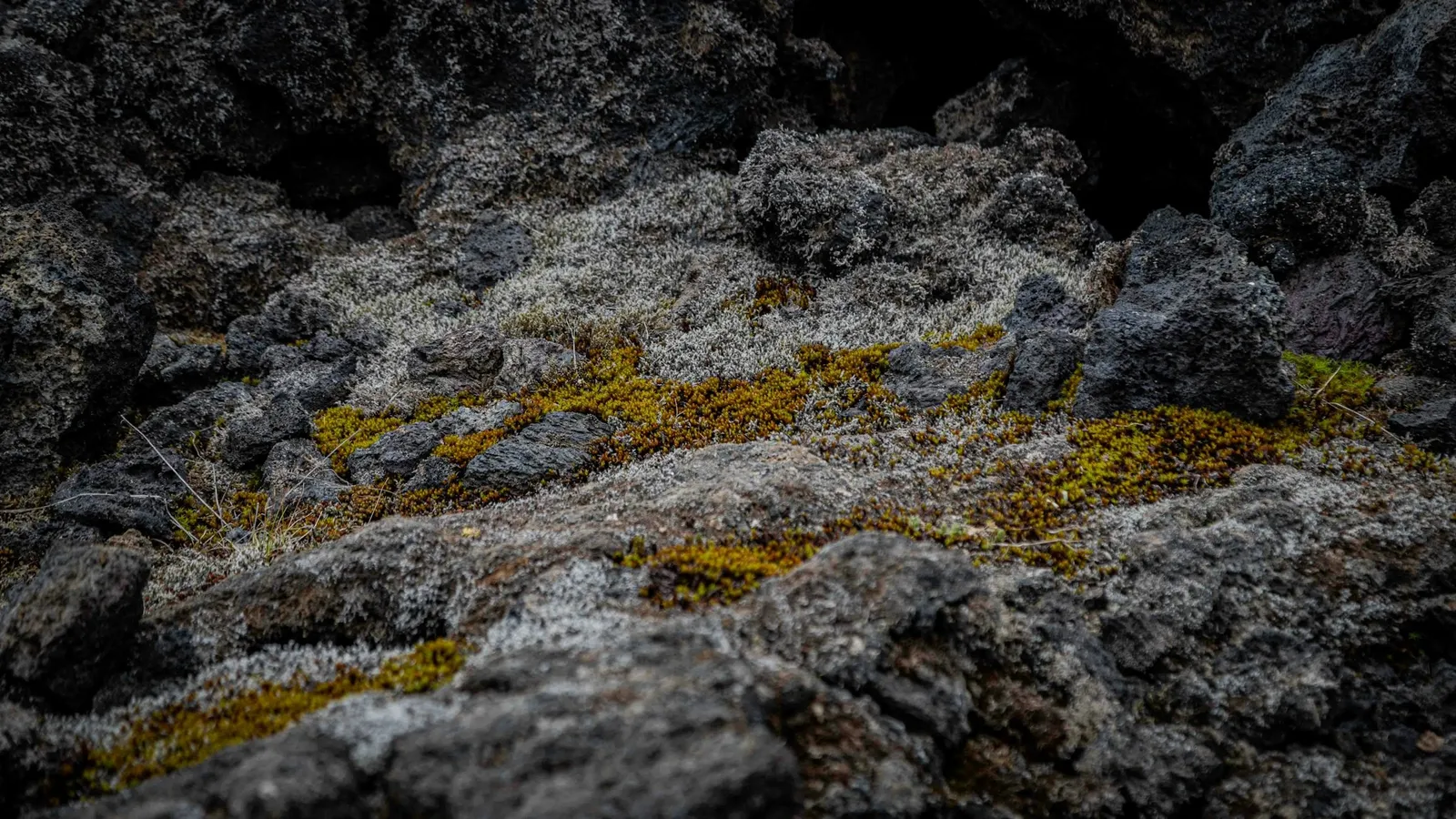
Primary succession begins where no soil exists: bare rock, a new volcanic island, sand dunes, or ground exposed by a retreating glacier. It is slow, because soil must be built from nothing.
Secondary succession begins where a community has been removed but soil remains: an abandoned farm, a forest after fire or felling, a flooded area that drains. Seeds and roots are often already in the soil, so it is much faster.
A well-known study of primary succession comes from Glacier Bay in Alaska, where ice has retreated and left bare ground of known age. Chapin, Walker, Fastie and Sharman (1994) found that over the first 200 years soil organic matter in the upper mineral soil increased tenfold, with rises in soil moisture and total nitrogen. Early species such as Dryas drummondii were small-seeded and short-lived; alder dominated the middle stage; Sitka spruce came last. Each stage changed the soil and light for the next.
How do ecologists explain the order of species?
Connell and Slatyer (1977) set out three models in The American Naturalist:
Facilitation: early species "prepare the ground", and later species can only establish after them. They found support mainly in some primary successions.
Tolerance: later species can tolerate lower resource levels, so they grow up under the earlier ones. They found little evidence for this at the time.
Inhibition: early occupants hold the space and keep later species out until they die or are damaged.
Real successions often mix these. At Glacier Bay, Chapin's team found that the Dryas and alder stages helped spruce seedlings grow, mainly by adding organic matter and nitrogen, while every stage also inhibited germination of sown seeds. They concluded that no single mechanism fully accounts for the succession.
Worked example: reading succession data
The numbers are invented for practice. A student surveys plant cover on abandoned fields of different ages, all with the same soil.
Field abandoned 2 years: total cover 60 per cent, of which annual herbs 48 per cent.
Field abandoned 10 years: total cover 90 per cent, of which perennial grasses 54 per cent and shrubs 18 per cent.
Field abandoned 30 years: total cover 100 per cent, of which shrubs and trees 70 per cent.
Type of succession. Soil was present from the start, so it is secondary.
Share of cover from annuals in the 2-year field. 48 / 60 = 0.8, so 80 per cent of the plant cover is annual herbs.
Share from woody plants. In the 10-year field, 18 / 90 = 20 per cent; in the 30-year field, 70 per cent.
Interpretation. Short-lived pioneers give way to perennials and then woody plants. Comparing sites of different ages to infer change over time is called a chronosequence, the same method used at Glacier Bay.
Caution. A chronosequence assumes all sites started alike. If the 30-year field had different soil, the comparison would mislead.
Common mistakes
Calling every bare site primary. A burnt forest has soil, so its recovery is secondary.
Treating the climax as permanent. It persists only while climate and disturbance stay the same.
Assuming the climax is always forest. In dry regions it may be grassland or scrub.
Listing stages without saying what each one changes. Examiners want the mechanism: soil, shade, nutrients.
A practice routine
Write one example each of primary and secondary succession near where you live.
For the Glacier Bay sequence, write one line on what each stage changed for the next.
Make up a chronosequence table with three sites and calculate one percentage from it.
Connect this to food chains and pyramids in our ecology questions guide.
If you are preparing for an olympiad and do not know where to begin, Fermi's AI tutor can work out what you already know and build a plan for the session, so you start with a clear next step.
Today, pick one patch of ground you pass every day and decide whether its recovery would be primary or secondary succession, and why.