

On this page
The last unit of Class 12 Informatics Practices, Societal Impacts, ends with two topics students often read once and forget: e-waste, and health concerns from using technology. Both turn up as short questions, and both are worth knowing beyond the exam, since every phone and laptop you own will one day become e-waste. This post covers what the syllabus asks, the facts behind it, and how to answer the questions that appear.
What does the syllabus ask?
The CBSE Informatics Practices curriculum for 2026-27 gives Unit 4, Societal Impacts, 10 of the 70 theory marks. Its last items are "E-waste: hazards and management" and "Awareness about health concerns related to the usage of technology". Computer science Class 11 also lists e-waste management in its Society, Law and Ethics unit, per the CS curriculum.
The textbook chapter is NCERT Class 12 Informatics Practices, Chapter 6, Societal Impacts, sections 6.8 and 6.9.
How big is the e-waste problem?
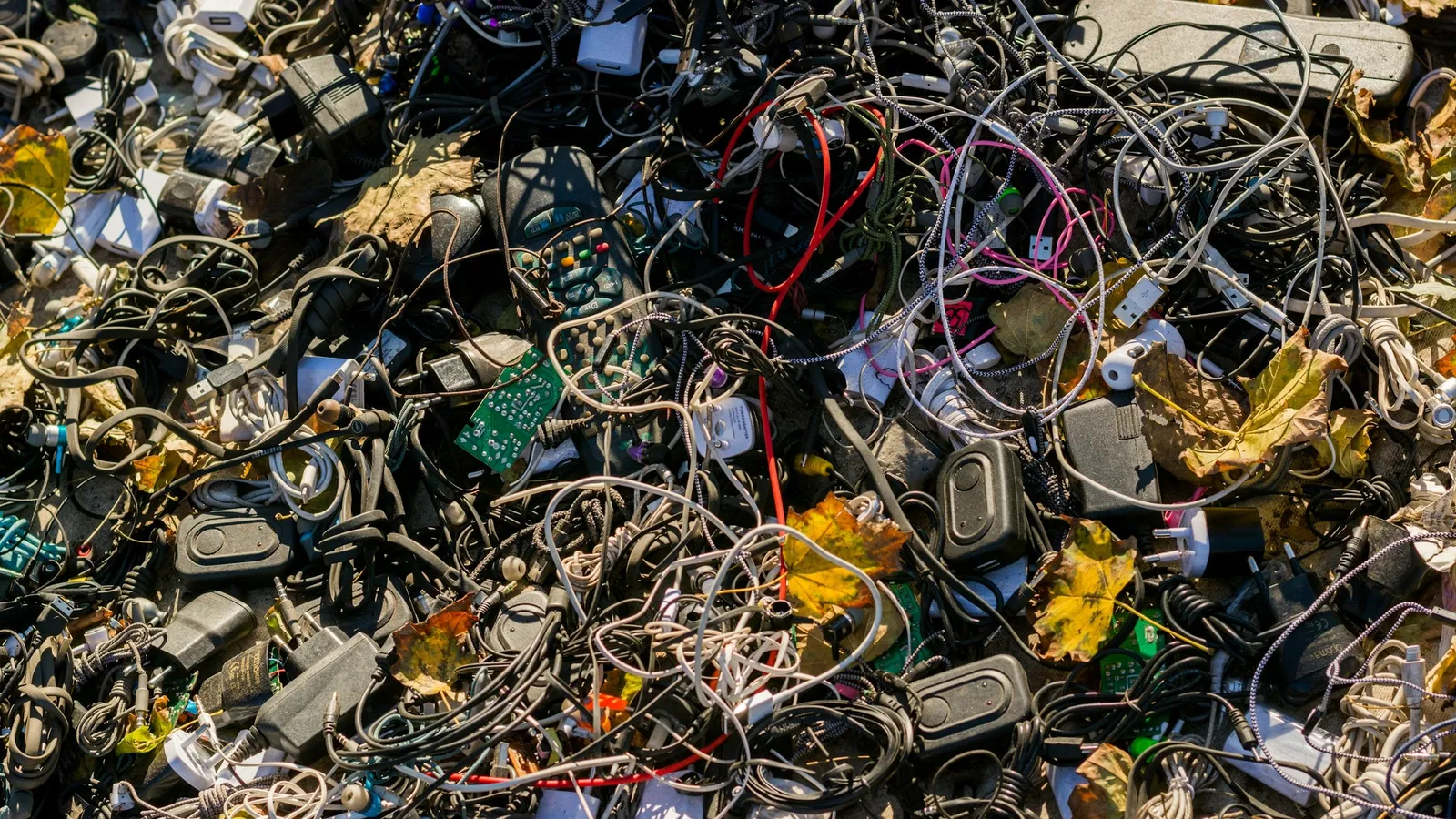
NCERT defines e-waste as electric or electronic devices no longer in use: discarded computers, phones, televisions, printers and so on. The scale is large. The UN's Global E-waste Monitor 2024 reports a record 62 million tonnes of e-waste generated in 2022, up 82% from 2010 and on track to reach 82 million tonnes in 2030. Less than a quarter, 22.3%, was documented as properly collected and recycled.
Worked example. What do those figures mean in tonnes?
Documented recycling: 22.3% of 62 million tonnes = 0.223 × 62 = 13.8 million tonnes (to one decimal).
Not documented as recycled: 62 − 13.8 = 48.2 million tonnes.
The 2030 projection: a 32% rise from 62 gives 62 × 1.32 = 81.8, which the report rounds to 82 million tonnes.
So for every tonne documented as recycled, roughly three and a half tonnes (48.2 ÷ 13.8 ≈ 3.5) were not.
Why is e-waste hazardous?
NCERT explains that when e-waste is dumped, metals and chemicals leach into soil and groundwater, and dust carrying heavy metals pollutes the air. It lists the main harms:
Lead (in monitors and batteries) affects the kidneys, brain and nervous system; children are especially at risk.
Mercury can cause respiratory disorders and brain damage.
Cadmium (in semiconductors and resistors) can damage kidneys, liver and bones.
Burning circuit boards or insulated wires to recover copper releases harmful substances.
The WHO fact sheet on e-waste adds that informal recycling, including open burning, can release up to 1000 different chemicals, including lead, and that children and pregnant women are particularly vulnerable.
How is e-waste managed?
NCERT's three steps, which the 2026-27 IP sample paper tests directly:
Reduce: buy devices only when needed and use them for their full life. Sample paper question 13 calls buying gadgets only when necessary an example of "Reduce".
Reuse: pass working devices on. Re-selling old electronics after minor repairs is refurbishing, the answer to sample paper question 7.
Recycle: recover materials from devices that cannot be repaired or reused.
In India, the E-Waste (Management) Rules, 2022, notified under the Environment (Protection) Act, 1986, came into force on 1 April 2023. They apply to manufacturers, producers, refurbishers, dismantlers and recyclers. Producers must meet extended producer responsibility targets, meaning they are responsible for getting a share of e-waste recycled through registered recyclers. Bulk consumers must hand their e-waste only to a registered producer, refurbisher or recycler. Waste batteries are covered by separate battery rules. NCERT's text describes earlier guidelines, so mention the 2022 rules if a question asks about current law.
Applying it at home
A sample family drawer, made up for practice: two old phones, one working, one with a broken screen; a laptop that no longer turns on; a tangle of chargers.
The working phone: reuse. Pass it to someone who needs it.
The broken phone: try repair first, which is the reuse step; if repair is not worth it, recycle.
The dead laptop: recycle through the brand's take-back channel or a registered recycler, never the household bin.
Chargers and cables: recycle with the other e-waste.
What health concerns does the syllabus mean?
NCERT section 6.9 covers ergonomics, the science of arranging furniture and equipment so work is safe and comfortable. Its posture figure shows a straight back with lower-back support, feet on the floor and a screen 19 to 24 inches away, about 48 to 61 cm. It names eye strain from screen glare and advises looking at distant objects regularly and taking outdoor breaks. Wrist pain from keyboards, backache, stress, fatigue and obesity are the other effects it lists. It also asks students to balance online time with sports, hobbies and in-person friendships. If screen use is affecting sleep or mood, talk to a parent, teacher or doctor.
How are these questions asked?
One-mark: which "R" is this? What is refurbishing? Which metal damages the kidneys and nervous system?
Two- or three-mark: two hazards of e-waste and two management steps; two ways to reduce eye strain.
The other half of the unit, intellectual property and licences, is covered in our guide to IPR and open-source licences. For how the whole IP paper is set, see the CBSE Class 12 IP paper, unit by unit.
A short revision routine
Write one line per metal: where it is found and what it harms.
Learn the three Rs with one example each from your own home.
Set your study desk using NCERT's posture figure, and check the screen distance with a ruler.
If you want the chemistry and biology behind these hazards, the Fermi Concept Library covers every concept in physics, chemistry, biology, mathematics and computing, so you can read up on any metal or effect named here.
This weekend, sort your home's old devices into reuse, repair and recycle, and find the nearest registered collection point.


