

On this page
Robert Frost's two short poems sit together in the first chapter of NCERT's Class 10 English textbook First Flight, right after the story A Letter to God. The exam tests whether you can explain what a small moment or a single word stands for.
What is Dust of Snow about, line by line?
The whole poem is one sentence spread over two stanzas of four lines each, as printed in the NCERT First Flight chapter.
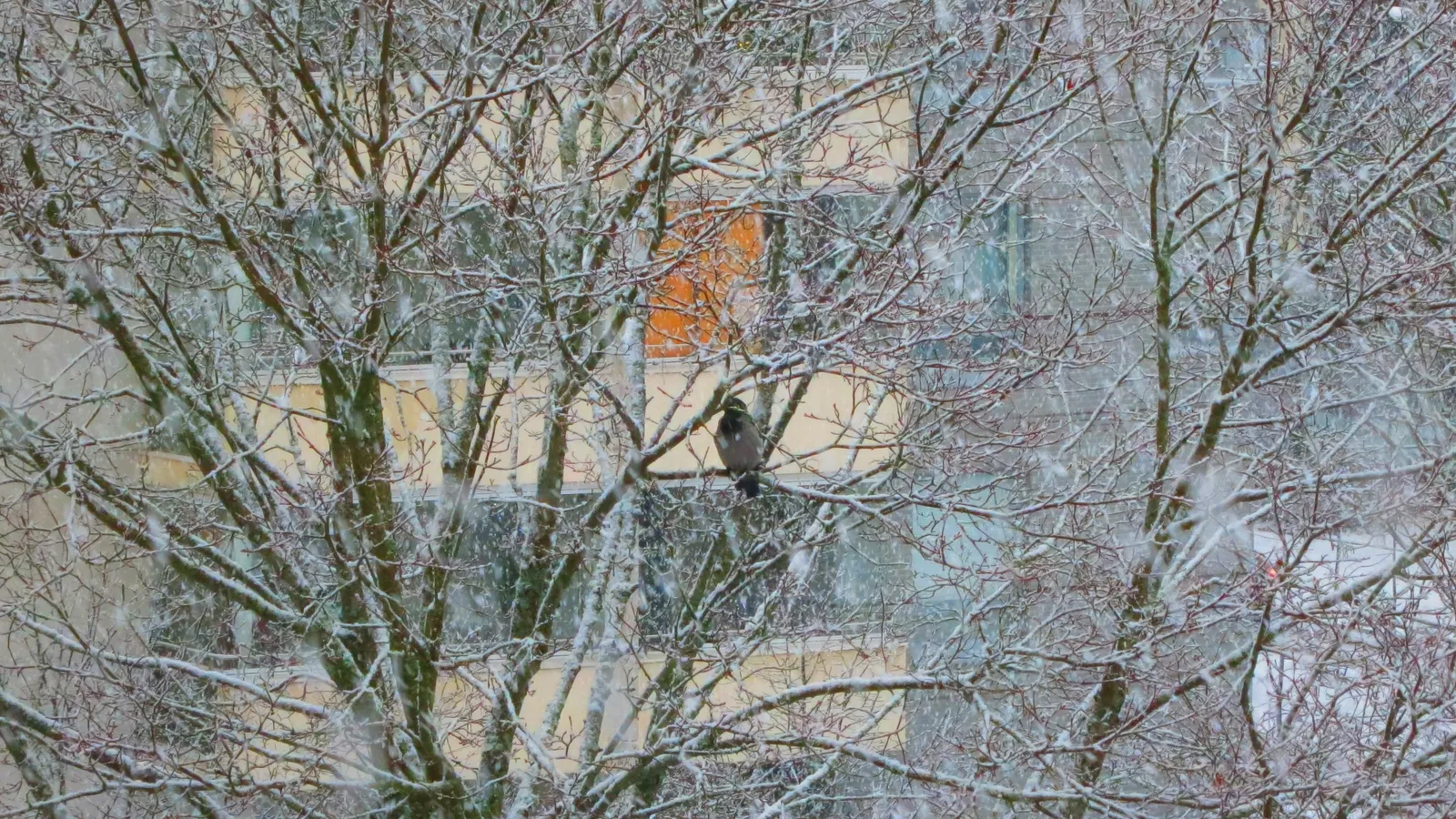
"The way a crow / Shook down on me": a crow sitting on a branch shook it, and something fell on the poet.
"The dust of snow / From a hemlock tree": what fell was a fine powder of snow from a hemlock tree.
"Has given my heart / A change of mood": that small, cold shock changed how he felt.
"And saved some part / Of a day I had rued": part of a day he had been regretting was rescued.
NCERT's glossary defines rued as "held in regret" and hemlock as "a poisonous plant (tree) with small white flowers". The mood moves from regret to relief.
What do the crow and the hemlock tree stand for?
NCERT's questions ask what images come to mind when you think of a crow, why Frost doesn't write about a more "beautiful" tree such as a maple, an oak or a pine, and whether the crow and hemlock represent joy or sorrow. The usual reading runs like this:
The crow: a black bird often linked with bad luck and gloom, not a sweet songbird.
The hemlock: a poisonous tree, so it suggests sorrow or death.
The dust of snow: a light, fresh touch that brings joy.
The twist is that joy reaches the poet through two things we connect with gloom. The textbook points to another line from Frost: "Always, always a larger significance... A little thing touches a larger thing."
What is Fire and Ice about, line by line?
The poem has nine lines; NCERT prints them in two stanzas, of four and five lines. The last two lines are much shorter than the rest, as the Wikipedia article on the poem notes. The same article says it was first published in Harper's Magazine in December 1920. It was later collected in Frost's book New Hampshire, which won the Pulitzer Prize for Poetry in 1924. Dust of Snow is in that book too.
"Some say the world will end in fire / Some say in ice": people disagree about how the world will end.
"From what I've tasted of desire / I hold with those who favour fire": from his own experience of desire, the poet agrees with the fire side.
"But if it had to perish twice": if the world could end a second time,
"I think I know enough of hate / To say that for destruction ice / Is also great / And would suffice": hate, the cold emotion, would do the job just as well.
NCERT glosses perish as "die" and suffice as "be sufficient". Notice the calm, almost casual tone: Frost discusses the end of the world as if giving an opinion over tea.
What do fire and ice symbolise, and what is the rhyme scheme?
Fire stands for desire: greed, lust, fury, wanting more, things that burn fast and hot. Ice stands for hate: coldness, indifference, rigidity, cruelty, things that harden slowly. NCERT gives a word bank for this question (greed, avarice, cruelty, lust, fury, rigidity, indifference, hatred and more); sort it into the two groups.
The rhyme scheme is ABA ABC BCB, as the Wikipedia article records. Seven of the nine lines end on just two sounds: fire/desire/fire and ice/twice/ice/suffice; hate/great is the only other rhyme. That pull between two main rhymes mirrors the two opposite forces.
Dust of Snow rhymes ABAB CDCD: crow/snow, me/tree, heart/part, mood/rued.
How do you answer exam questions on these two poems?
NCERT's own questions ask about the mood change, the symbols and the rhyme scheme. Use this four-step frame for a short answer:
Point: answer the question in one sentence.
Proof: quote two to five words from the poem.
Meaning: say what the quote shows.
Link: connect it to the theme.
Here is a worked example for "How does the poet's mood change in Dust of Snow?"
"The poet begins in a sad, regretful mood; he calls it a day he had 'rued'. When a crow shakes snow from a hemlock tree onto him, his heart gets 'a change of mood'. The small moment lifts his spirits and saves the rest of his day."
Before moving on, check that you named both the crow and the hemlock, linked fire to desire and ice to hate (not the other way round), and quoted the poem exactly.
For the prose piece in the same chapter, read our A Letter to God summary and exam answers. To label figures of speech correctly, see how to check AI's figures of speech in NCERT poems.
If your board revision also has maths or science chapters you don't know where to start with, Fermi's AI tutor works out what you already know and builds a plan for the session.


