

On this page
When you toss a banana peel into garden soil, it darkens, collapses, and disappears into humus within a few weeks. Drop a polyethylene snack wrapper beside it, and that plastic will outlive your grandchildren. Both materials contain carbon, yet soil decomposers consume one and leave the other untouched. Understanding the boundary between biodegradable and non-biodegradable substances is a core topic in our Class 10 guide to ecosystems and waste, and the key to solving modern municipal waste crises.
What makes a substance biodegradable or non-biodegradable?
A substance is biodegradable if microorganisms can break its molecular bonds into simple inorganic compounds like carbon dioxide, water, and mineral nutrients. As detailed in Microbiology and Molecular Biology Reviews, bacteria and fungi secrete extracellular enzymes—such as cellulases and proteases—that hydrolyse specific polar bonds, releasing soluble units for cellular metabolism. These natural enzymatic pathways form the basis of the planet's ecological recycling system.
Conversely, a substance is non-biodegradable if decomposers lack enzymes to cleave its chemical structure. According to a review in Frontiers in Microbiology, conventional synthetic plastics like polyethylene and polypropylene feature non-polar carbon-carbon backbones and lack accessible functional groups. Soil microbes evolved over millions of years alongside natural plant and animal polymers, leaving them unable to recognise these synthetic backbones. Because the initial extracellular attachment and oxidation cannot occur, the materials remain chemically intact. If you are reviewing organic reaction mechanisms, the Fermi Concept Library maps every concept in chemistry and biology, showing how chemical bond structures determine ecological cycles.
Why can microbial enzymes digest paper but not plastic bags?
The divide comes down to bond polarity and enzymatic fit. Plant matter consists largely of cellulose, where glucose units join via polar β-1,4-glycosidic bonds. When paper or cotton enters damp soil, bacteria and fungi secrete cellulolytic enzymes that insert water molecules across these oxygen linkages. This hydrolysis breaks the polymer into simple glucose, which microbes oxidise for energy, as explained in our guide on microbial breakdown in sewage treatment.
Plastic bags, however, are made from polyethylene synthesised using transition-metal catalysts, as described in our review of the catalytic synthesis of polyolefins. Polyethylene consists of long chains of carbon-carbon bonds. Because water cannot hydrolyse an unactivated carbon chain, microbial enzymes cannot cleave it. Kinetic measurements in ACS Sustainable Chemistry & Engineering show that high-density polyethylene in the marine environment has an estimated half-life from 58 years to 1,200 years depending on thickness.
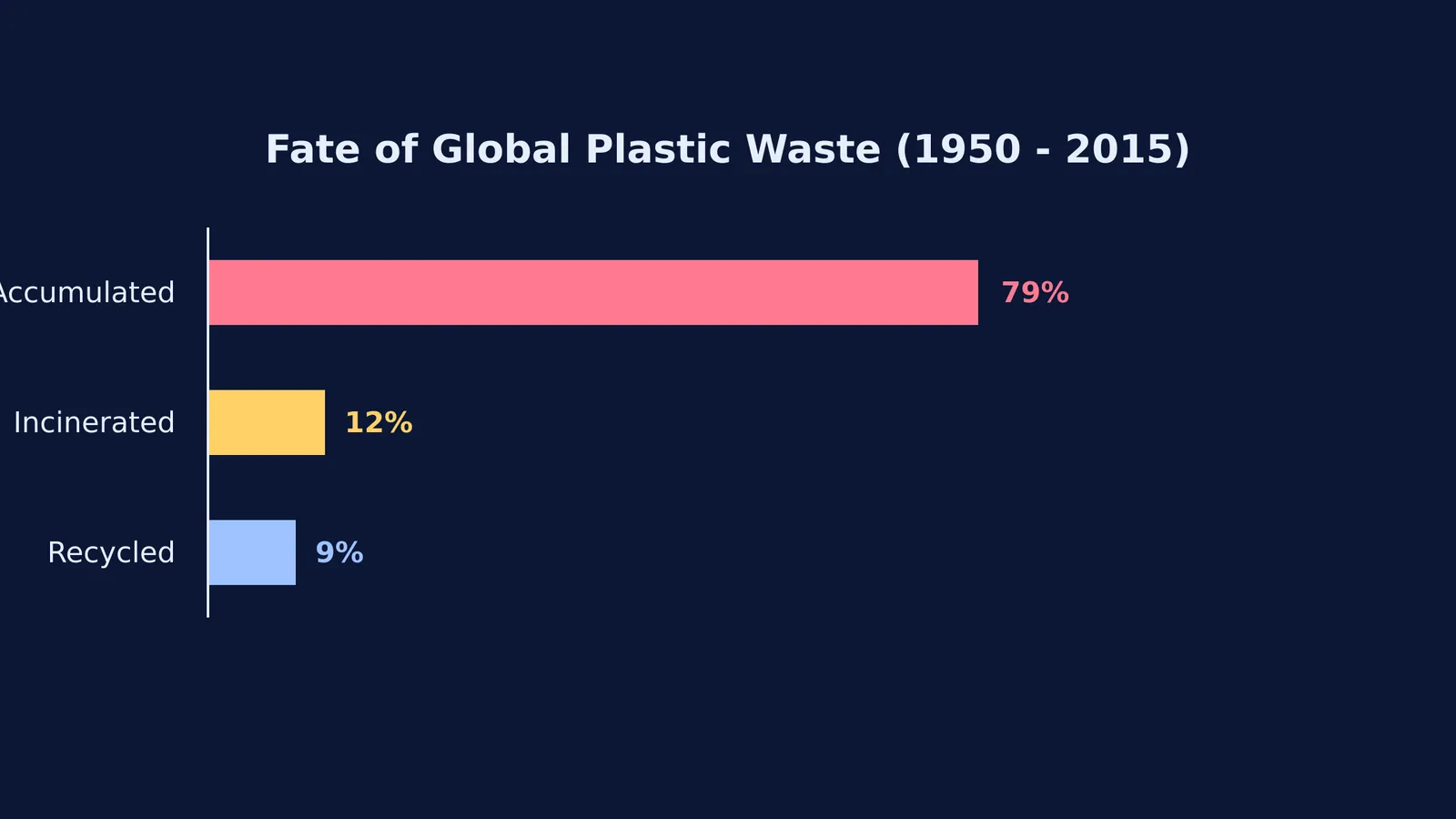
Because these synthetic polymers do not biodegrade, they accumulate rapidly. A study in Science Advances calculated that out of 6,300 million metric tons of plastic waste generated globally by 2015, only 9% was recycled and 12% incinerated, while 79% accumulated in landfills or the natural environment. These figures highlight the massive scale of the ecological challenge caused by non-biodegradable synthetic polymers.
Which everyday substances belong in each category?
You can classify common household materials by their chemical linkages:
Biodegradable substances:
Food waste: Vegetable peels, fruit scraps, and cooked leftovers degrade rapidly in natural environments.
Paper products: Newspapers, cardboard cartons, and paper bags break down easily in damp soil.
Natural fibres: Pure cotton cloth, jute twine, and woollen yarn decompose completely over time.
Fallen leaves and wood: Garden trimmings degrade naturally as fungal enzymes soften their lignin content.
Non-biodegradable substances:
Synthetic polymers: Polyethylene bags, PET water bottles, and polystyrene cups persist indefinitely.
Metals: Aluminium cans and tin-plated steel take a very long time to corrode chemically.
Glass and ceramics: Inert silicate structures persist practically forever without decomposing.
Persistent chemicals: Synthetic pesticides resist microbial action and can biomagnify up food chains.
When practicing environmental science and material balance problems, the Fermi Problem Library offers worked problems with a step-by-step solver that explains the reasoning rather than printing an answer.
How should households sort waste under Indian municipal rules?
Under the Solid Waste Management Rules monitored by the Central Pollution Control Board, households must segregate waste at source into three streams:
Green Bin (Biodegradable wet waste): Kitchen peels, food scraps, and garden trimmings. Biodegradable waste constitutes 50% to 55% of India's municipal solid waste, and home or community composting converts it into nutrient-rich manure.
Blue Bin (Non-biodegradable dry waste): Clean plastic packaging, paper, metals, and glass bottles, which head to Material Recovery Facilities for mechanical recycling.
Domestic hazardous waste: Batteries, electronic waste, and expired medicines, collected separately to prevent toxins from leaching into soil.
A reliable household rule: if it grew from soil or fed an organism, microbes can digest it in the green bin; if it came from a chemical factory with synthetic polymers, send it clean to the blue bin.


