

On this page
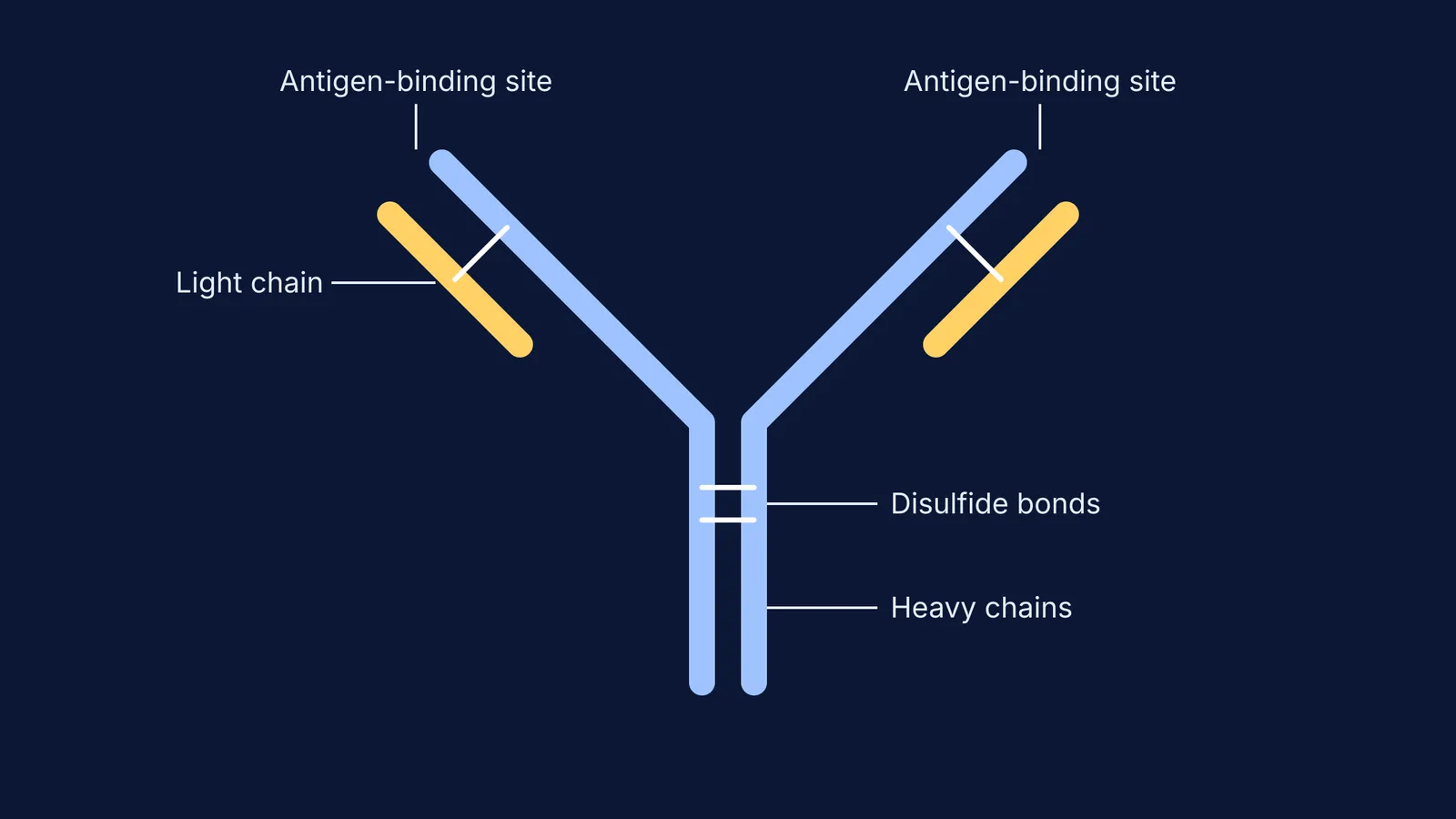
When you study the immune system—specifically the humoral immune response—you will encounter the Y-shaped molecules that patrol your bloodstream. These are antibodies, and NCERT Class 12 biology represents them with a simple formula: H₂L₂.
What does the H₂L₂ structure of an antibody mean?
An antibody is a protein molecule composed of four peptide chains. It has two long, identical heavy chains (the "H") and two short, identical light chains (the "L"). These four chains are linked together by disulfide bonds to form a flexible Y shape.
Because of this 2-heavy and 2-light arrangement, the molecule is written as H₂L₂. The tips of the "Y" arms contain the variable regions, which act as antigen-binding sites. These sites lock onto specific pathogens, like a key fitting into a lock, to neutralise them.
If you are stuck on how these chains connect or how they function within the wider immune response, the Fermi Concept Library gives every concept in biology its own lesson and its place in the map, so you can see how the ideas fit together.
What are the antibody types IgA, IgM, IgE and IgG?
In humans, there are five major classes of antibodies (Ig stands for immunoglobulin), distinguished by their heavy chains. The NCERT syllabus focuses heavily on four of them:
IgG: This is the most abundant antibody in the bloodstream, providing long-term immunity. It has a half-life of 3 to 4 weeks, which is exceptionally long compared to other plasma proteins (Wikipedia).
IgA: Found primarily in body secretions like tears, saliva and breast milk, IgA protects your mucosal surfaces from invading pathogens (Wikipedia).
IgM: This is the first antibody produced when your body encounters a new infection. It is a large molecule that is highly effective at clumping pathogens together.
IgE: Present in trace amounts in the blood, this antibody triggers allergic reactions by stimulating mast cells to release chemicals like histamine.
The fifth type, IgD, acts mainly as a receptor on the surface of B cells to help initiate the immune response. To understand where the cells that make these antibodies come from, see our guide on the formed elements of blood.
Which antibody crosses the placenta and which is in colostrum?
A common question in board exams and competitive tests is about how infants acquire passive immunity.
IgG crosses the placenta: IgG is the only antibody class capable of crossing the human placenta. This transport gives the developing foetus natural passive immunity before birth, protecting it during its first months of life (Wikipedia).
IgA is in colostrum: After birth, the mother produces a yellowish fluid called colostrum during the first few days of lactation. Colostrum is rich in IgA antibodies, which protect the infant's digestive tract from infections.
When the immune system is compromised, these natural defences break down. You can read about how viruses target the immune system in our post on how HIV replicates.
How to remember the antibody classes for exams?
If you are preparing for exams, recalling the differences between these classes is essential. A simple way to remember the five classes is the word GAMED (IgG, IgA, IgM, IgE, IgD).
For their specific roles, you can use this quick association script:
G for Gestation (protects the foetus as it crosses the placenta).
A for Anywhere there is fluid (found in secretions, tears and colostrum).
M for Militia (the large, first responder to a new infection).
E for Environment (reacts to environmental allergens).
When you sit down to study immune responses, a clear plan keeps you focused. Fermi's AI tutor works out what you already know and builds a plan for the session, teaching through it by writing on a board and checking your understanding as it goes.


