On this page
Many Class 10 students think they already know this chapter: lemons are sour, soap is slippery. Then the exam asks why dry HCl gas does not change dry litmus, or how much water washing soda holds, and marks slip away. This guide, for students and parents, covers what the 2026-27 syllabus asks, the facts to get exactly right, three short calculations and a revision plan.
Is this chapter in the 2026-27 syllabus?
Yes. The CBSE Class X Science curriculum for 2026-27 lists Acids, Bases and Salts under Unit I, Chemical Substances: Nature and Behaviour, which carries 25 of the 80 theory marks. It includes definitions in terms of H⁺ and OH⁻ ions, indicators, chemical properties, neutralisation, the pH scale and "importance of pH in everyday life", and the preparation and uses of sodium hydroxide, bleaching powder, baking soda, washing soda and plaster of Paris. CBSE adds that the definition of pH relating to logarithm is not required. The matching textbook is the NCERT Class 10 Science Chapter 2, Acids, Bases and Salts (2026-27 reprint). Check CBSE's site each year.
How do indicators work?
NCERT groups indicators into three kinds:
Natural indicators: litmus (a purple dye from lichen), turmeric, red cabbage, and petals of flowers such as Hydrangea, Petunia and Geranium. Acids turn blue litmus red; bases turn red litmus blue.
Synthetic indicators: methyl orange and phenolphthalein. In NCERT's Activity 2.6, phenolphthalein turns pink in sodium hydroxide, and the pink disappears as hydrochloric acid is added drop by drop.
Olfactory indicators: substances whose smell changes in acid or base. NCERT's activity uses onion, vanilla and clove.
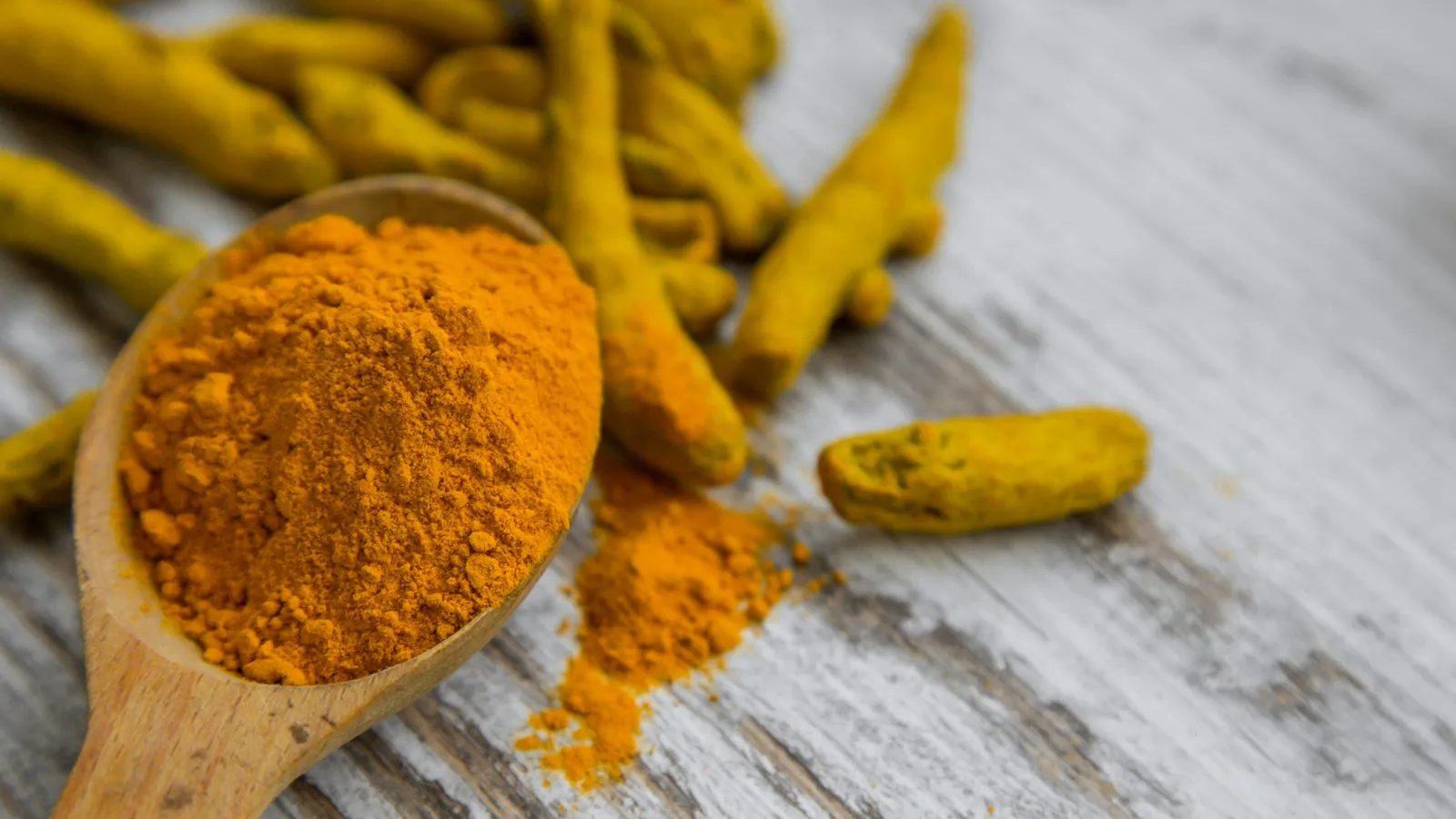
At home: NCERT notes that a turmeric curry stain turns reddish-brown when soap, a base, is scrubbed on it, and yellow again when washed with plenty of water.
What does the pH scale tell you?
NCERT describes pH as a number from 0 (very acidic) to 14 (very alkaline), with 7 neutral. The higher the hydronium ion concentration, the lower the pH. A universal indicator, a mixture of several indicators, shows different colours across the range.
Learn the everyday pH facts exactly as NCERT states them:
Our body works within a pH range of 7.0 to 7.8.
Rain with a pH below 5.6 is called acid rain.
Tooth decay starts when the pH in the mouth falls below 5.5, because enamel (calcium hydroxyapatite) is corroded.
Antacids such as milk of magnesia (magnesium hydroxide), a mild base, neutralise excess stomach acid.
Which five salts must you know?
All five start from common salt, sodium chloride.
Sodium hydroxide by the chlor-alkali process: 2NaCl(aq) + 2H₂O(l) → 2NaOH(aq) + Cl₂(g) + H₂(g). Chlorine forms at the anode, hydrogen at the cathode.
Bleaching powder, Ca(ClO)₂ in NCERT's simplified formula, from chlorine and dry slaked lime. Used for bleaching and for making drinking water free from germs.
Baking soda, NaHCO₃, a mild non-corrosive base. On heating: 2NaHCO₃ → Na₂CO₃ + H₂O + CO₂. Baking powder is baking soda plus tartaric acid.
Washing soda, Na₂CO₃·10H₂O, made by recrystallising sodium carbonate. Used in glass, soap and paper industries and to remove permanent hardness of water.
Plaster of Paris, CaSO₄·½H₂O, made by heating gypsum (CaSO₄·2H₂O) at 373 K. With water it sets back to gypsum.
Worked examples with numbers
Use atomic masses Na = 23, C = 12, O = 16, H = 1, Ca = 40 and S = 32 (in u).
1. How much of washing soda is water? Na₂CO₃ = 2(23) + 12 + 3(16) = 106. Ten H₂O = 10 × 18 = 180. Total = 286. Water fraction = 180 ÷ 286 ≈ 62.9%. So the "dry" crystals are almost two-thirds water by mass, held as water of crystallisation.
2. Heating baking soda. In 2NaHCO₃ → Na₂CO₃ + H₂O + CO₂, the left side has mass 2 × 84 = 168, and the right side 106 + 18 + 44 = 168, so the equation balances by mass. Heating 16.8 g of baking soda gives 10.6 g of sodium carbonate.
3. Gypsum to plaster of Paris. CaSO₄ = 40 + 32 + 64 = 136. Gypsum = 136 + 36 = 172; plaster of Paris = 136 + 9 = 145. So 172 g of gypsum gives 145 g of plaster of Paris and loses 27 g of water, about 15.7% of its mass. NCERT explains the "half water" in the formula: two formula units of CaSO₄ share one molecule of water.
Why do students get acids and bases wrong?
In a study of 88 students, Demircioğlu, Ayas and Demircioğlu (2005) found that worksheets built on conceptual conflict, which make students confront what they predicted, led to higher achievement and fewer misconceptions about acids and bases than the usual teaching. For revision, predict first and check second: say what colour the indicator will turn before you look.
Which mistakes cost marks?
Saying strong acid means high pH. Strong acid means low pH.
Mixing up baking soda and washing soda. NaHCO₃ is baking soda; Na₂CO₃·10H₂O is washing soda.
Writing gypsum as CaSO₄·½H₂O. That is plaster of Paris; gypsum has two water molecules.
Forgetting the safety order. Acid into water.
Expecting dry HCl gas to turn dry litmus red. NCERT explains that HCl separates into H⁺ ions only in the presence of water, so the gas alone shows no acidic behaviour.
Balancing the equations above is covered in our post on chemical reactions and equations.
For a full-subject plan, see our Class 10 science revision guide. When one idea, such as why a salt can be basic, will not click, the Fermi Concept Library covers every concept in chemistry, each with its own lesson.
A one-week revision plan
Day 1: Write the three kinds of indicators with two examples each, from memory.
Day 2: Draw the pH scale and place the four everyday pH facts on it.
Day 3: Write the preparation equation and two uses for each of the five salts.
Day 4: Redo the three worked examples, then calculate the water fraction in CuSO₄·5H₂O (Cu = 63.5).
Parents can help with one thing tonight: ask your child to predict, then test, what happens when a little soap touches a turmeric stain.