On this page
Whether you plan to code software or build bridges, your first year of engineering will put you in a boiler suit. First-year students complete 60 hours of practical workshop time under the AICTE model curriculum. You spend this time moving between different "shops" to learn how materials behave when you cut, heat and join them.
The goal is not to turn you into a professional machinist. It is to build a physical intuition for how things are made. When you move to theoretical design later, you need to know why a certain joint will fail or why a shape cannot be cast. If you struggle to picture the forces inside these materials, the Fermi Simulation Lab offers interactive simulations for the ideas that are easier to see than to read.
What are the four main jobs you will do?
You will usually rotate through several trades over the semester. The most common four are:
Fitting: You start with a rough block of mild steel. Using hand files, hacksaws and measuring tools like Vernier calipers, you cut and file the metal until it fits perfectly into another piece. A V-fit or a dovetail joint requires careful filing to ensure the angles match exactly. When reading technical drawings for these jobs, you might need to convert units, which is where converting a quantity between unit systems using dimensions helps.
Welding: You learn to join metal plates using arc welding. You will wear a dark face shield to protect your eyes from the intense ultraviolet light, strike an arc, and lay a bead of molten metal to create a butt joint or a lap joint. The heat melts both the electrode and the base metal, fusing them together as they cool.
Carpentry: Working with wood (often teak or pine), you use saws, chisels and planes to make standard joints, such as a mortise and tenon or a T-lap joint. This teaches you how to cut along or across the grain, and how different cuts affect the strength of the wood.
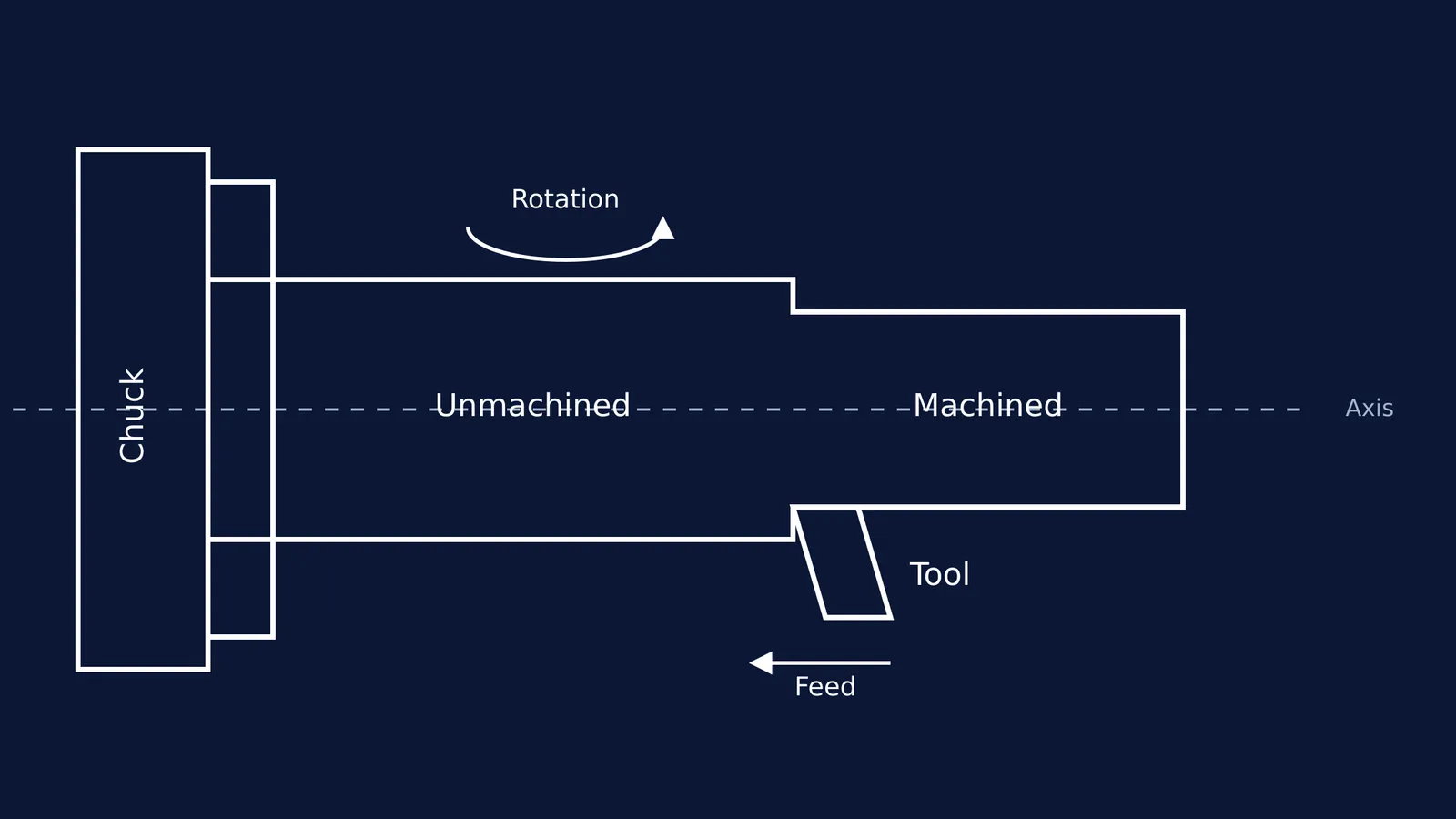
Machining: You are introduced to the lathe. You will learn to mount a cylindrical metal rod in the chuck and use high-speed cutting tools to reduce its diameter (turning), make the end flat (facing), or cut a diamond pattern into the surface for grip (knurling). The tool peels away a continuous chip of metal as the rod spins. Workshop machines sometimes use hydraulics to apply massive forces; Pascal's law in hydraulic machines explains how a small push can lift a heavy load.
For the theory behind these processes, NPTEL's 12-week course on the fundamentals of manufacturing covers everything from casting to tool failure.
What safety rules must you follow?
A workshop contains heavy machinery, sharp tools and high temperatures. A 2021 study in the Journal of Technical Education and Training highlights that strict safety compliance is the foundation of any effective workshop session.
If you break these rules, you will be sent out:
Wear the right gear: Hard-toed leather shoes and safety glasses are mandatory.
No loose clothing: You must wear a fitted apron or boiler suit. Loose shirts, scarves, ties and dangling jewellery can be caught in spinning machines like lathes or drills.
Tie your hair back: Long hair must be tied and tucked away.
Never work alone: A supervisor or instructor must always be present when you operate power tools.
How is your workshop project graded?
Your workshop grade is rarely about theoretical exams. It comes down to the physical object you submit at the end of each rotation.
Instructors measure your work against a technical drawing. If the drawing asks for a specific width and your piece is smaller because you filed away too much, you lose marks. They check if your fitting joint has gaps when held up to the light, if your weld is straight and strong, and if your wooden joint holds together without glue. If you have gaps in your understanding of the underlying material science, the Fermi Concept Library contains every concept in physics, chemistry, biology, mathematics and computing, each with its own lesson and its place in the map.
Workshop practice is a break from lectures. It teaches you that engineering is not just equations on a page, but the physical reality of making things work.