

On this page
The pressure of Class 10 can make students feel they need every thick reference book on the market. In reality, across the state-sanctioned education boards in India, the most reliable path to a high score is much simpler.
Your preparation should rely on three pillars: the official state textbook, previous year question papers, and official model answers. Sticking to these resources keeps your study time focused on exactly what the examiners will ask.
Why state textbooks matter more than reference books
State boards design their exams specifically around their own prescribed textbooks, whether that is SCERT, Balbharati in Maharashtra, or the NCERT books adopted by states like Uttar Pradesh and Bihar. Every question, diagram, and numerical in the board exam is drawn from these pages.
Reading the official textbook ensures you learn the exact definitions and processes the board expects. For instance, if a question asks about the extraction of metals or the dispersion of white light by a glass prism, examiners will look for the specific phrasing and diagrams used in your state's book. Reference books are useful for extra practice, but they often contain information beyond the scope of your syllabus, wasting valuable time.
How to prepare for state board class 10 exam?
The most effective approach is a structured, repetitive loop. Most state boards divide their grading between a main written theory paper and a smaller portion for internal assessments or practicals.
To conquer the syllabus, break your study plan into three actionable phases:
Read the chapter for understanding: Go through the assigned chapter in your state textbook, paying special attention to bolded terms and "Do You Know?" boxes. These sidebars are frequent sources of objective-type questions.
Solve chapter-end exercises: Board exams frequently lift questions directly from the back of the chapter. Write down the answers to these exercises as if you were sitting in the exam hall.
Test yourself under time pressure: Many students struggle to finish their papers in time, especially in Maths and Science. Once you have finished the syllabus, sit down and write full-length mock papers without looking at your notes.
In addition to your daily study sessions, dedicate time each week solely to revision. This spaced repetition ensures that the concepts you studied in July are still fresh in your mind when exams begin in February or March.
Why are previous year papers so important?
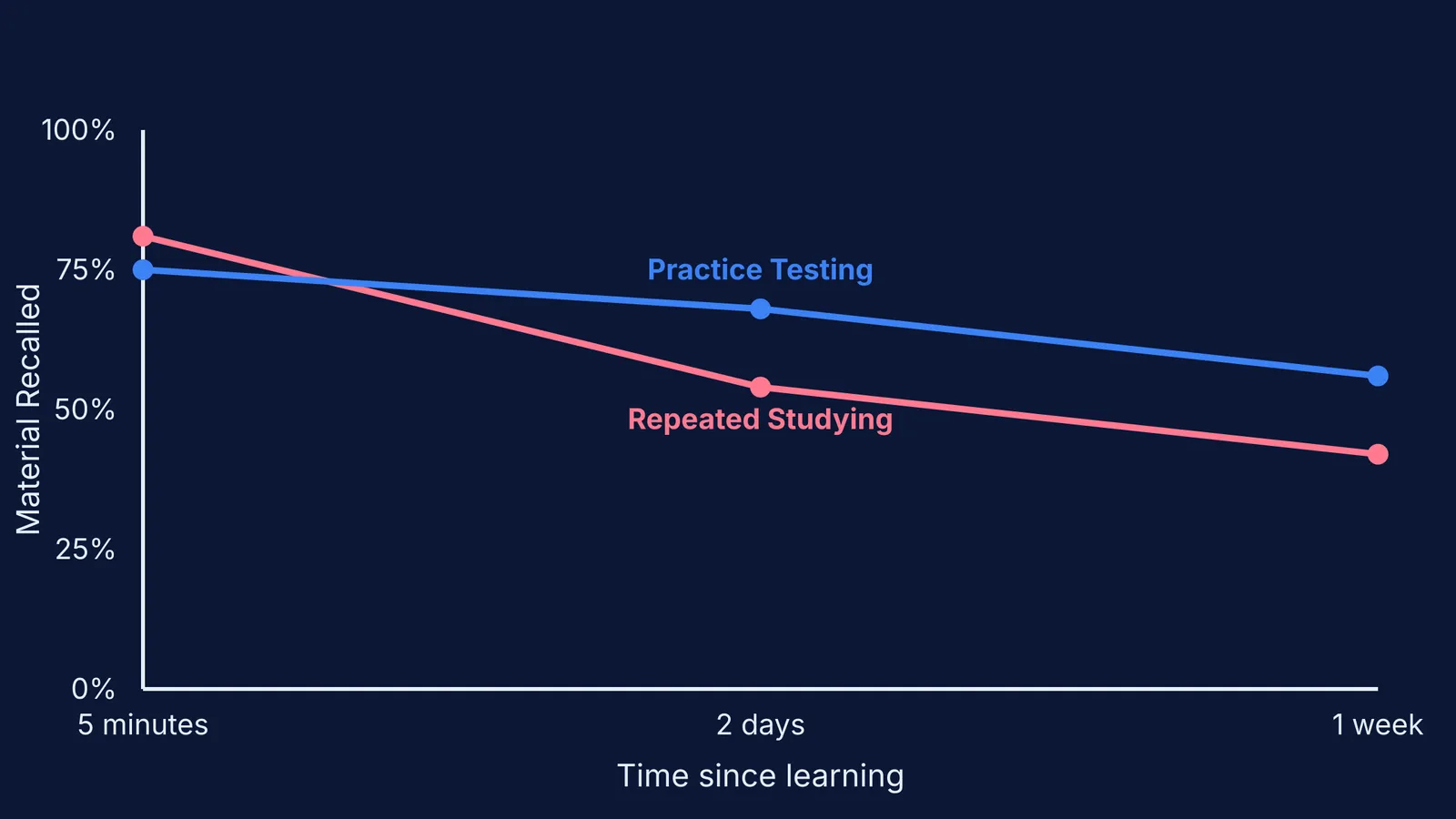
Solving previous year papers is not just about understanding the exam format; it physically changes how well you remember the material.
A 2006 study by psychologists Henry L. Roediger III and Jeffrey D. Karpicke proved that taking memory tests improves long-term retention. In their experiment, students either repeatedly restudied material or tested themselves on it. When given a final test a week later, prior testing produced substantially greater retention than studying, even though repeated studying made students feel more confident initially.
This means that struggling through a past paper is a more efficient use of your time than passively rereading the textbook.
When you are solving past papers and hit a concept you do not understand, Fermi's AI tutor can step in. It is a one-to-one AI tutor that works out what you already know and builds a plan for the session. Instead of just handing you the solution, it explains the reasoning step by step, asking questions to check your understanding as it goes.
How to use model answers
Finally, compare your practice tests against the official model answers (or "marking schemes") released by your state board. These documents show exactly how marks are awarded and can dramatically improve your score.
State board examiners do not have time to read long, rambling paragraphs; they look for keywords and step-by-step logic. For instance, if a question asks you to draw the structural isomers of butane, a model answer will explicitly show that credit is awarded for drawing the straight carbon chain (n-butane), the branched chain (isobutane), and correctly labelling the IUPAC names.
By studying these rubrics, you learn to write precise, point-wise answers. You will see that highlighting key terms, drawing neat diagrams with pencil, and stating the final formula in a box makes it easy for the examiner to give you full marks. Incorporating model answers into your study routine trains you to think exactly like the person grading your paper.


