

On this page
Seismology is the science of earthquakes and the propagation of elastic waves through the Earth or through other planet-like bodies. If you are fascinated by the physics of waves, geology, and how our planet moves, a career as a seismologist offers a blend of fieldwork, deep physics, and high-stakes hazard planning.
What does a seismologist do?
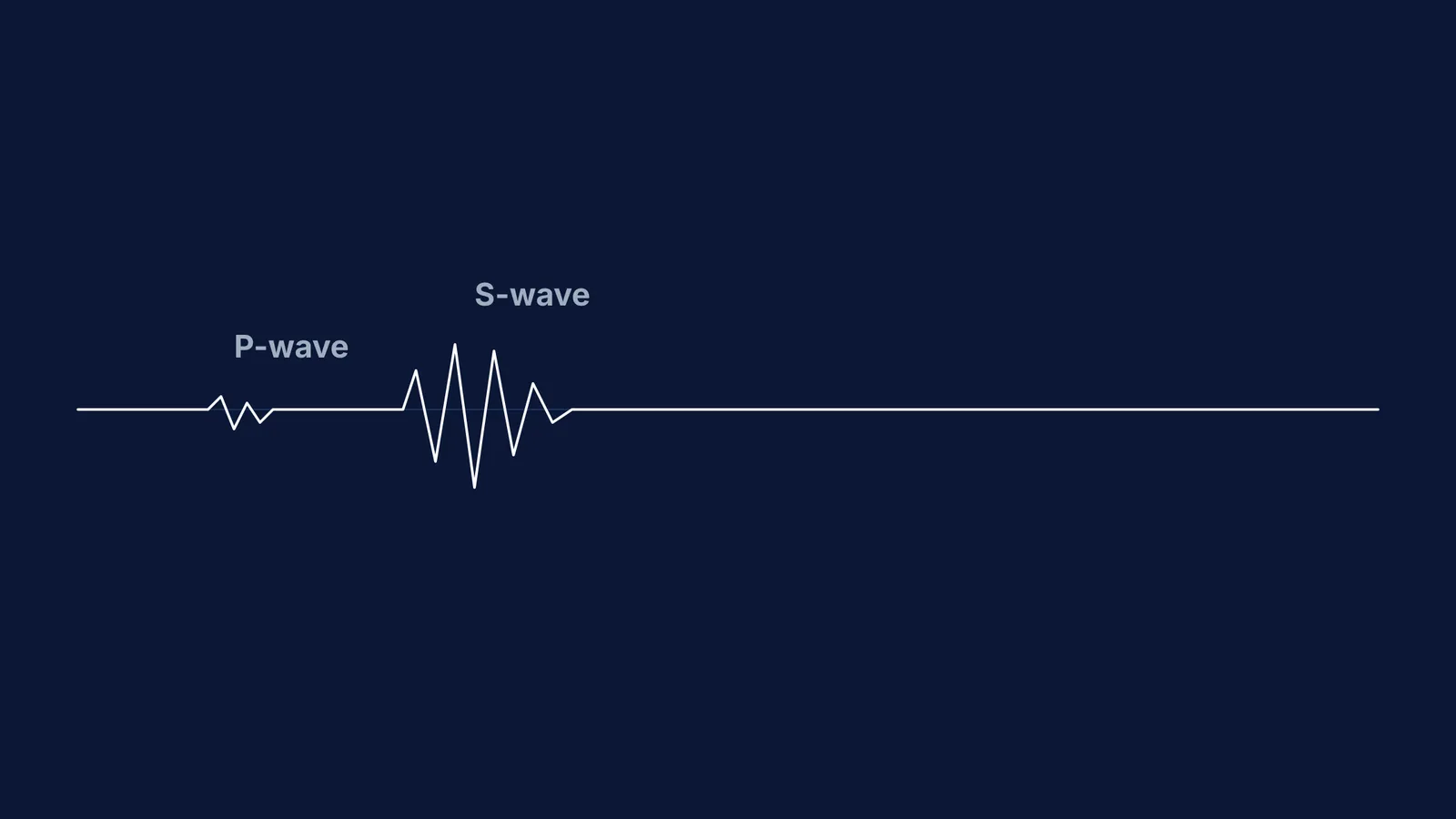
A seismologist monitors the vibrations of the Earth to pinpoint where earthquakes happen, understand why they occur, and map out the hidden layers of our planet. When the ground shakes, two main types of body waves radiate from the source: P-waves (Primary) and S-waves (Secondary).
P-waves are longitudinal waves that travel faster than S-waves in the continental crust. Because S-waves are transverse and travel more slowly, they arrive at monitoring stations later, allowing seismologists to calculate the distance to the quake's epicentre. Studying these waves has historically led to significant discoveries; for instance, the Danish seismologist Inge Lehmann deduced the Earth's inner core by observing how P-waves bent through the planet's centre.
How to become a seismologist in India?
The most common route begins with a strong foundation in physics and mathematics.
Undergraduate degree: Start with a B.Sc. in Physics, Mathematics, or Geology. You need strong mathematical skills to model wave mechanics and signal processing.
Postgraduate degree: Pursue an M.Sc. in Geophysics, Applied Geophysics, or Physics. Institutes like the IITs, IISERs, and ISM Dhanbad offer excellent master's and integrated programmes in earth sciences.
Qualifying exams: For government roles, you must clear the UPSC Combined Geo-Scientist Examination, which recruits postgraduates with an M.Sc. in Physics or Geophysics for Group 'A' posts 1. For the descriptive papers of the UPSC Geophysics stream, you will need a deep understanding of solid earth geophysics, remote sensing, and signal processing. If you wish to pursue research or a Ph.D., you should aim to qualify for the CSIR-NET exam.
Where do seismologists work?
A career in seismology often branches into government research, academic institutions, or the energy sector.
National Centre for Seismology (NCS): The nodal agency under the Ministry of Earth Sciences. The NCS operates a 24/7 network of more than 170 state-of-the-art broadband seismic stations across India 2. They are responsible for real-time monitoring and hazard microzonation.
CSIR-NGRI and WIHG: The National Geophysical Research Institute in Hyderabad and the Wadia Institute of Himalayan Geology are premier research labs. The latter is crucial for studying the seismically active Himalayan belt—a legacy built by pioneers like D. N. Wadia, who read the rocks of the Himalaya.
The energy sector: Oil and Natural Gas Corporation (ONGC) and private exploration companies hire geophysicists to use seismic waves to map subsurface oil and gas reserves.
Private Geotechnical Firms: With India's infrastructure boom, seismologists are also increasingly needed by engineering firms to conduct Seismic Hazard Analysis (SHA) before constructing dams, nuclear plants, and high-rise buildings.
Mastering the physics of seismology
Seismology relies heavily on wave mechanics and elasticity—topics that often challenge high school students preparing for competitive exams like JEE. If you want to see how wave speed changes with the medium's density and elasticity without doing all the maths by hand, you can experiment with wave mechanics in the Fermi Simulation Lab.
A practical plan for high school students
If you want to build towards this career today, here is a simple checklist to keep you on track:
Master the wave equation: Focus on the wave mechanics and simple harmonic motion chapters in Class 11 physics. These form the bedrock of seismology.
Learn to code: Python and MATLAB are the daily tools of modern geophysicists. Start by learning basic data plotting in Python.
Watch the data: Download the "IndiaQuake" app from the NCS to see real-time seismic data and understand how monitoring centres report magnitude and depth.
By securing a solid base in physics and coding, you will be well-prepared to tackle the complex, hidden dynamics of the Earth.


