On this page
Writing an article for the school magazine is often the first time you publish your work for a real audience. It feels very different from an English assignment because your readers are your classmates, teachers, and sometimes even parents, and they read for interest, not to give you marks. This shift in audience requires a shift in how you write. You are no longer writing to prove you know a syllabus; you are writing to inform, entertain, or persuade.
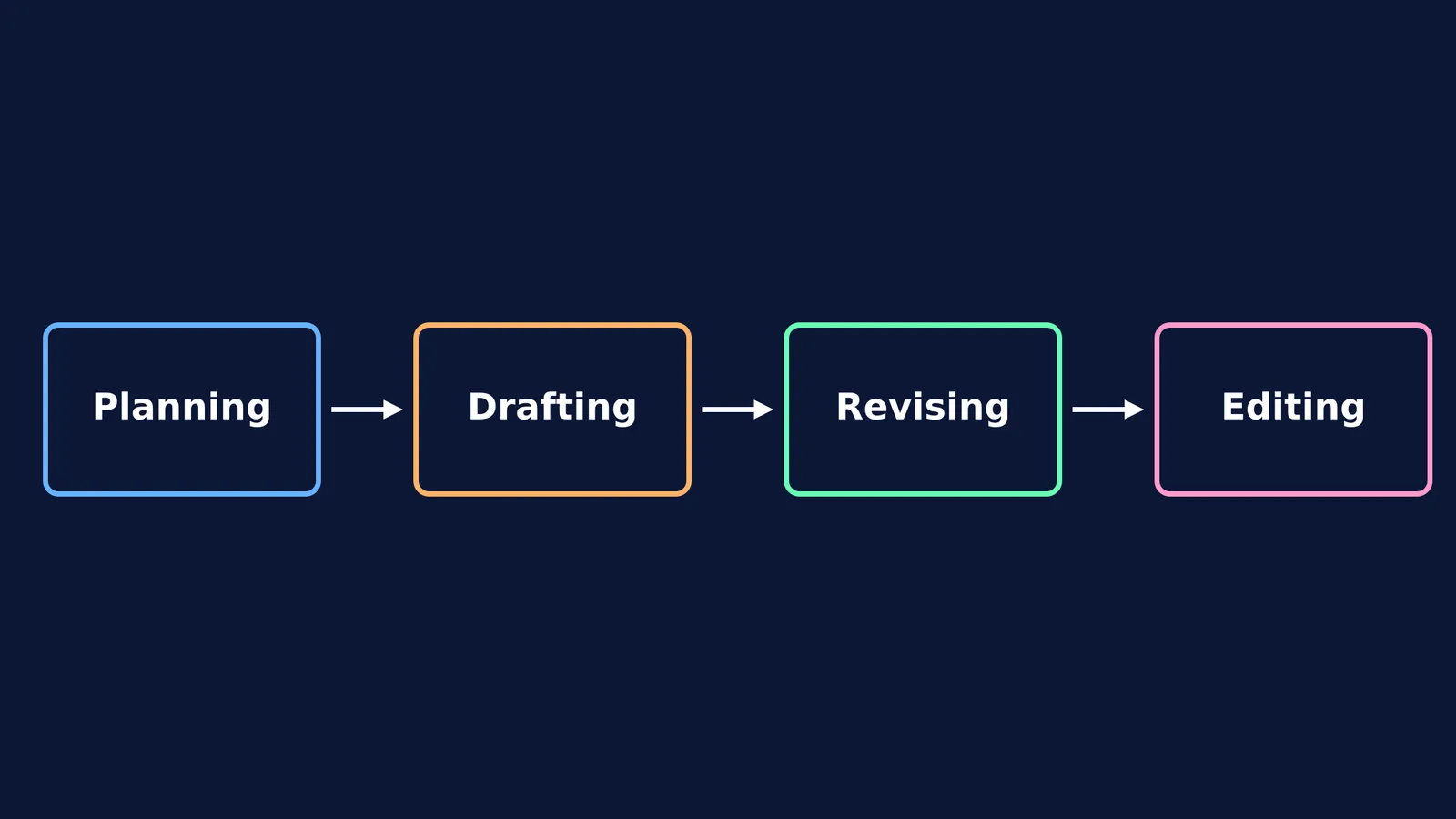
A 2007 meta-analysis published by the Carnegie Corporation, known as the *Writing Next* report, found that explicitly teaching students writing strategies—like planning, revising and editing—improves student writing quality with a large effect size of 0.82. The process matters just as much as the idea. Here is how to structure your effort from the first idea to the final print.
How do you choose a good topic?
A strong school magazine article connects with the student body. Write about what they care about, but offer a new angle.
Answer an unspoken question: What are students wondering about? It could be how the school decides the timetable, or why the canteen stopped selling a certain snack. Investigating these everyday mysteries makes for excellent reading.
Profile someone unusual: Write about a quiet student who restores old radios, or a teacher who runs a bird rescue. People love reading about people, especially when they discover a hidden talent in someone they see every day.
Review with meaning: Do not just list what happened at the sports day. Write about what it felt like, or how a specific team prepared for it. Focus on the human experience rather than the raw scores.
If your topic leans academic—perhaps an explainer on a recent science prize—you can use the Fermi Concept Library to ensure you have the basic physics or biology facts correct before you start drafting.
How do you interview people for an article?
If you are writing a profile or an investigative piece, you will need to speak to people. An interview provides the quotes and personal details that bring an article to life.
Prepare your questions: Do not just turn up and hope for the best. Write down five to ten open-ended questions. Avoid questions that can be answered with a simple "yes" or "no".
Listen more than you talk: Your job is to capture their story. If they say something interesting, put your list of questions aside and ask them to tell you more about that specific point.
Take accurate notes: If you cannot record the conversation, write down key phrases and numbers immediately. Always ask for permission if you decide to use a recording app on your phone.
Verify your facts: If you are unsure whether you heard something correctly, ask them to repeat it. It is always better to double-check during the interview than to print a misquote in the school magazine.
What makes school magazine writing clear and engaging?
Good writing is clear thinking made visible. When you write, keep your language simple and direct.
Start strong: Your opening paragraph must hook the reader. Tell them who, what, when, and why it matters within the first three sentences. If the start is boring, they will turn the page.
Use the active voice: Say "The quiz team won the trophy" instead of "The trophy was won by the quiz team." The active voice is energetic and easier to read.
Keep sentences short: Long, winding sentences lose readers quickly. Read your work and break long thoughts into two or three crisp sentences.
If you are writing about science, remember to read a science textbook actively to gather accurate details, but explain them in your own words rather than copying the textbook's dry tone. Be aware of the tools you use; many schools check submissions, and understanding why AI-writing detectors misfire is important if you use software to help brainstorm.
How should you edit your draft?
Editing is where the real writing happens. The first draft is just you telling the story to yourself; the edit is where you make it ready for someone else.
Rest it overnight: Leave your draft alone for at least a day before editing. You will spot awkward phrases and missing logic that you could not see when you were tired.
Read it aloud: If you stumble over a sentence when speaking, a reader will stumble when reading it silently. Fix the rhythm. Hearing your own words makes repetitive structures obvious.
Cut the fluff: Remove words that do not add meaning. Words like "very," "really," and "basically" weaken your sentences.
Ask for feedback: Before you submit your final draft, give it to a classmate who has not been involved in the writing process. Fresh eyes catch the confusing parts that you miss.
How do you build a lasting writing habit?
The hardest part of writing is sitting down to do it. You do not need a bolt of inspiration to write well; you just need a routine.
First, set a small goal. Aim for a short, uninterrupted block of time every day. Small goals are easy to start and often lead to much longer sessions once you gain momentum. Shut out distractions, because what task-switching research shows is that jumping between writing and checking messages ruins your focus.
Second, make a plan. Knowing exactly what you will write about before you sit down removes the friction of a blank page. If you are stuck on how to structure a complex topic, Fermi's AI tutor can work out what you already know and build a plan for the session, so you sit down to a clear next step. Write your outline first, fill in the details, and edit last.