

On this page
The pressure of a unit test in three days often leads to a predictable cycle: late nights, endless re-reading of textbooks, and walking into the exam feeling exhausted. But cognitive science shows a smarter way. Instead of a long marathon of cramming, a three-day plan based on active recall, spacing, and sleep will help you actually remember the material when you sit down for the test.
How should you plan your revision?
A three-day sprint works best when you divide your time by the type of thinking required. It is about working systematically from your weakest areas to your strongest, and shifting from learning to testing.
Day one: Find your gaps. Your first task is to work out what you do not know. Do not open your textbook to page one and start reading forward. Instead, take a blank sheet of paper and write down everything you remember about the unit's topics—a method called "blurting". Compare your sheet against the syllabus and highlight what you missed.
These missed areas are your priority. Fermi's AI tutor can work out what you already know and build a plan for the session, so you sit down to a clear next step. Spend day one tackling only these difficult concepts to ensure you have a baseline understanding of everything on the test.
Day two: Active recall and practice questions. Spend the second day solving problems from memory. Do not look at the solutions before trying to answer. If you are revising maths or physics, try mixing different topics together rather than doing them in order. This forces your brain to identify which method to use for each question, mirroring the real exam experience.
If you get stuck, try to retrieve the formula or method yourself first. The Fermi Problem Library has worked problems with a step-by-step solver that explains the reasoning rather than printing an answer, which helps when you need to understand the underlying logic.
Day three: Light recall and sleep. Do not try to learn completely new topics on the final day. Focus on light review, such as scanning over the questions you got wrong on day two or reviewing high-level summaries. Organise your notes, pack your bag, and stop studying early. Your goal is to keep the information fresh without exhausting your mental energy before the exam.
Why does active recall work better than reading?
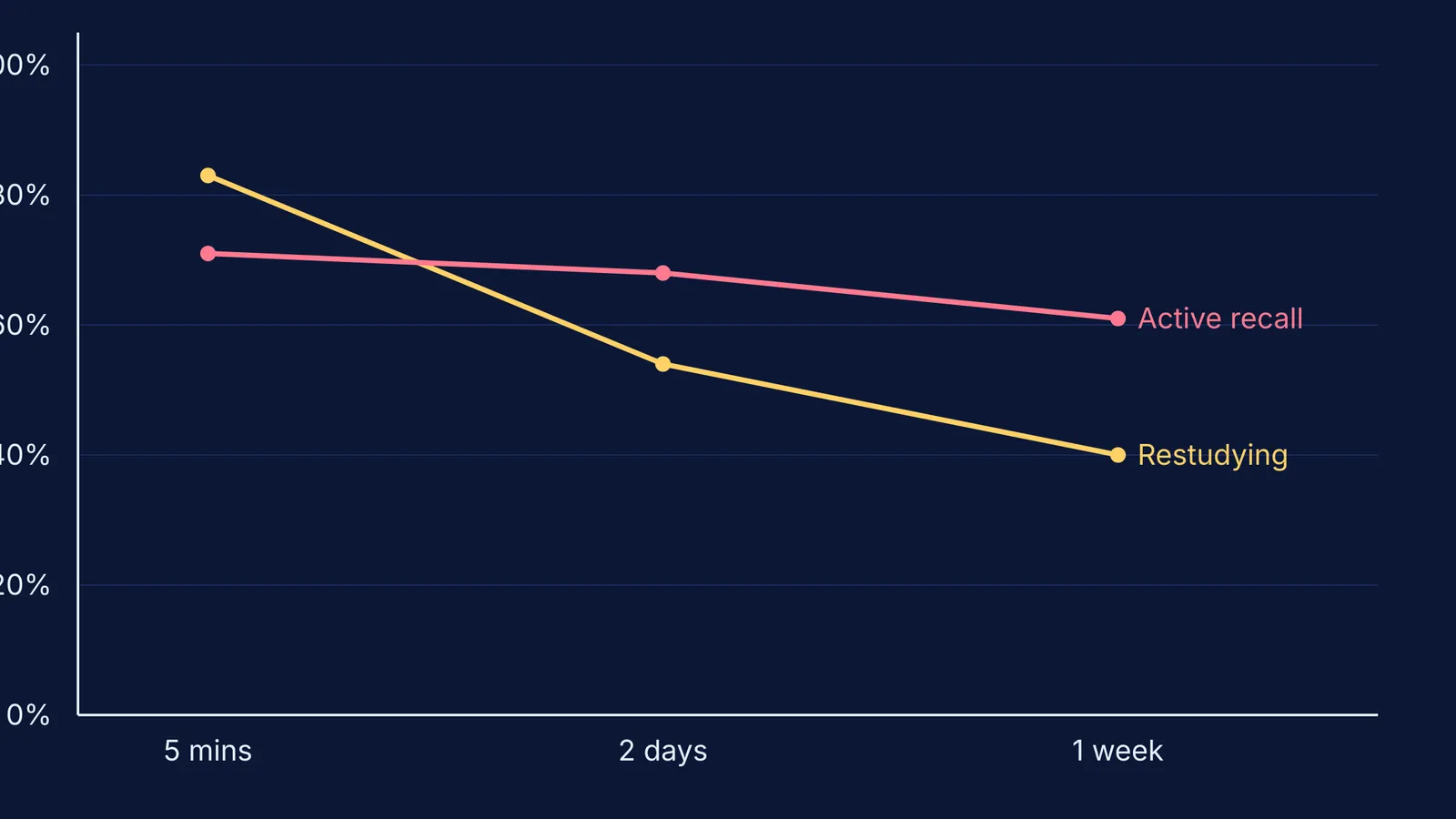
Active recall is the process of forcing your brain to retrieve information without looking at your notes. A 2006 study by Roediger and Karpicke investigated this testing effect and found that students who tested themselves retained approximately 61% of the material a week later. In contrast, those who simply restudied the material retained only about 40%.
Every time you pull a fact from memory, you strengthen the neural pathway to it. This is closely tied to the spacing effect. A 2006 meta-analysis in *Psychological Bulletin* confirmed that distributing your practice over several days consistently leads to better long-term retention than massing it all together in one session. Revisiting a concept on day one, and again on day three, signals to your brain that the information is important enough to keep.
How does sleep affect your test performance?
Sleep is not just downtime; it is the period when your brain actively saves what you have learned. A 2005 review in *Nature* highlighted that sleep actively participates in memory consolidation, converting initial, labile memory representations into more permanent ones.
During the night, your brain replays the neural patterns formed during the day, strengthening the connections. If you skip sleep to study more on day three, you block the brain from consolidating the very facts you just spent hours trying to learn.
By following this three-day plan—finding gaps, practising actively, and protecting your sleep—you replace the stress of cramming with a method that actually builds durable knowledge. You will walk into the exam room feeling rested and prepared.


