

On this page
The pandemic changed how governments view disease outbreaks and health systems, bringing public health professionals into the spotlight. While clinical doctors treat individual patients, public health professionals look at populations. They design interventions, track diseases, and manage the logistics of healthcare delivery.
With initiatives like the Ayushman Bharat Digital Mission and the expansion of Health and Wellness Centres, the demand for trained professionals is growing. A Master of Public Health (MPH) degree equips students to meet this demand, moving them from direct patient care to broader systemic management.
What do public health professionals do?
A Master of Public Health (MPH) degree prepares graduates for roles that focus on the management, research and policy sides of healthcare rather than direct clinical practice. The work is multidisciplinary, bringing together data analysis, project management and community outreach.
Common roles include:
Epidemiologists: They study disease patterns, manage outbreaks and lead surveillance for initiatives like the Integrated Disease Surveillance Programme (IDSP).
Program Managers: They oversee the implementation of national health programs at the district or state level, ensuring resources reach the clinics that need them.
Monitoring & Evaluation (M&E) Officers: They design frameworks to track program performance, analyse health data and ensure interventions are working as planned.
Health Policy Analysts: They research and develop health policies, evaluate existing laws and advocate for health system reforms.
Professionals in these roles often collaborate with state health departments, logistics providers and frontline workers. This ensures that a single health initiative can scale from a pilot project to a statewide mandate smoothly.
How is the government structuring public health roles?
Historically, administrative and planning roles in government health departments were filled by clinical specialists, which sometimes pulled doctors away from patient care. The Ministry of Health and Family Welfare (MoHFW) is changing this by introducing a dedicated Public Health Management Cadre (PHMC).
The guidelines for the PHMC create distinct verticals to separate clinical duties from administrative ones. This provides public health professionals with a clear career path in government. The four main verticals include the Public Health Cadre for medical professionals with public health qualifications, the Specialist Cadre for clinical experts, the Teaching Cadre for medical education, and the Health Management Cadre.
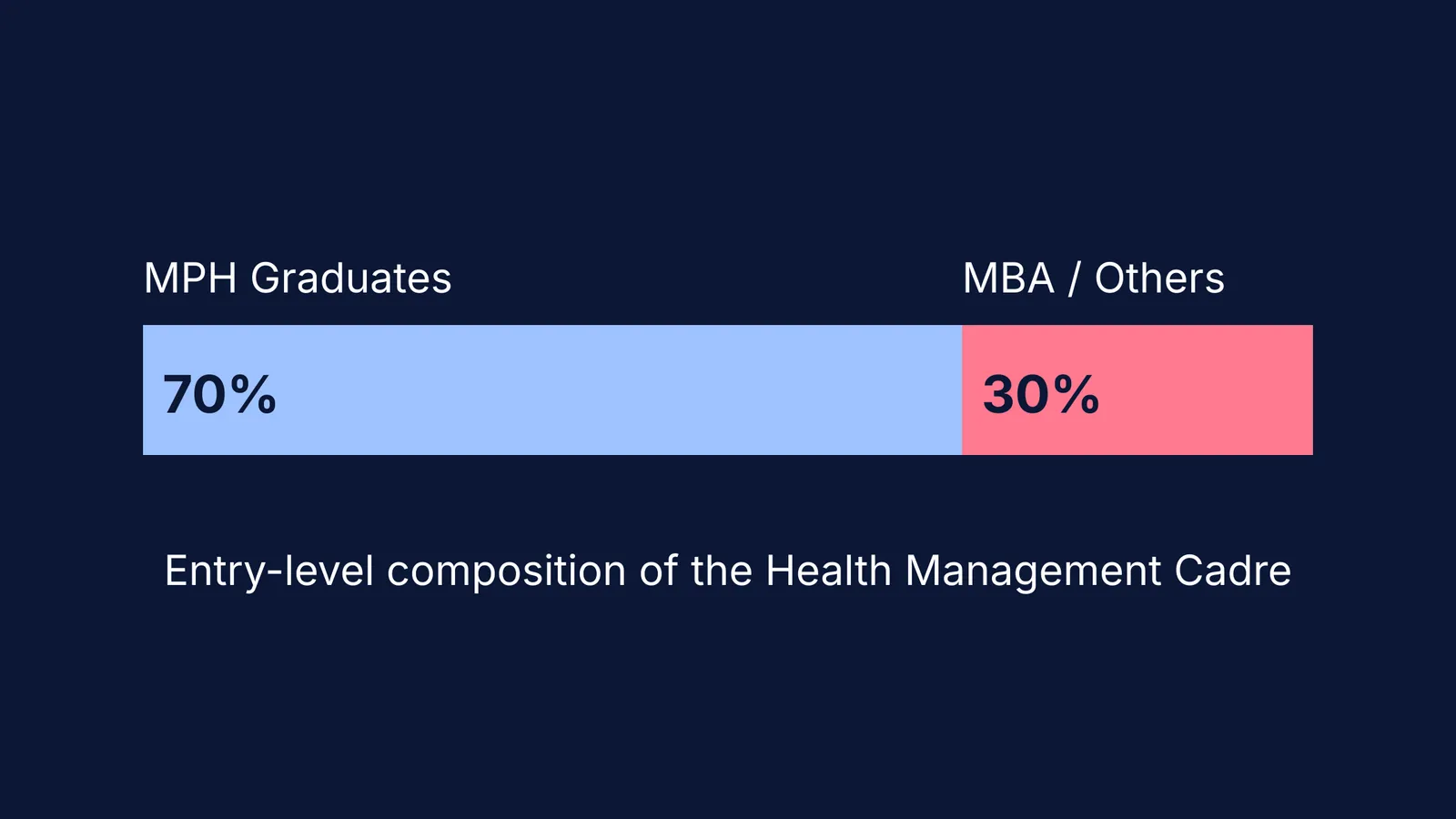
The Health Management Cadre focuses on operations, finance and human resources. Crucially, the guidelines propose that 70% of entry-level positions in this vertical be filled by MPH graduates, opening a direct path for professionals with this specific degree.
In addition to central bodies like the National Health Mission (NHM) and NITI Aayog, MPH graduates find roles in international organisations such as the WHO and UNICEF, as well as NGOs like the Public Health Foundation of India (PHFI).
What should you look for in an MPH program?
As the demand for public health expertise rises, so does the availability of training programs. A recent desk review published in 2026 identified 177 institutions offering Master of Public Health (MPH) programs across 23 states and 3 Union Territories in India. Together, these institutes have an estimated intake capacity of over 4,200 seats.
However, because there is currently no centralized regulatory body for MPH degrees in India, programs vary widely. Students must carefully evaluate the curriculum. Strong programs offer competency-based training, structured internships and extensive field-based dissertation projects. The study also highlighted variations in admission criteria and elective options, suggesting that applicants should look for programs that align closely with the current job market and national health priorities.
How do you prepare for a career in public health?
If you are considering this path, the work often starts in field-based implementation or data roles before moving into strategic advisory or leadership positions. Building skills in data analysis (using tools like R or STATA), grant writing and stakeholder management is just as important as understanding the biology of diseases.
Fermi's AI tutor can help you grasp the foundational science during your undergraduate studies. If you are reviewing the epidemiology of infectious diseases or the statistics behind clinical trials, the tutor works out what you already know and builds a plan for the session, writing on a board and checking your understanding as it goes.
Understanding fundamental biological principles is a strong starting point for any public health path. For more on related biological concepts, you can review how diseases are tracked in our guide to biological magnification or find early ways to get involved in our guide to research internships for science undergraduates in India.


