

On this page
According to the Food and Agriculture Organization (FAO), pests and plant diseases destroy up to 40% of global crop yields every year. These losses cost the global economy over USD 220 billion annually and pose a direct threat to global food security.
As the world's population grows, we cannot afford to lose nearly half of what we grow. This is where plant pathologists step in. Often described as "plant doctors," these agricultural scientists study the organisms and environmental conditions that cause plant diseases, and they develop strategies to manage them. For students interested in biology but looking outside traditional medicine, this field offers a heavily research-driven and impactful alternative path.
What does a plant pathologist do?
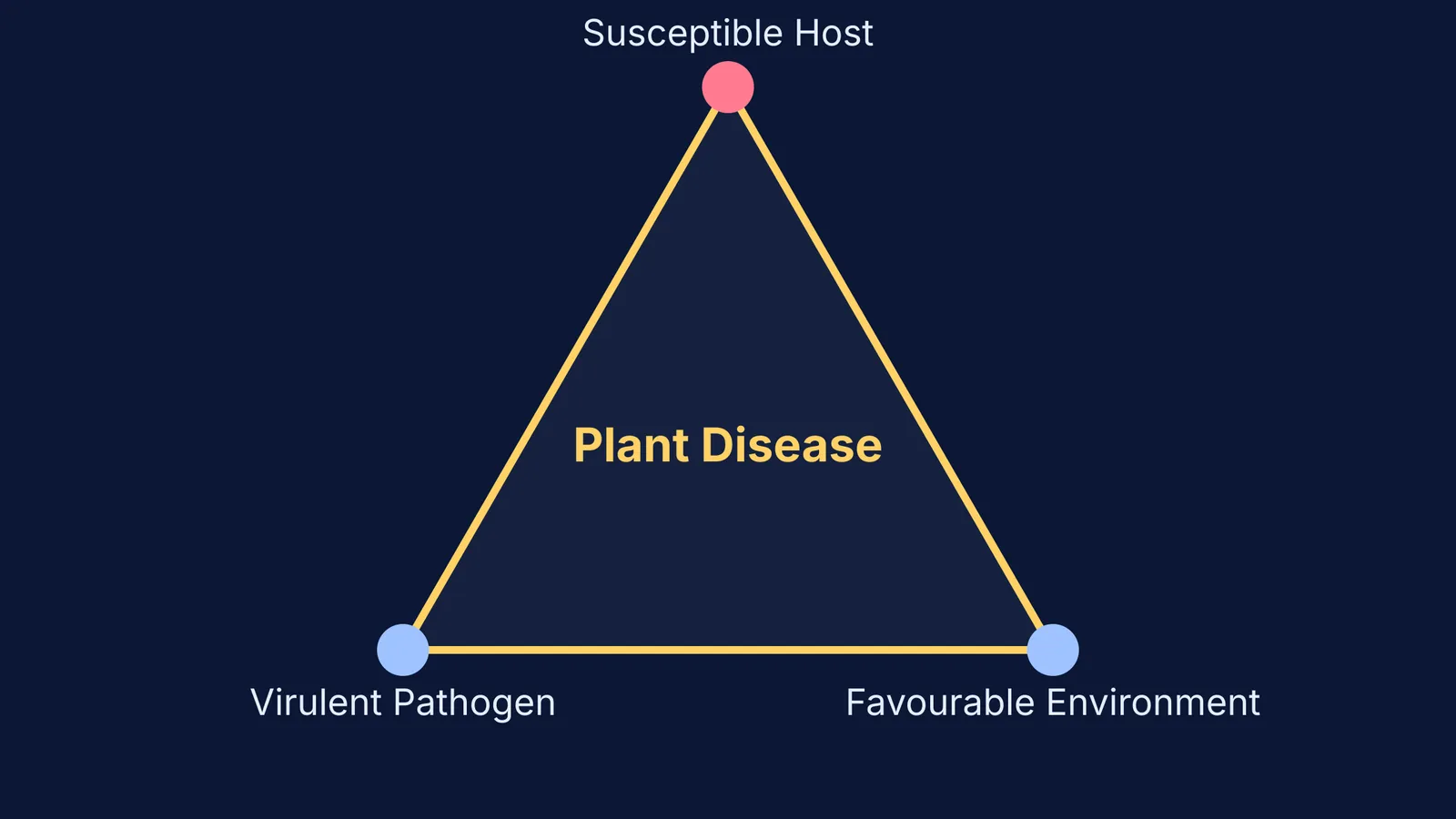
Plant pathologists work to understand and control diseases caused by fungi, bacteria, viruses and nematodes. Their work hinges on a fundamental concept called the "disease triangle," which states that a disease only occurs when three factors align: a susceptible host plant, a virulent pathogen and a favourable environment.
Daily responsibilities vary depending on the role. A pathologist might spend time in a laboratory sequencing the DNA of a new viral strain, or in the field testing whether a change in irrigation reduces fungal leaf spots. They also play a major part in breeding resilient crops. Just as B. P. Pal bred wheat that resists rust disease decades ago, modern pathologists work alongside geneticists to develop seeds that can naturally withstand local pathogens.
If you find these biological interactions hard to picture, the Fermi Simulation Lab has interactive simulations for ideas that are easier to see than to read.
The agricultural science route
Becoming a plant pathologist in India typically begins with a Bachelor of Science (BSc) in Agriculture. This four-year undergraduate degree provides a foundation in entomology, soil science, genetics and agronomy, with plant pathology as a core subject.
Following the bachelor's degree, students must specialise by completing a two-year Master of Science (MSc) in Plant Pathology. Admission to top postgraduate programmes is highly competitive and usually requires clearing entrance exams like the ICAR AIEEA (PG) or state agricultural university tests.
Because the field is deeply rooted in research, many professionals also go on to complete a PhD. A doctorate is almost always necessary for those aiming to become lead scientists at national research institutes or professors at agricultural universities. If you are preparing for these rigorous entrance exams, Fermi's AI tutor can help you build a study plan, working out what you already know and stepping in to explain the reasoning whenever you get stuck on complex genetics or microbiology problems.
What is the plant pathologist career scope?
The career scope for plant pathologists in India spans the government, private and academic sectors.
In the government sector, graduates often target the Agricultural Research Scientist (ARS) position through the Agricultural Scientists Recruitment Board (ASRB) exams. Other government roles include Plant Protection Officers in state agriculture departments and Quarantine Officers who inspect imported agricultural goods to prevent invasive diseases from entering the country.
In the private sector, agrochemical companies (such as those manufacturing fungicides and biopesticides) and major seed corporations hire pathologists for research and development. Biotechnology firms also rely on their expertise to develop genetically modified, disease-resistant crop varieties.
Both sectors offer progressive roles, starting from field and laboratory research positions and advancing to lead R&D scientists or senior university professors, making it a viable and structured career path.
Is this career right for you?
Success in plant pathology requires strong analytical thinking, technical proficiency with laboratory equipment, and a willingness to divide your time between the microscope and the muddy field. It is a career meant for those who want to apply rigorous science to practical, real-world problems. For families exploring options, it is worth talking about STEM careers beyond engineering and medicine to see if agricultural science is the right fit.
The demand for food is only going up, and climate change is allowing pathogens to spread into new regions. Plant pathologists will remain at the forefront of the fight to keep our crops healthy and our food supply secure.


