

On this page
When you get home from school at 4:00 PM, you might feel like you have the entire evening to study. But without a structured plan, that time often vanishes into a blur of snacking, scrolling, and disorganised reading. Before you know it, it is 9:00 PM, and you are forced to cram your homework into the few hours before bed. Building a sustainable daily routine requires mapping out the hours you cannot control before assigning tasks to the ones you can.
Why does cramming after school not work?
After a long school day, the temptation is often to push through a single, massive three-hour study session to get it over with. However, cognitive science suggests this is an inefficient way to learn, especially when your brain is already fatigued from hours of classroom instruction.
In a comprehensive 2013 review of learning techniques, researchers John Dunlosky and colleagues evaluated ten common study methods. They found that distributed practice—spacing study sessions over time—was one of the few methods to receive a "high utility" rating for improving student performance across all age groups (DOI: 10.1177/1529100612453266). The review concluded that breaking study time into smaller, frequent chunks is vastly superior to massed practice.
Instead of massing all your work into one exhausting block, breaking your evening into shorter, spaced sessions allows your brain to consolidate information. A 2008 study by Cepeda and colleagues confirmed that spacing out your study sessions dramatically improves long-term retention compared to cramming them together (DOI: 10.1111/j.1467-9280.2008.02209.x). When you cram, the information is held in short-term memory just long enough to pass a test the next day, but it quickly fades. Spacing forces your brain to retrieve the information repeatedly, which strengthens the neural pathways required for long-term recall.
How to make a study plan around school timings?
The most common mistake students make is scheduling their study time first, expecting the rest of their day to simply fit around it. A realistic plan begins by blocking out your non-negotiable commitments.
Map the fixed blocks: On a piece of paper or a digital calendar, block out your school hours, commute time, coaching classes, and sleep. Adolescents need roughly eight to nine hours of sleep, so block that out unconditionally.
Protect your rest: Block out 30 to 45 minutes for dinner and winding down before bed. You cannot sustain a heavy academic workload without proper nutrition and downtime.
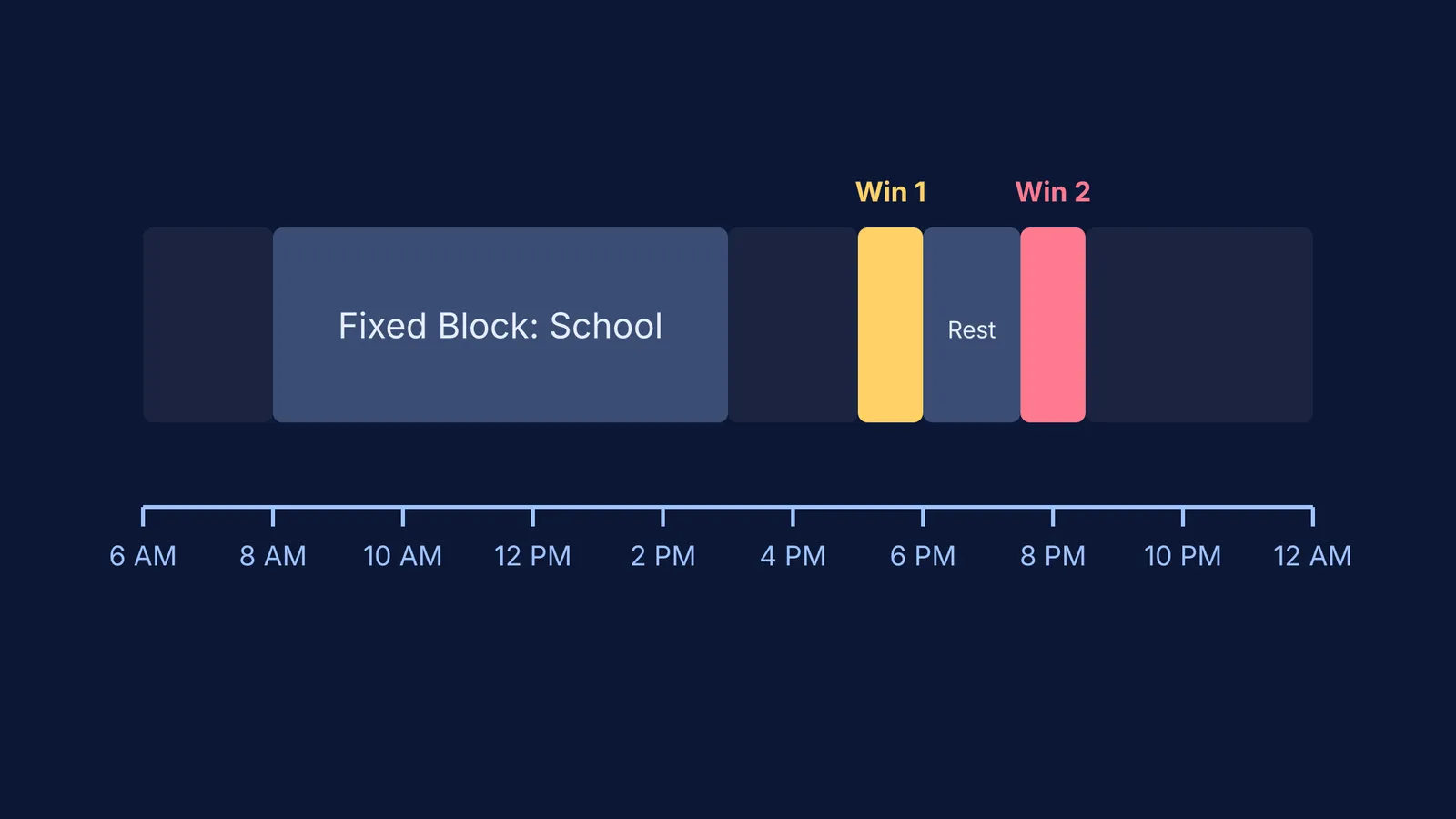
Find your windows: Look at the remaining blank spaces on your schedule. Your goal is to identify just two optimal study windows, typically lasting 45 to 60 minutes each.
By limiting yourself to two distinct windows, you create a sense of urgency that prevents procrastination, while leaving enough room in your evening to actually relax.
When is the best time to study after school?
The ideal timing for your two windows depends heavily on your personal energy levels and daily routine. If you return from school feeling completely drained, your first window should not start immediately. Take an hour to disconnect and reset; if you are unsure how to rest effectively without falling into a scrolling trap, see our guide on what to do in a study break, according to the research.
A common and highly effective split is placing Window 1 in the late afternoon (e.g., 5:00 PM to 6:00 PM) and Window 2 in the evening (e.g., 7:30 PM to 8:30 PM). This creates a natural gap for dinner, hobbies, or exercise, which uses the spacing effect naturally.
What should you study in each window?
Once you have your two windows established, the final step is assigning specific types of tasks to each based on the cognitive effort they require. Treating all homework as equal will quickly lead to burnout.
Window 1: High-energy tasks. Use your first window for active learning, when your mind is relatively fresh. This is the time to tackle difficult maths problems, write drafts for essays, or engage in active recall with flashcards.
Window 2: Lower-energy tasks. Use your second window for reviewing notes, organizing your materials for the next day, or addressing specific concept gaps. Because this window falls later in the evening, avoid highly frustrating tasks that might disrupt your sleep. If you find yourself staring at a blank page during this session, Fermi's AI tutor can work out what you already know and build a plan for the session, so you sit down to a clear next step.
Sticking to this structured approach takes practice. For strategies on maintaining your new schedule through the entire term, read our advice on How to build a study routine that lasts longer than a week. By focusing on two high-quality windows rather than endless hours of vague studying, you can master your syllabus while still having a life outside of school.


