

On this page
In short
Offshore engineering involves designing and operating structures at sea, from fixed platforms in 520-metre waters to floating wind turbines. Engineers typically work rotational schedules—such as 28 days on and 28 days off—doing 12-hour shifts. Entering the field requires an engineering degree and a mandatory three-day BOSIET safety certification.
Offshore engineering takes the principles of civil, mechanical and electrical engineering and applies them to one of the harshest environments on Earth. Instead of building on stable ground, offshore engineers design, construct and maintain structures that float or stand in the open ocean, constantly battling wave loads, saltwater corrosion and high winds.
For students exploring career options, the offshore sector—spanning oil, gas and rapidly growing renewable energy—offers a life unlike standard office jobs. It involves vast structures, global travel and distinct periods of intense work followed by long stretches of leave.
What do offshore engineers actually build?
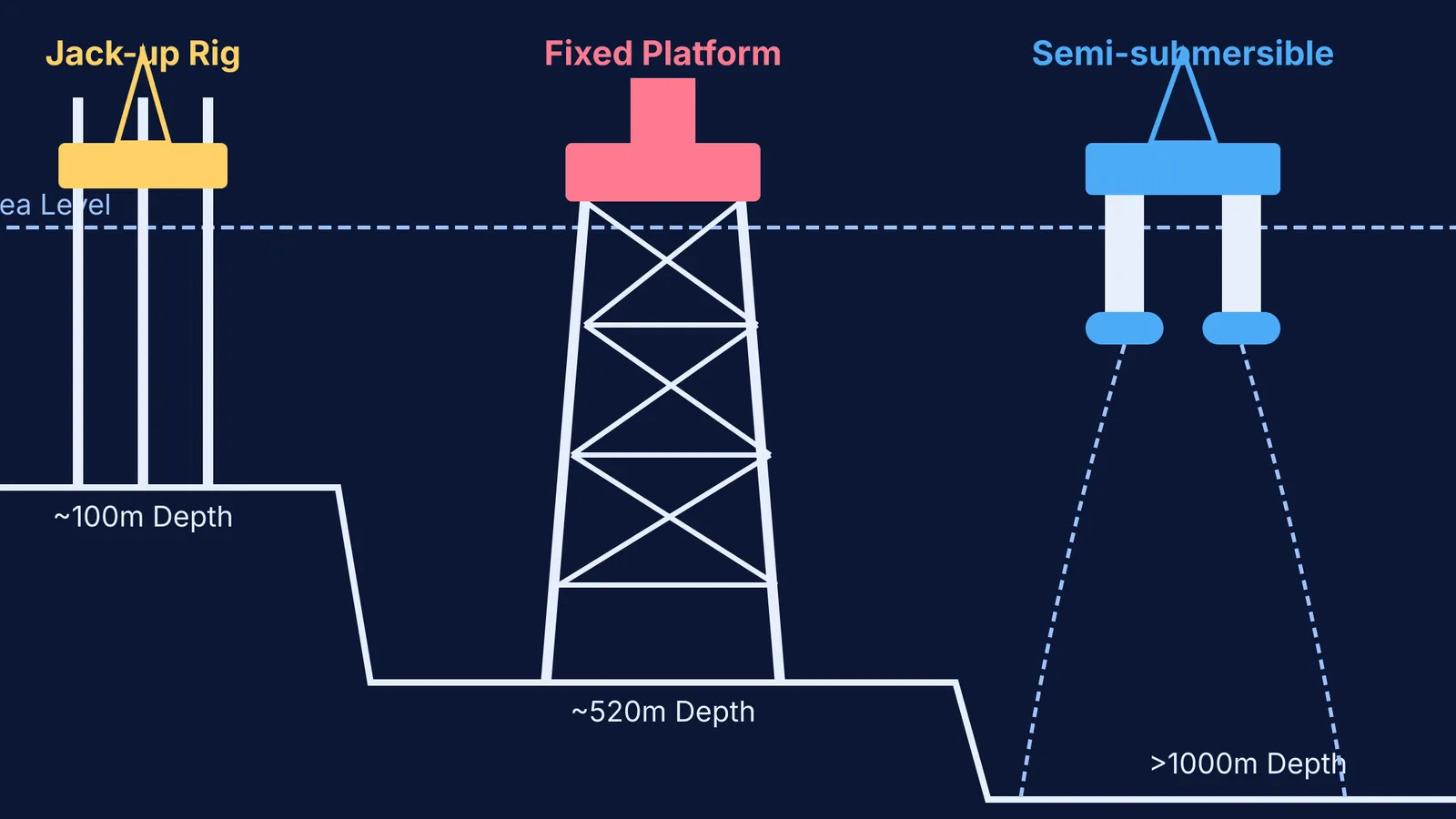
The type of structure an engineer works on depends heavily on the water's depth and the project's purpose. Depending on the environment, offshore structures take radically different forms:
Fixed platforms: These are massive steel or concrete structures attached directly to the seabed. They are typically used in shallower waters up to about 520 metres deep (Wikipedia).
Jack-up rigs: Mobile platforms with long legs that can be lowered to the seafloor to raise the hull above the waves. These are mostly deployed for drilling in shallow waters.
Semi-submersibles and drillships: For deep-water operations, engineers design floating units. These stay in place over a wellhead using either heavy mooring lines or dynamic positioning systems that use thrusters to fight the ocean current.
Offshore wind farms: A rapidly growing sector where engineers design fixed and floating turbines to generate renewable electricity.
Which engineering branches lead offshore?
You do not strictly need a dedicated "offshore engineering" degree to enter the field. Most professionals start with a traditional bachelor's degree in mechanical, civil, electrical or chemical engineering. If you are aiming for maritime colleges in India, you might take the IMU CET: the entrance for marine engineering and nautical science to pursue marine engineering directly.
From a core engineering degree, you can specialize in several branches:
Naval Architecture: Designing the hull, buoyancy and stability of floating structures and vessels.
Subsea Engineering: Focusing on the equipment placed on the seabed, such as wellheads, manifolds and the pipelines that carry fluids to the surface.
Structural Engineering: Designing the complex steel frames (jackets) that must withstand decades of extreme weather.
Mastering the physics behind these structures—such as hydrodynamics, buoyancy and structural mechanics—starts early. If you are struggling with the foundational physics in your first semester at science or engineering college, the Fermi Problem Library provides worked problems with a step-by-step solver that explains the reasoning rather than printing an answer. For fluid mechanics concepts that are hard to picture, the Fermi Simulation Lab runs interactive simulations for the ideas that are easier to see than to read.
What is an offshore rotation schedule?
One of the most defining aspects of working offshore is the rotation schedule. Instead of a standard five-day workweek, offshore engineers live on the platform or vessel for a set number of weeks, followed by an equal amount of time off back home.
The 28/28 rotation is a standard pattern for international and remote operations: you work 28 days on, followed by 28 days off. During the "on" period, personnel typically work 12-hour shifts every single day, with no weekends or public holidays (Worldwide Recruitment Solutions). Life on a platform resembles a self-contained town, complete with cafeterias, gyms and internet access, though space is highly optimized.
While the work is intense and keeps you away from family for a month at a time, the trade-off is that you effectively work only half the year. The long periods of continuous leave allow for travel, personal projects or complete rest—a work-life balance that is impossible in traditional 9-to-5 roles.
How can students prepare for an offshore career?
Before stepping onto a helicopter bound for a rig, every worker must pass safety and survival training. The global standard is BOSIET (Basic Offshore Safety Induction and Emergency Training), which is regulated by the Offshore Petroleum Industry Training Organization (OPITO).
The three-day course covers fire fighting, first aid and helicopter underwater escape training (HUET). In India, accredited centres charge around ₹25,000 to ₹35,000 for the standard course, and the certification remains valid for four years (Pista Offshore). You will also need a specialised medical certificate to prove you are physically fit for remote, demanding work.


