

On this page
As lifestyle diseases rise, the science of food has moved from a general interest to a critical part of healthcare. According to the World Health Organization, a balanced diet is fundamental to preventing noncommunicable diseases like diabetes and heart disease, and they recommend professional dietary counselling at all primary health-care facilities (WHO).
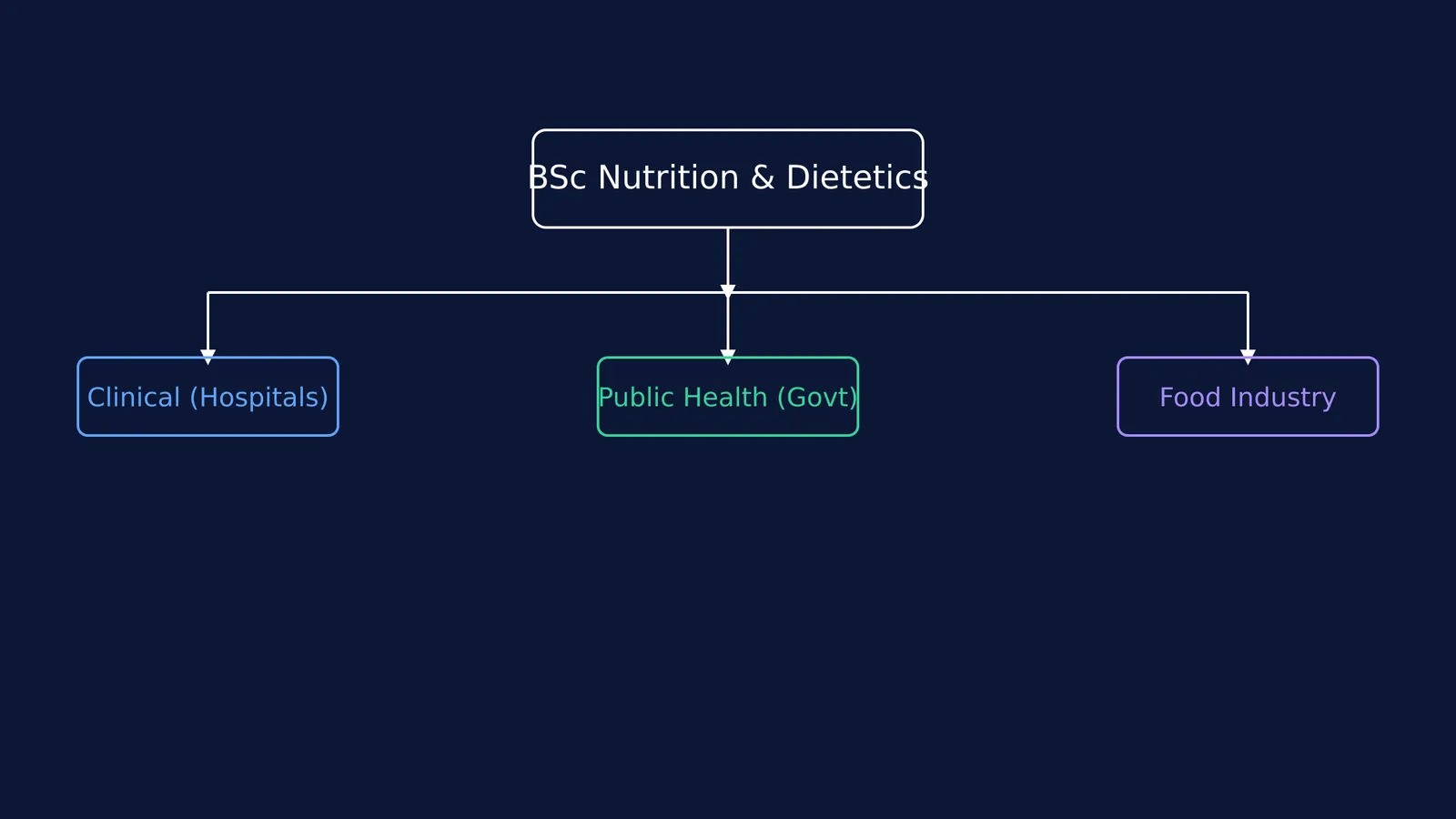
If you are interested in the chemistry of food and human biology, a Bachelor of Science (BSc) in Nutrition and Dietetics offers a direct path into clinical practice, public health, and the food industry. Here is a look at what the degree involves and the career scope it opens up.
What does the BSc Nutrition and Dietetics syllabus cover?
The BSc program is a three-year undergraduate degree that bridges biology, chemistry, and sociology. You do not just learn about food groups; you study how nutrients interact with the body at a cellular level and how to manage those interactions for different health conditions (Collegedunia).
Core subjects across the six semesters typically include:
Nutritional Biochemistry: How the body breaks down and uses macronutrients and micronutrients.
Human Physiology: The biological functions of human organ systems, similar to what you study in our guide to primary and secondary metabolites.
Food Microbiology: The study of bacteria and organisms that modify or contaminate food.
Advanced Dietetics and Counselling: Planning specific diets for patients and learning how to communicate those plans effectively.
The curriculum is hands-on. By your final year, you will spend significant time in practical labs and workshops, testing the chemical composition of foods or planning family meals.
How do you become a Registered Dietitian in hospitals?
Many graduates aim for clinical roles in hospitals, working alongside doctors to create nutritional interventions for patients.
Here is the checklist to practice at the highest clinical level as a Registered Dietitian (RD). The Indian Dietetic Association (IDA) sets strict requirements for this title (IDA):
Higher Education: After your BSc, you must complete a Post Graduate Diploma in Dietetics or an MSc in Foods and Nutrition.
Internship: You must finish a continuous 6-month internship at an IDA-recognized hospital.
The RD Exam: You must pass the IDA's two-part examination covering biochemistry, human nutrition, and food service management.
Membership: You must be a Life Member of the IDA.
This rigorous path ensures that RDs are qualified to handle complex medical nutrition therapy, such as designing tube feeding regimens for critically ill patients.
What is the career scope in government and public health?
The career scope for a BSc Nutrition and Dietetics graduate extends well beyond hospital wards. The government sector is a major employer, focusing on public health and maternal nutrition.
Graduates can take public service exams to work in the National Health Mission (NHM) or the Integrated Child Development Services (ICDS). Roles include:
Nutrition Officer or Counsellor: Working at district levels or in Nutrition Rehabilitation Centres.
Child Development Project Officer (CDPO): Overseeing nutritional programs for mothers and young children.
Food Safety Officer: Working with the Food Safety and Standards Authority of India (FSSAI) to enforce food quality standards.
As you prepare for competitive exams or advanced degrees, you might find yourself revisiting core science concepts. If you encounter a challenging biochemistry problem or need help visualising a metabolic pathway, the Fermi Problem Library has worked problems with a step-by-step solver that explains the reasoning.
What are the roles in the food industry and corporate wellness?
The private sector offers diverse roles for nutritionists who prefer not to work in a clinical setting. Fast-moving consumer goods (FMCG) companies hire nutrition analysts and product developers to create healthier food alternatives and ensure accurate nutritional labelling.
Corporate wellness is another growing field. Multinational companies employ in-house nutritionists to design cafeteria menus and run employee health programs. In the sports sector, nutritionists work with athletes and fitness centres to optimize performance through diet.
Whether you lean toward clinical therapy, public health policy, or food technology, a BSc in Nutrition and Dietetics provides a strong scientific foundation for a career focused on improving human health. To see how early nutritional science was established in India, read our post on C. Gopalan and the science of nutrition.


