

On this page
It is a terrible feeling: you study hard for weeks, take a mock test, and your score is lower than the last one. It feels like you are going backwards. But before you tear up your timetable, it is important to understand the math of mock tests.
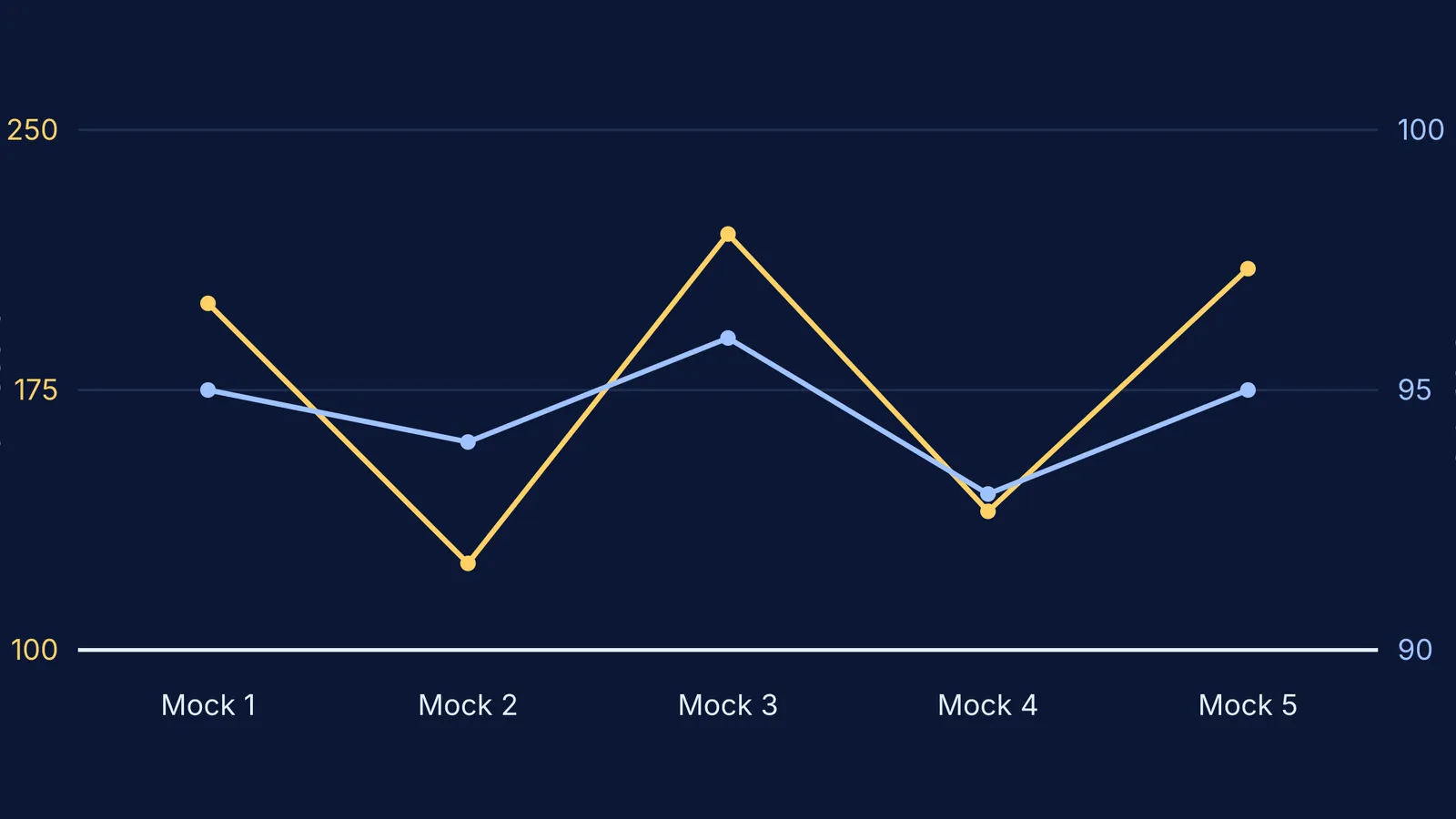
Scores rarely move in a straight upward line. Fluctuation is an inherent part of standardized testing, and knowing how to read your scores can save you from unnecessary panic.
Why do mock test scores go up and down?
The most common reason for a fluctuating score is simple: not all mock tests are exactly the same difficulty.
Even the most carefully designed standardized exams have built-in variability. If you take two different mock tests on the same day without learning anything new, your score can naturally swing just based on which specific questions appeared. One paper might accidentally test all your strong areas (like calculus and modern physics), while the next is heavy on topics you dislike (like probability or inorganic chemistry).
A drop in score does not necessarily mean your knowledge has decreased; it often just means the test was harder or focused heavily on your weak spots. Fatigue also plays a massive role. Sitting a long mock test on a Sunday morning after a good night's sleep will naturally yield a different result than taking one on a Tuesday evening after a full day of school and coaching classes.
Why should I track percentiles instead?
Because raw scores are so sensitive to paper difficulty and personal fatigue, competitive exams rely on relative ranking. The **percentile rank** of a given score is the percentage of scores in its frequency distribution that are less than that score.
In highly competitive exams, testing agencies rarely use raw marks to determine your final rank because the exam takes place across multiple shifts with varying difficulty. Instead, they use a normalization process that converts your raw score into a percentile based entirely on how you performed compared to other students in your specific shift.
If you get a very tough paper, your raw marks will be lower, but so will everyone else's. A lower raw score on a hard test might earn you a top percentile, while a higher score on an easy test might earn you a lower percentile. If your raw score drops but your percentile remains flat, you haven't regressed. You just sat a harder paper. Tracking your percentile neutralizes the noise of paper difficulty.
How should I analyze my mock tests?
Instead of stressing over the total number at the top of the page, use a systematic approach to review your performance.
Here is a simple checklist for analyzing your next mock test:
Check the percentile first: Before looking at the raw score, look at your relative rank among the cohort taking the mock. Is it stable, rising, or falling?
Look at attempts versus accuracy: If your score dropped, investigate the cause. Was it because you attempted fewer questions, pointing to a pacing or time management issue? Or did you get more questions wrong, pointing to a conceptual or accuracy issue?
Categorize your errors: Sort your incorrect answers into distinct buckets. Silly mistakes (like misreading the question or a sign error) require better focus. Time traps (like spending too much time on one problem) require better test-taking strategy. Concept gaps (not knowing the formula or core idea) require immediate study.
When you identify true concept gaps during your analysis, Fermi Concept Library has a lesson for every idea in physics, chemistry, biology, and mathematics to help you quickly rebuild that foundation.
If your issue is that you understand the concept but cannot solve the harder application questions, the Fermi Problem Library provides a step-by-step solver that explains the reasoning behind each move, rather than just printing an answer. This helps you see exactly where your method broke down.
Stop treating a single mock test score as a final judgment. It is just one data point on a longer curve. Focus on the trend line over several mocks, improve your weak spots methodically, and let the process work.


