

On this page
Many teenagers and adults assume they have missed the window to learn swimming. A 2025 report from Royal Life Saving found that 84% of 15- to 16-year-olds are unable to meet basic lifesaving requirements, such as treading water and swimming 400 metres. If you are among them, you are not alone—but starting at 15 actually offers distinct advantages in learning.
Is it too late to learn swimming at 15?
The short answer is no. In fact, a 15-year-old can often learn the mechanics of swimming faster than a young child.
Teenagers have fully developed motor skills and the ability to process complex technical instructions. When an instructor explains bilateral breathing or the mechanics of a flutter kick, an adolescent can consciously apply those adjustments. The primary hurdle is not physical capability but overcoming any residual fear of the water.
This is a critical life skill. According to the World Health Organization's first-ever global status report on drowning prevention in 2024, drowning claimed 300,000 lives in 2021. The report notes that only 22% of countries integrate swimming and water safety training into their national school curricula, leaving many to learn the skill on their own time.
How long does it take to learn to swim?
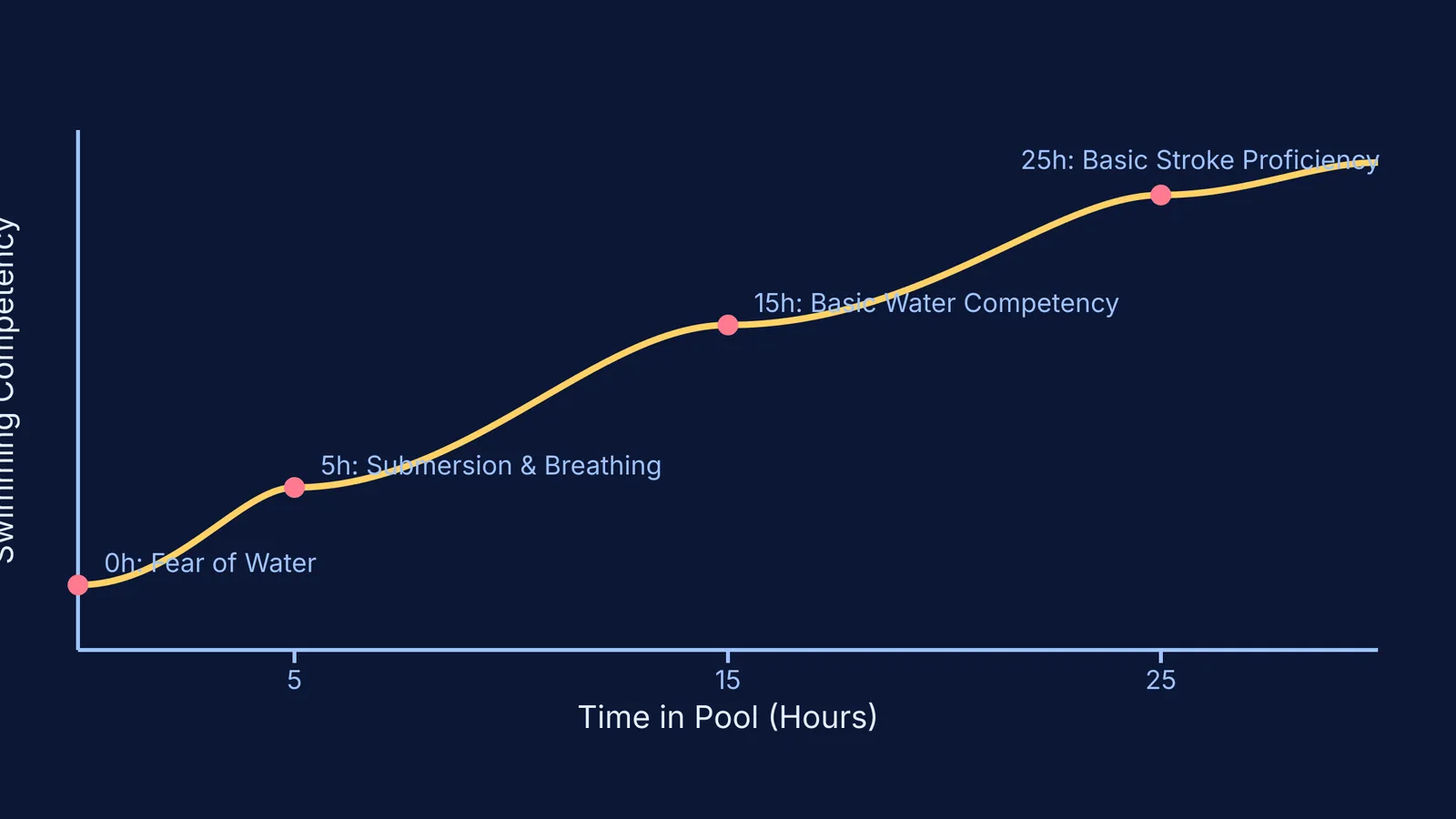
The time it takes to learn depends on your starting point, but structured progress is highly predictable. Organizations like the American Red Cross divide the journey into phases:
Basic Water Competency (10 to 15 hours): This is the safety benchmark. It includes stepping into water over your head, surfacing, treading water for one minute, and swimming 25 yards to an exit. Most adult and teenage beginners reach this stage in 15 sessions of 60 minutes.
Basic Stroke Proficiency (20 to 30 hours): Moving beyond survival to swimming recognisable freestyle (front crawl) and backstroke with rhythmic breathing typically takes three to four months of consistent practice.
If you are a student aiming to learn over a summer break, committing to two 60-minute sessions per week will get you to basic competency before the new academic term begins.
What are the cognitive benefits of swimming for students?
Fitting swimming into a busy study schedule might seem like a distraction, but research shows it actively supports academic performance.
A 2021 study published in *Physiological Reports* found that regular swimming exercise—such as 60 minutes a day, five days a week—led to significant improvements in short-term and long-term memory within just 7 days. Aerobic exercise like swimming stimulates the release of Brain-Derived Neurotrophic Factor (BDNF), which supports the growth of new neurons in the hippocampus, the brain region responsible for learning and memory. This ties closely to how our brains hold information, a concept explored in our guide to Alan Baddeley's working memory model.
Furthermore, the rhythmic breathing and bilateral cross-patterning (using opposite limbs) required in swimming strokes lower cortisol levels. This creates a calmer, more focused mindset that is crucial during exam preparation.
How can you fit swimming into a study schedule?
A common worry for 15-year-olds preparing for board exams or competitive tests is the time commitment. The key is to use the pool as a deliberate mental reset rather than an extra chore. As discussed in our piece on William James and the first psychology textbook, building a new habit is easier when it supports an existing routine.
Schedule sessions before study blocks: Swimming in the morning or late afternoon increases blood flow to the brain. The short-term cognitive boost from an aerobic session can last up to three hours, making the study period immediately following a swim highly productive.
Prioritise frequency over duration: Two 45-minute sessions a week build muscle memory better than a single 90-minute block.
Use the reset to start fresh: Coming back from the pool is the perfect time to tackle a difficult subject. If you are not sure where to start your revision, Fermi's AI tutor can work out what you already know and build a plan for the session, so you sit down to a clear next step instead of a blank page.
Learn the physics of the pool: Understanding the fluid dynamics of drag and buoyancy can make learning strokes easier. This is a practical application of mechanics that you can explore in the Fermi Concept Library.
At 15, learning to swim is an investment in both your physical safety and your cognitive endurance. With 15 hours of dedicated practice, you can transform from a non-swimmer to someone who is water-safe, all while building a habit that supports your studies.


