

On this page
The KEAM (Kerala Engineering Architecture Medical) admission process can feel overwhelming after the results are out. Your engineering college and course are decided through the Centralised Allotment Process (CAP), run by the Commissioner for Entrance Examinations (CEE), Kerala.
This Single Window System (SWS) eliminates the need to apply to individual colleges, grouping everything into one online portal. Here are the exact steps you need to follow to secure your seat.
How do I register options for KEAM?
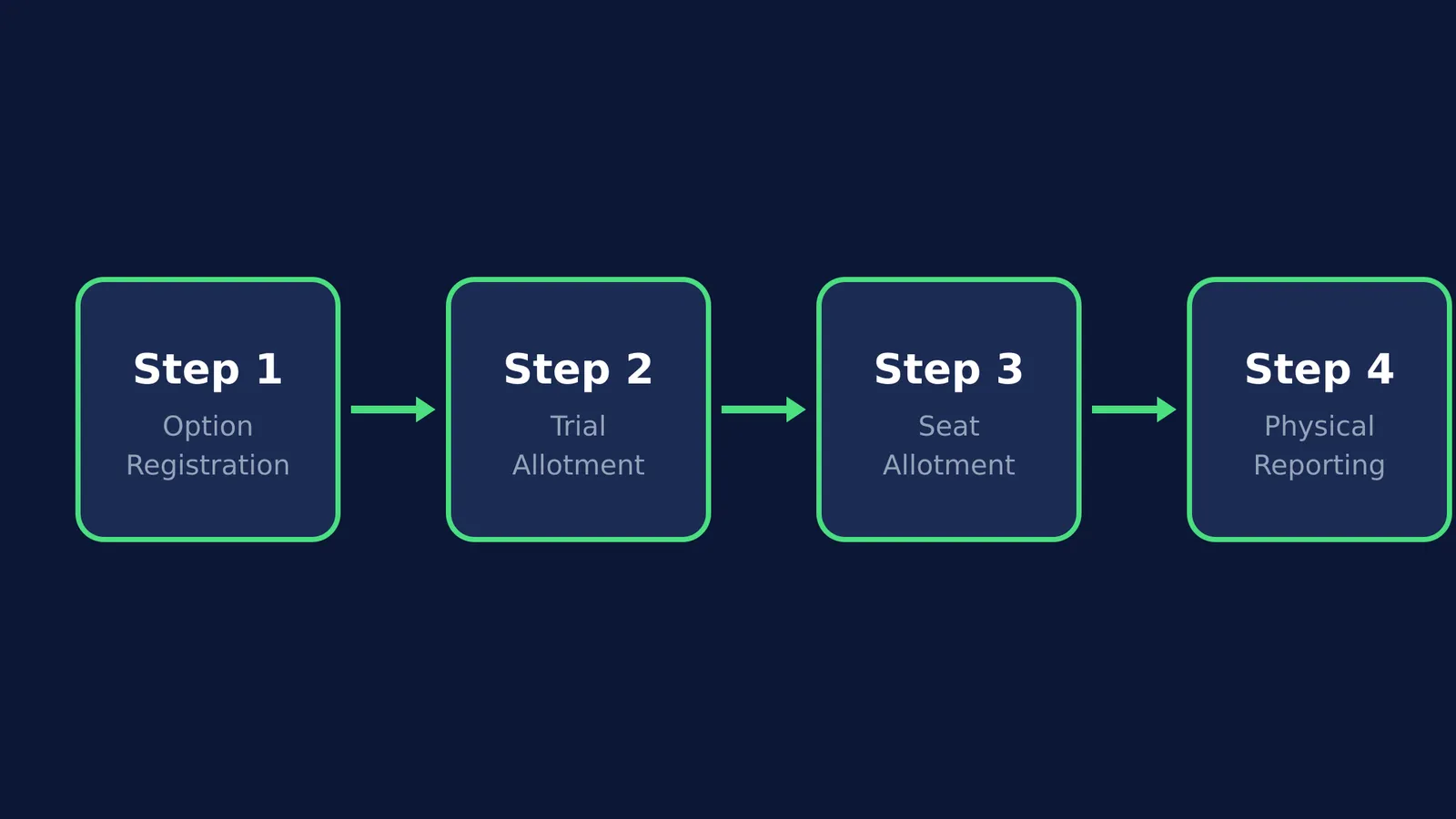
You will start by logging into the Candidate Portal on the official CEE Kerala website. Here, you will find the 'Option Registration' link.
To participate in the CAP, you must first pay an option registration fee as outlined in the KEAM 2024 Prospectus. For general candidates, this is ₹2,000, while SC, ST and OEC candidates pay ₹500. This fee is adjusted against your tuition fee if you take admission, but it is not refunded if you get an allotment and choose not to join.
Once paid, you will see a comprehensive list of available engineering colleges and courses. You must add and rank your choices in order of preference. The system processes your first choice first; if it is not available, it moves to your second, and so on. Always remember to save your choices before logging out. You can rearrange, add or delete options as many times as you want before the deadline.
What is the KEAM trial allotment?
Before the formal allotment begins, the CEE publishes a trial allotment. This gives you a rough idea of the college and course you might get based on your rank and current preferences.
The trial allotment does not guarantee a seat, but it is a valuable chance to reorder, add or delete options if you are unhappy with the predicted outcome. Use this window to evaluate whether your current list is realistic and whether you need to include more backup choices.
If you are rethinking your foundational physics before university starts, Fermi's AI tutor can work out what you already know and build a plan for the session, helping you master tricky ideas step by step. You can also review basic formulas, such as finding the distance in the nth second, to prepare for your first semester.
How do the seat allotment rounds work?
Once the option entry period closes, the first formal allotment is published. If you are allotted a seat, you must download your Allotment Memo from the portal.
To accept the seat and remain in the allotment process, you need to pay a token fee to the CEE, as detailed in the KEAM 2024 Prospectus. For general candidates in private self-financing colleges, the total amount remitted to the CEE is typically ₹10,000, which includes your earlier ₹2,000 registration fee, leaving an ₹8,000 token fee. SC, ST and OEC candidates usually pay a concessional token fee of ₹500. This payment can be made online via the candidate portal or at designated Head Post Offices across Kerala.
If you fail to pay this fee before the deadline, you will lose your allotted seat, and all your higher options will be cancelled permanently. If you do pay the fee, you can still participate in later rounds to see if you get a higher-preference seat.
What happens during final reporting to the college?
After the allotment rounds conclude, you must report physically to your assigned engineering college. The dates for reporting will be specified in your final Allotment Memo.
You will need to bring several original documents for physical verification. These typically include your Data Sheet, Allotment Memo, Class 10 certificate to prove your date of birth, Class 12 mark list, Transfer Certificate (TC) and a Physical Fitness Certificate. If you are claiming a reservation seat, you will also need the relevant community or income certificates.
At this stage, you will also pay the balance of your tuition fee directly to the college to confirm your admission.
If you are brushing up on maths or physics before classes begin, you might want to look at converting a quantity between unit systems using dimensions or explore the logic behind finding Aⁿ for a matrix by spotting the pattern.


