

On this page
Most students prepare for literature exams by reading their prescribed plays and stories over and over. They highlight key passages in *Julius Caesar* or *Treasure Chest* and read them until the words feel familiar.
This creates an illusion of fluency. You recognize the words on the page, so you feel like you know them. But recognizing a quote is very different from remembering it in an empty exam hall and using it to answer a long extract question.
What is the format of the ICSE English Literature paper?
According to the official specimen papers, the Paper 2 (English Literature) exam is an 80-mark written test. Section A contains 16 marks of compulsory multiple-choice questions covering all texts.
Sections B, C, and D cover Drama, Prose, and Poetry. From these sections, you must answer context-based extract questions worth 16 marks each. You have to answer one question from each section, plus one additional question from a section of your choice.
An extract question is typically broken into five sub-questions worth 3, 3, 3, 3, and 4 marks. The first few questions ask you to identify the context, such as who is speaking and what just happened. The final analytical question usually asks for a deeper character analysis or personal response connected to a major theme.
Why should you stop rereading your texts?
Instead of reading a story over and over, you need to practise retrieving the information from your memory.
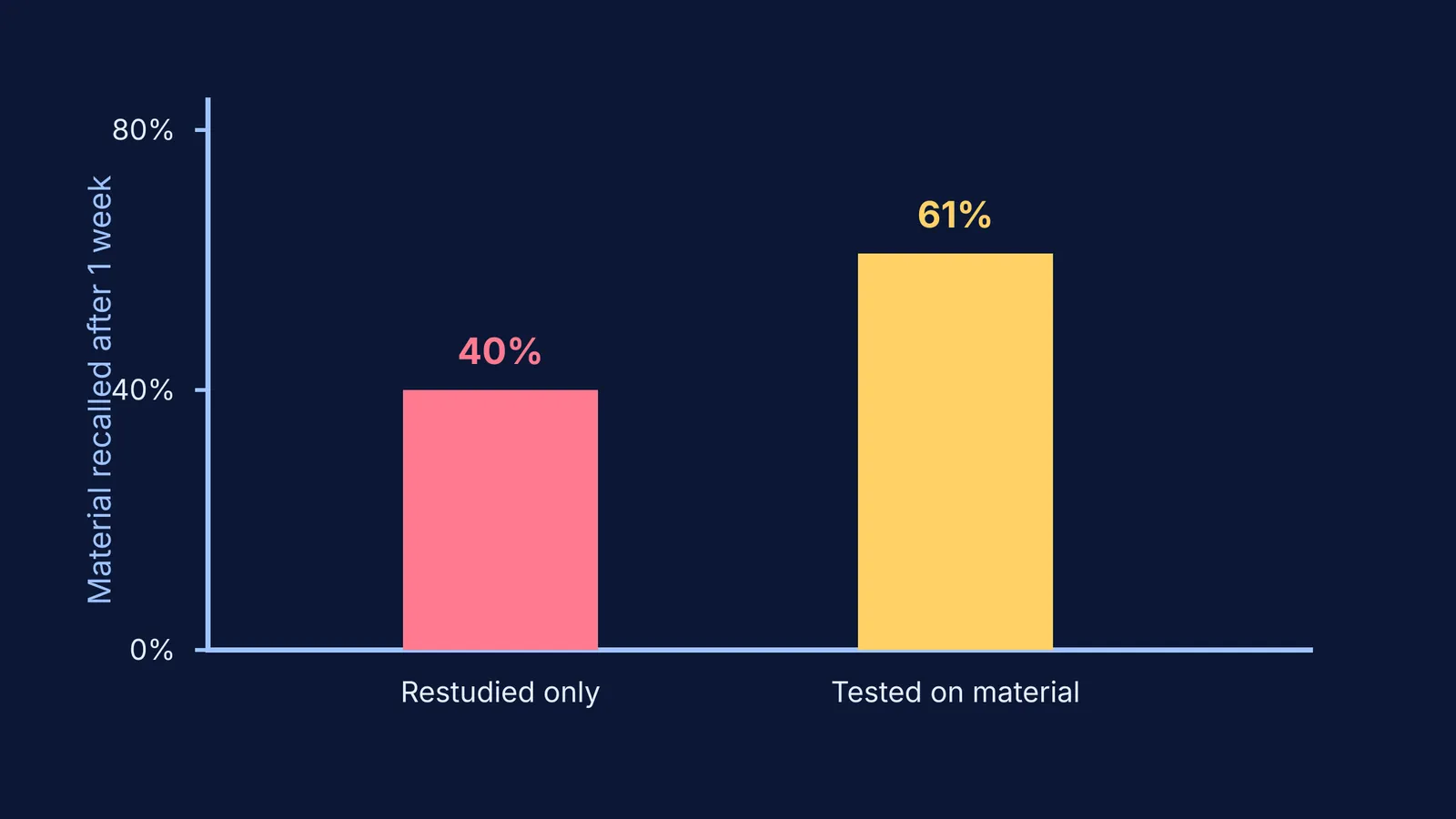
In a 2006 study published in *Psychological Science*, researchers Henry Roediger and Jeffrey Karpicke at Washington University tested how well students remembered prose passages. One group of students studied a text four times. Another group studied the text just once, but then took three practice tests where they had to recall everything they could remember on a blank sheet of paper.
When tested a week later, the group that studied the text four times remembered only 40% of the material. The group that took practice tests remembered 61%.
To apply this to your exam preparation, read an act or a poem once, and then close the book. Just as you must read a science textbook actively, you have to actively retrieve literature quotes instead of just staring at the page. Write down everything you can remember about the plot, the characters' motives, and key phrases on a blank sheet.
You can use this active testing method across all your subjects. For instance, if you are also preparing for science exams, Fermi's AI tutor teaches by holding a line of reasoning across a session, checking your understanding as it goes rather than just giving you the answer.
How do you quote briefly and accurately?
For the analytical sub-questions, you need to use quotes to prove your point. However, writing out long, full sentences wastes time and does not show the examiner that you understand the text.
Instead, you should memorize short phrases and weave them into your own sentences.
For example, instead of quoting a whole block of dialogue from a play, you can write: *Antony immediately appeals to the crowd as his "friends" and claims he only wants to "bury Caesar, not to praise him".*
This brief quoting technique proves you know the text closely and can use it to support an argument.
How do you write character and theme answers?
The final sub-question on an extract demands a structured answer. A good strategy is to use the Point, Evidence, and Explanation framework.
Point: State your answer directly in the first sentence. For example, "Cassius manipulates Brutus by appealing to his sense of honour and Roman pride."
Evidence: Provide a brief quote or specific plot detail that proves your point.
Explanation: Explain how this evidence connects back to the broader theme, such as political ambition or betrayal.
Practising these answers takes time. You should map out characters and themes regularly leading up to your English exam, building a spaced revision schedule that covers the entire syllabus.
If you apply this same structured approach to numerical subjects and get stuck, the Fermi Problem Library has a step-by-step solver that explains the reasoning behind each step. Just like in a good literature essay, understanding the 'why' is more important than just copying the text.


