

On this page
Writing answers in a Hindi board exam requires a blend of linguistic accuracy, neat presentation, and strategic time management. Since language papers are notoriously lengthy, knowing how to structure your responses can make a significant difference to your final score. By understanding the marking scheme and what examiners look for, you can approach the paper with confidence and avoid common pitfalls that cost students marks.
What is the best way to present answers?
The presentation of your paper is the first thing an examiner notices. Even with perfect knowledge, a messy paper can cost you marks, as the examiner might struggle to read your handwriting or find your key points.
Section-wise clarity: Always mention the section name (e.g., *खण्ड 'क'*) clearly at the top of the page. Starting a new section on a fresh page helps keep your work organised and makes grading much easier.
Clear numbering: Write question numbers prominently in the margin and ensure they exactly match the question paper. This is a simple step, but mismatching numbers is a surprisingly common error.
Spacing: Leave a blank line after every answer. If you make a mistake, draw a single, clean line through it rather than scribbling, which makes the page look untidy.
Highlighting: Use a pencil or a black pen to underline key terms, authors' names, or important quotes in your long answers. This draws the examiner's eye directly to the most important parts of your response.
If you are feeling overwhelmed by exam pressure, understanding the roots of exam nerves can help you stay calm and focused.
How should I manage my 180 minutes?
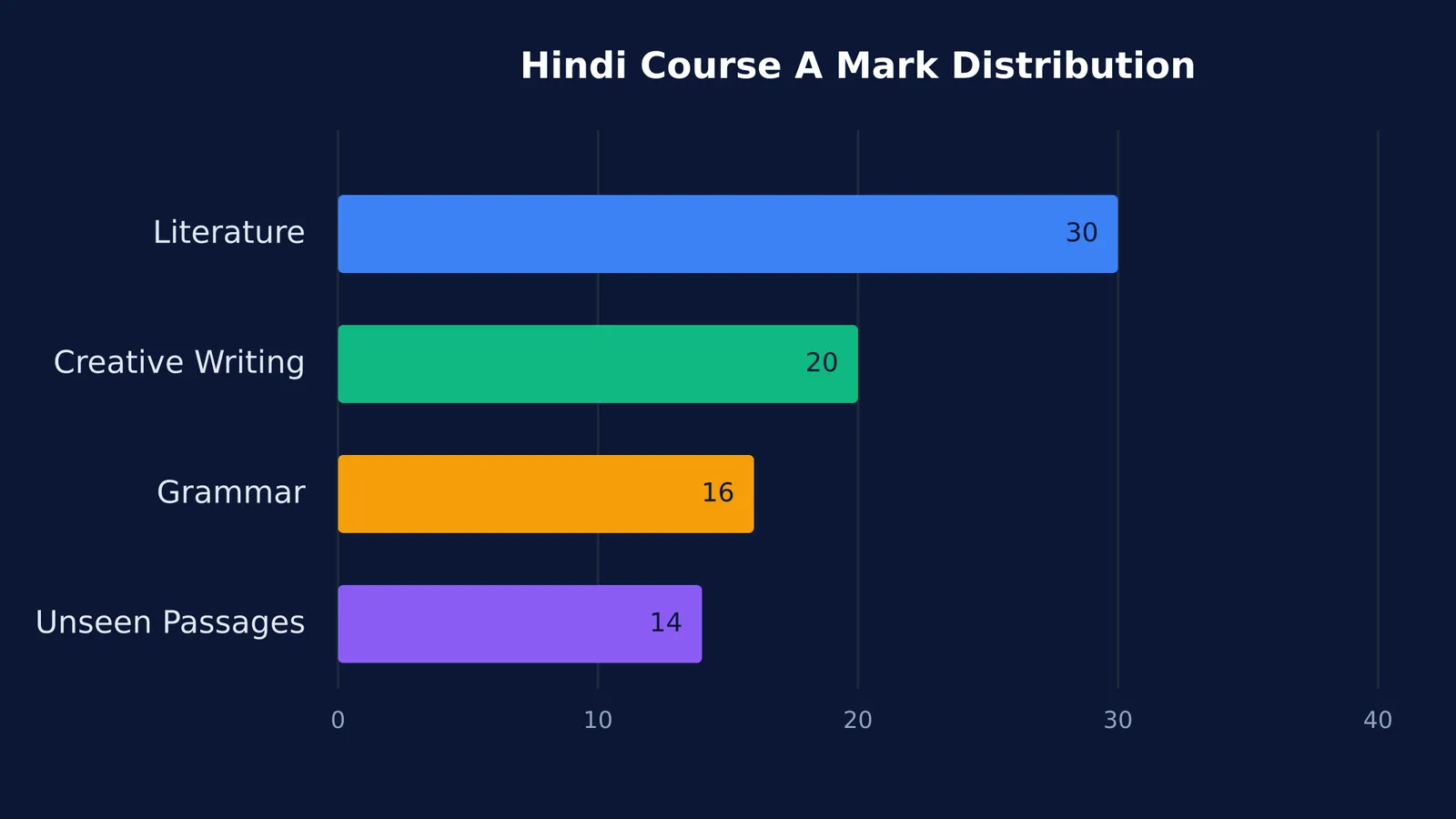
Hindi is a length-intensive paper, making a strict timeline crucial so you do not leave questions unanswered. The CBSE Class 10 Hindi marking scheme for the 2024-25 academic year follows a structured 80-mark theory paper and a 20-mark internal assessment. A standard 3-hour (180 minutes) paper requires discipline, and you should dedicate a substantial portion of your time specifically to the creative writing section.
Reading Time: Use the initial reading period to quickly scan the paper and mentally solve the unseen passages or decide which optional writing topics you will tackle.
Unseen Passages: Dedicate enough time to read carefully without rushing.
Grammar: Keep this brisk, as it is mostly MCQ-based.
Literature: Allocate the largest block of your time for the textbook questions.
Writing Skills: Reserve a substantial block for essays, letters, and notices.
Revision: Save the final moments to check for spelling errors, especially *matras* (vowel signs), and ensure all question numbers are correct.
A well-structured study routine will help you practice this timing using past papers before the actual exam day.
How do I tackle the unseen passages and grammar?
The reading and grammar sections are high-scoring areas if approached correctly.
**Unseen Passages (*अपठित बोध*):** Always read the questions before reading the passage. This strategy helps you spot answers quickly as you scan the text. Always write the answers in your own words rather than copying sentences verbatim, as this demonstrates true comprehension.
**Grammar (*व्याकरण*):** This section is largely MCQ-based and tests concepts like sentence types and figures of speech. Solve these quickly but accurately. Regular practice is the only way to avoid losing marks on basic grammatical rules.
While you are preparing for your exams, balancing language subjects with STEM preparation is important. If you find yourself stuck on a science problem, the Fermi Problem Library has worked problems with a step-by-step solver that explains the reasoning rather than printing an answer.
What are the formatting rules for the writing section?
The creative writing section (*रचनात्मक लेखन*) carries a significant portion of the total score and demands close attention to layout. In the CBSE Course A paper, the literature section carries 30 marks, and the creative writing section carries 20 marks. Meanwhile, in Course B, literature carries 28 marks and creative writing 22 marks.
Formats: For formal letters (*पत्र*), notices (*सूचना*), and emails, follow the board's prescribed layout strictly. Marks are allocated specifically for having the date, subject, and salutation in the correct places.
Word limits: Stick to the specified word limits. Do not write a two-page answer for a 3-mark question; it wastes precious time, leads to more grammatical errors, and does not yield extra marks.
Creativity: In essays (*अनुच्छेद*) or advertisements (*विज्ञापन*), use relevant proverbs (*मुहावरे*), quotes, or catchy slogans to make your writing stand out. Draw neat boxes for advertisements and notices using a pencil.
If you struggle with knowing where to start on your broader exam preparation, Fermi's AI tutor can work out what you already know and build a plan for the session, so you sit down to a clear next step in your science subjects. Reviewing your performance across all subjects is also key; learning how to analyse a mock test will show you exactly where to focus your efforts next.


