

On this page
The rush to start a career makes fresh graduates prime targets for cyber fraud. Job scams operate through fake emails, social media messages, and counterfeit company websites.
Before you reply to an offer letter, you need to know how to spot a trap.
What are the red flags of a fake job offer?
Legitimate companies have standard hiring processes. Fraudsters rely on urgency to trick you. Look out for these warning signs:
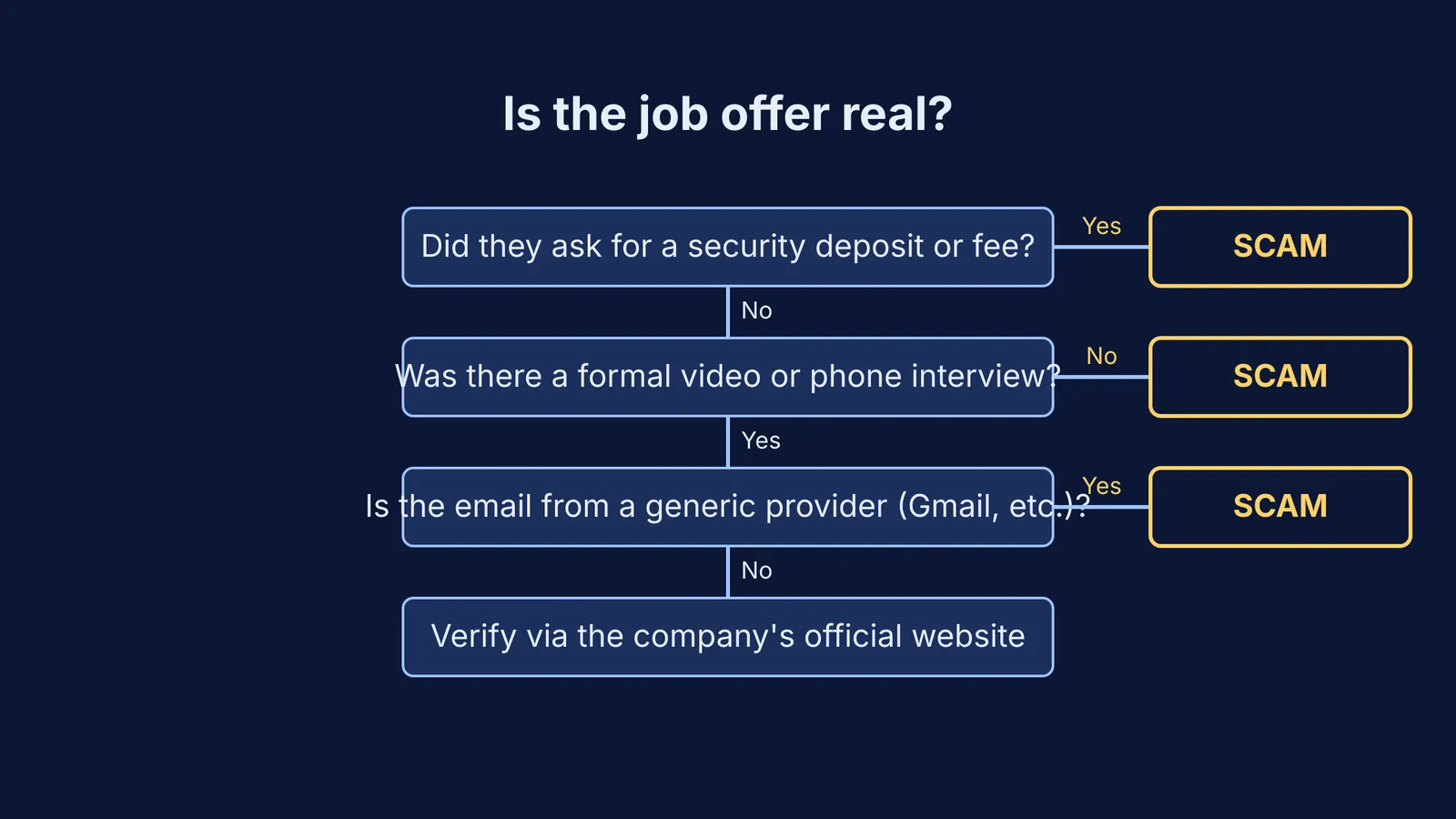
Requests for money: A genuine employer will never ask you to pay for a job. If an email demands a "security deposit," a "registration fee," or asks you to pay for your own company laptop before starting, it is a scam.
Unprofessional email addresses: Real job offers come from a corporate domain (for example, `hr@companyname.com`). Be highly suspicious of recruiters using generic providers like Gmail, Yahoo, or Outlook.
Unrealistic pay for minimal effort: If a "Data Entry" or "Digital Marketing" role promises a salary that is completely out of line with your experience, it is likely a fraud.
No formal interview: Getting an offer letter without ever speaking to a human on a video or phone call, or conducting the entire "interview" over a messaging app, is a major red flag.
What should you do if you are pressured to accept quickly?
Fraudsters often create artificial deadlines to stop you from thinking clearly or asking for advice. They might claim that the job offer expires in two hours, or that another candidate is waiting to take your spot if you do not pay the registration fee immediately.
If you feel rushed, take a step back. A legitimate human resources department understands that reviewing an offer letter, consulting with family, and making a career decision takes time. They will typically give you at least two to three days to respond to an offer.
If a recruiter demands an instant decision or payment, it is a sign that they want your money before you have a chance to research their claims. Do not let the fear of missing out force you into a poor decision.
How do overseas job rackets trap graduates?
The problem extends beyond losing money online. Scammers are now targeting young professionals with fake international postings.
In April 2024, the Ministry of External Affairs issued an advisory warning that Indian nationals are being lured by fake job offers in Cambodia. Candidates are promised lucrative "Data Entry" or "Customer Support" roles after clearing a simple typing test. However, upon arrival, victims are held captive in cyber work camps and forced to carry out illegal financial scams under threat of violence.
The advisory notes that scammers often ask candidates to travel on a tourist visa rather than a proper work visa. A tourist visa does not permit employment in any country. If an agent suggests this route, walk away immediately.
How can you verify a company?
If you receive an offer that looks legitimate but you are still unsure, do not trust the links or phone numbers provided in the email. Instead, follow a verification checklist:
Check the official website: Go directly to the company's actual website and look for their careers page. Check if the job ID or the role you applied for is actually listed.
Verify the recruiter: Look up the name of the person who emailed you on professional networking sites. Check their profile to see if they genuinely work for the company they claim to represent.
Contact the company directly: Do not use the phone numbers printed on the offer letter, as they might just lead to a scammer's mobile phone. Instead, find the official switchboard number or contact email listed on the company's verified website to ask their team if the offer is real.
Look for government registration: For overseas jobs, verify the recruiting agent on the government's eMigrate portal to ensure they are authorised by the Ministry of External Affairs. If an agent is not listed, they are operating illegally.
If you realise you are dealing with a scammer, stop all communication immediately. You can report the incident to the National Cyber Crime Reporting Portal or call the national helpline.
How can you build real skills instead of rushing?
The desperation to land a job quickly often makes freshers vulnerable to these traps. If you are struggling to clear legitimate technical interviews, focus on strengthening your fundamentals rather than applying for everything you see.
Building real competence takes time, but it pays off in secure, verified employment. When practicing for technical rounds, tools like the Fermi Problem Library provide worked problems with a step-by-step solver that explains the reasoning rather than printing an answer. This helps you understand the logic behind a solution, rather than just memorising facts.
If you are exploring STEM careers beyond engineering and medicine, take the time to research the typical entry-level roles and salaries in those fields. Knowing what a normal hiring process looks like for your child's career choice or your own chosen path is your best defence against fraud.


